
9.0Exceptional
Lech Zürs am Arlberg
Austria's most beautiful ski village — Lech Zürs anchors Ski Arlberg, Austria's largest connected ski area, with 305km of pistes.
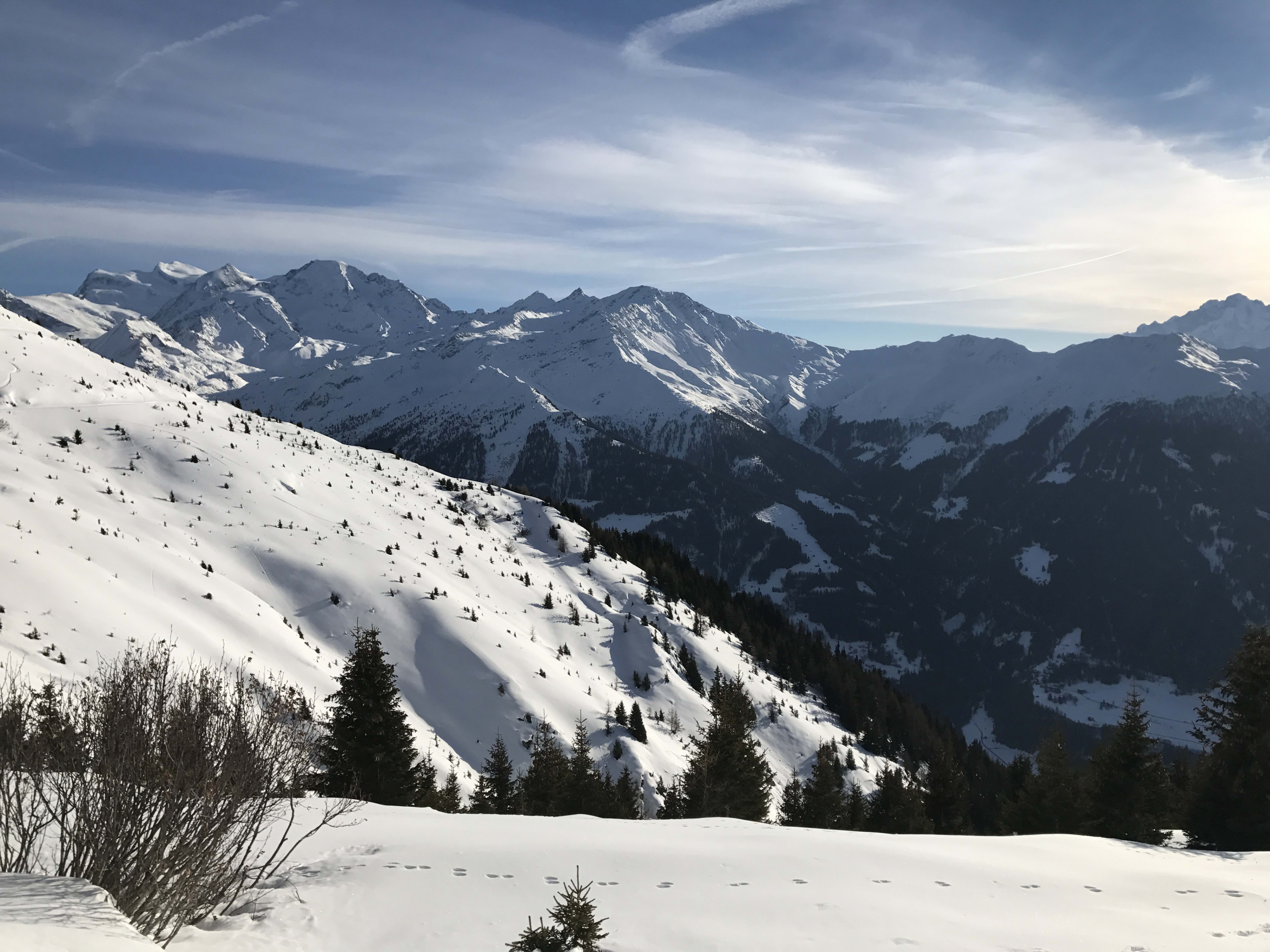
Best for
Strengths
Lower-scoring areas
Verbier operates on a different register to most Swiss resorts. It is not a traditional farming village that evolved into a ski destination — it was built for skiing in the 1950s as a calculated project, and everything about it reflects that original purpose operating at a luxury level. The clientele is international, wealthy, and often returning: the same families book the same chalets for decades. Yet the resort has not calcified into a monument to itself. The Freeride World Tour stage brings genuine performance skiing to the Verbier couloirs each February; the Verbier Festival brings classical music each summer; and the off-piste community that clusters around spots like Pub Mont Fort gives the place an energy that exists outside the usual luxury-resort bubble.
The 4 Vallées encompasses Verbier, Nendaz, Veysonnaz, Thyon, and La Tzoumaz — 412km of runs on a single regional pass. Verbier's own sector is the high-altitude heart of this system: the Attelas, Mont Fort (3,330m), and the Tortin bowl define the resort. Marked black runs on the Tortin face and the Mont Fort pistes are genuinely demanding; the Stairway to Heaven itinerary (marked but ungroomed off-piste route) from Mont Fort is world-famous among expert skiers. For beginners and intermediates, Savoleyres — a secondary sector with a quiet, sunny plateau — offers gentler terrain and a noticeably different atmosphere. The off-piste potential of the surrounding mountains, particularly the couloirs beneath the Chassoure and the Grand Combin approaches, is essentially unlimited for those with appropriate fitness and a guide.
Snow reliability is strong by Swiss standards, aided by the high altitude (75% of terrain above 2,000m), consistent north-facing aspects in the upper sectors, and exposure to heavy snowfall from Atlantic weather systems that funnel up the Rhône valley. The Tortin bowl in particular holds cold, dry powder long after a storm. The lower Verbier sector, from Les Ruinettes down to the resort at 1,500m, is the weak link — it can be icy or thin in warm spells, and the main return piste to resort level is sometimes replaced by a long gondola journey. The 4 Vallées extension adds terrain at varying elevations, with Nendaz and Veysonnaz offering reliable lower-mountain connections.
The 4 Vallées network runs 89 lifts, of which roughly 30 serve the Verbier sector directly. Access to resort from the car parks and Le Châble begins with the Médran gondola — the main pinch point during busy periods, where queues of 20–40 minutes can form on February school-holiday mornings. The Jumbo cable car from Attelas to Mont Fort is the high-altitude asset: a large-capacity installation that drops directly into the best expert terrain. Lift technology across the network is generally modern; Verbier's operating company has invested consistently since the 1990s. The cross-valley connection to Nendaz and Veysonnaz is efficient in good weather conditions but can be closed in high wind.
Verbier's accommodation stock is dominated by privately owned chalets, many of which are rented through specialist operators at premium prices. A week in a quality chalet with catered service can reach CHF 20,000–50,000 and up; at the other end, shared rooms in simpler apartments offer a more accessible entry. The W Verbier (five-star, central, rooftop pool) is the headline hotel property; the Chalet d'Adrien, a Relais & Châteaux property, sits at the quieter edge of the village. Eating options range from the classic Les Ruinettes mountain restaurant to Les Vernes, one of the best high-altitude dining addresses in Switzerland. The village has a compact central core with restaurants, bars, and a small shopping street.
Geneva Airport is the primary gateway, with transfers running roughly 2 hours 10 minutes via the A9 and through Martigny and Sembrancher. Rail travellers take Swiss Federal Railways from Geneva Cornavin to Martigny (approximately 1 hour 15 minutes), then change to the narrow-gauge TMR (Transports de Martigny et Régions) line to Le Châble (30 minutes), from where the Verbier Express gondola rises to the resort in 25 minutes. Total rail journey from Geneva is approximately 2 hours 30 minutes. Driving from Zurich takes approximately 3 hours via the A9.
Geneva is the primary gateway — a direct transfer runs the 130km via the A9 motorway and the valley road through Martigny in approximately 2 hours 10 minutes. Helicopter transfers from Geneva operate in good weather. Swiss Federal Railways connect Geneva to Le Châble (the valley station below Verbier) via Martigny; a gondola then rises to the resort in 25 minutes.
Verbier is one of the most expensive ski destinations in Switzerland and Europe. A 6-day 4 Vallées adult lift pass costs approximately CHF 390–430 for the 2024/25 season. Verbier-only day passes are also available for those focused on the main sector. Accommodation costs are high even by Swiss standards — budget a minimum of CHF 2,000 per person for a week's package in a shared apartment, and considerably more for a catered chalet. Meals on the mountain are excellent but expensive. The overall Verbier experience demands a serious budget commitment.
Adult 6-day 4 Vallées lift pass approximately CHF 390–430 (2024/25 season). Verbier-only passes and day tickets also available; verify current rates at verbier.ch.
This is an approximate editorial reference for the season noted. Always check the official resort website for current prices.
All price references are editorial estimates for the 2024/25 season. Current season prices may differ; verify at the official resort website before booking.
Après-ski in Verbier is anchored by two institutions: the Farm Club (the closest thing to a luxury members' club with a dancefloor in a ski resort, operating from 22:00 to very late) and the Farinet (a lively outdoor terrace at the base of the Médran gondola, open from around 15:30). Between them, these two venues define Verbier's after-skiing reputation, which is well-deserved. For food on the mountain, Les Ruinettes (at 2,200m) is a large, well-run operation with a famous sun terrace; Chez Dany (a classic Valaisanne restaurant between Les Ruinettes and the resort) serves raclette by the log fire. In the village, La Luge, Sonalon, and Fer à Cheval cover the spectrum from casual to gastro.
The Stairway to Heaven requires good visibility and confident off-piste ability — get a conditions briefing from the ski patrol board at Mont Fort before dropping in, and carry a transceiver. For the Verbier Freeride event (usually mid-February), the couloirs below the Bec des Rosses are closed to the public during the competition window, so plan around the schedule if you want to ski those lines. Médran gondola queues are at their worst from 08:45–09:30 on school-holiday Saturdays and Sundays; arrive at 08:30 or wait until 10:00. The 4 Vallées extension towards Nendaz is quieter than the Verbier sector and offers excellent intermediate cruising with a fraction of the crowds.
Value for money scored 5.5 — among the lowest in our dataset — reflecting Verbier's position as one of Switzerland's most expensive resorts. Lift infrastructure 8.0 accounts for occasional queues at the Médran gondola during school holidays despite the network's overall strength.
Austria's most beautiful ski village — Lech Zürs anchors Ski Arlberg, Austria's largest connected ski area, with 305km of pistes.

The Jungfrau Ski Region — 211km of piste beneath the Eiger's north face, two car-free Alpine villages, and a UNESCO World Heritage backdrop.

Ski in the shadow of the Matterhorn across 322 kilometres of car-free Alpine perfection.
Support our independent research and help us add more ski resorts.
☕ Buy us a coffee