
9.0Exceptional
Lech Zürs am Arlberg
Austria's most beautiful ski village — Lech Zürs anchors Ski Arlberg, Austria's largest connected ski area, with 305km of pistes.
Paradise Chronicle / CC BY-SA 4.0
Best for
Strengths
Lower-scoring areas
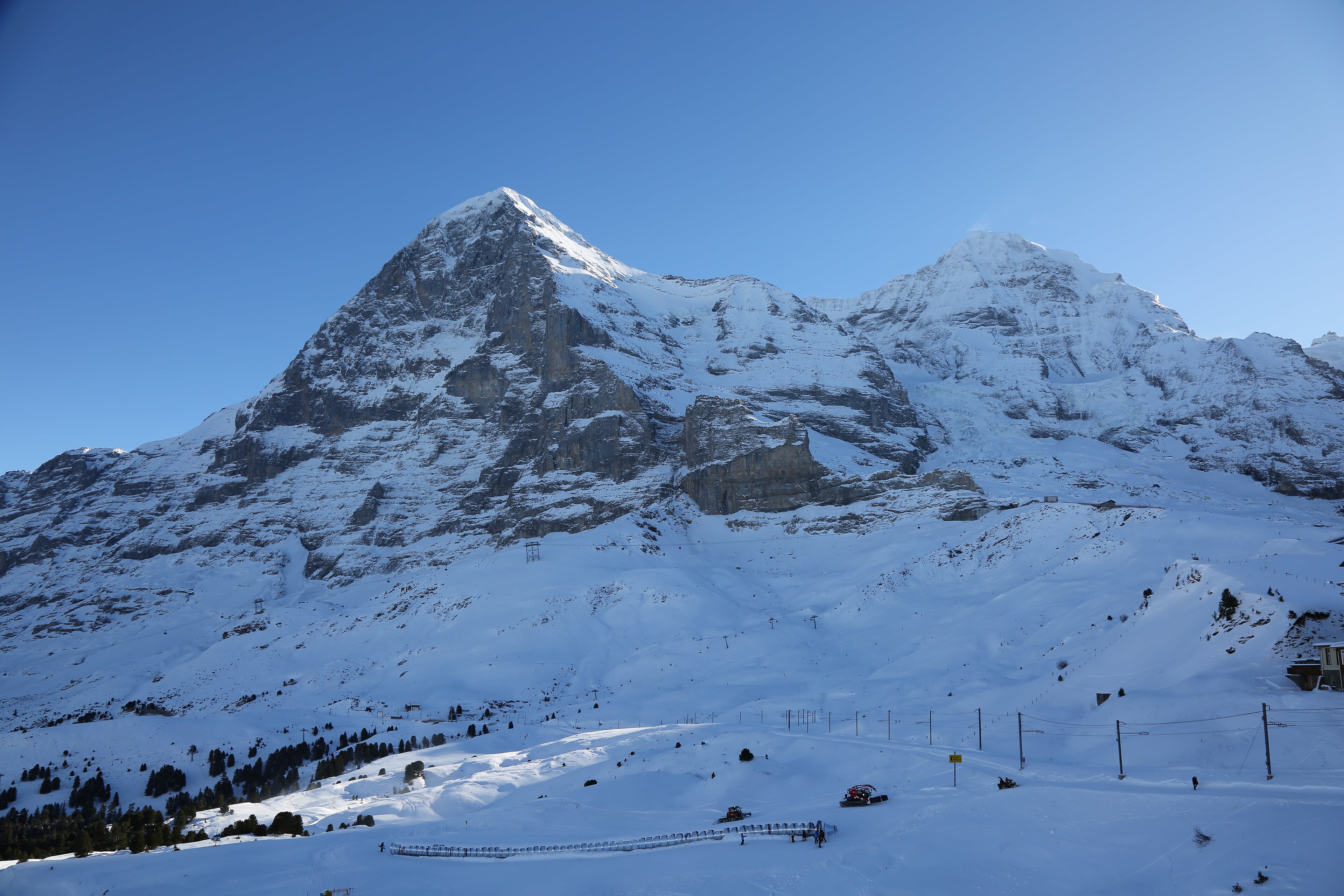
The Jungfrau Ski Region is Alpine Switzerland at its most fully realised: the Eiger's north face as the backdrop to the ski terrain, car-free villages accessible only by rack railway and cable car, a World Cup race course that has been part of the international skiing calendar since 1930, and a UNESCO World Heritage Site in the valley beyond. The three ski areas — Grindelwald-First, Kleine Scheidegg/Männlichen, and Mürren-Schilthorn — have distinct characters and are each complete ski experiences in their own right; the connection between them (via the Jungfrau Ski Region combined pass and lift network) adds strategic range to a day's skiing. Grindelwald is the accessible, car-owning, restaurant-rich base; Wengen is the traditional English-influenced Alpine resort with the Lauberhorn race history; Mürren is the most remote and the most spectacular, overlooking the Lauterbrunnen valley with the Schilthorn above and the Jungfrau, Mönch, and Eiger in the full panoramic register.
Two hundred and eleven kilometres across three ski areas span from the lowest gondola access at 937m (Grindelwald town) to the Schilthorn at 2,970m. Grindelwald-First (56km, up to 2,501m) is predominantly intermediate terrain with wide-open pistes and good beginner areas; the panoramic views of the Eiger, Wetterhorn, and Schreckhorn from the upper lifts are the area's primary asset alongside the skiing. Kleine Scheidegg/Männlichen (102km, 937–2,500m) is the largest sub-area and the heart of the region — this is where the Lauberhorn race takes place, where the Eiger face is closest, and where the Eigergletscher station at 2,320m provides access to the most technically demanding terrain. The Eiger Express tricable gondola from Grindelwald Grund to Eigergletscher (26 minutes) is the main access route to this area. Mürren-Schilthorn (approximately 53km, 1,638–2,970m) is the most remote sub-area, accessed from Lauterbrunnen by train to Mürren or cable car via Gimmelwald; the Schilthorn summit at 2,970m is the highest lift-served point in the region and provides the most challenging terrain.
The Jungfrau region's 937m–2,970m range creates varied snow conditions across the three ski areas and the season. The Schilthorn and upper Kleine Scheidegg terrain reliably hold snow from mid-December through early April; lower Grindelwald First terrain below 1,500m can be marginal in warm or low-snow years. The resort's December to April core season is well-supported by the altitude; the Kleine Scheidegg area's north-facing exposures hold powder quality for several days after snowfall. Annual snowfall statistics for the region reflect its Bernese Oberland position: the western facing of the Alps here captures both westerly Atlantic systems and southerly Föhn events, creating variable but generally reliable winter snow. The Jungfraujoch high-altitude train journey (to 3,454m) remains possible in almost any winter weather conditions and provides a year-round snow experience even outside the ski season.
Approximately 44 lifts serve the three sub-areas: the Eiger Express tricable gondola from Grindelwald Grund to Eigergletscher at 2,320m (installed December 2020, 26-minute journey) is the landmark infrastructure of the region; the Kleine Scheidegg/Männlichen sector has the most developed network; Grindelwald-First is served by a gondola from the town and chairlifts on the upper mountain; Mürren-Schilthorn has the Schilthornbahn cable car and chairlifts covering the ski terrain. The three areas are connected by piste, ski bus, and the Berner Oberland Bahn rail network — Kleine Scheidegg is the hub where the Wengernalp Railway (from Grindelwald and Wengen) meets the Jungfrau Railway to the Jungfraujoch. Day pass coverage across all three sub-areas is included in the Jungfrau Ski Region pass; individual area passes are available at lower cost for visitors concentrating on one sector.
Three distinct village options provide the range of the Jungfrau experience. Grindelwald (1,034m) is the main resort town — accessible by car and train, with the widest range of accommodation from budget guesthouses to four-star hotels, numerous restaurants, and the most active town life. Wengen (1,274m) is car-free, reached by rack railway from Lauterbrunnen — a Victorian mountain resort that has maintained its timber-chalet character through planning restrictions; the Lauberhorn race transforms it into one of the most festive events in Swiss skiing each January. Mürren (1,638m) is car-free, the most remote, reached by cable car from the valley, and sits directly below the Schilthorn with a level of mountain isolation and panoramic intensity that rewards the additional journey. Accommodation throughout reflects Swiss prices: good to excellent quality, consistently presented, and at the premium end of European mountain resort pricing.
Grindelwald is Switzerland's most rail-connected major ski resort: Zurich, Geneva, and Basel all have direct intercity connections to Interlaken, with the Berner Oberland Bahn running to Grindelwald. Swiss Travel Pass holders travel on all these connections without purchasing individual tickets. The road approach (motorway to Interlaken, valley road to Grindelwald) is straightforward in winter conditions. For Wengen and Mürren, the rail journey through Lauterbrunnen is the only option — cars are left at valley level. This makes the Jungfrau region particularly well-suited to car-free visitors using the Swiss rail network; the logistics that Wengen and Mürren impose on drivers are handled entirely by the excellent train and cable car system.
Grindelwald is accessible by train from Zurich, Geneva, and Bern without changing gauge — the Bernese Oberland is one of the most rail-integrated ski destinations in Europe. The standard route from Zurich Airport takes approximately 2.5 hours: Zurich HB by S-Bahn, then intercity train to Interlaken Ost, then the Berner Oberland Bahn to Grindelwald. Bern-Belp Airport (BRN) provides a closer option with shuttle service to Bern main station, then 70 minutes by rail to Grindelwald. Car hire and road travel are practical from Zurich or Bern; the A8 motorway to Interlaken and then valley road to Grindelwald is well-maintained. Wengen and Mürren are car-free — accessible by train from Lauterbrunnen (Wengen) and cable car from Stechelberg (Mürren). For Mürren in particular, the journey by public transport from Zurich adds a scenic step through the Lauterbrunnen valley and up the Schilthornbahn.
The Jungfrau Ski Region combined day pass covering all three sub-areas runs approximately CHF 79–89 (2025/26 season; roughly $87–98 USD). Multi-day passes and the Jungfrau Ski Region season pass offer better per-day economics. Swiss resort pricing is at a structural premium to comparable French and Austrian destinations: accommodation in Grindelwald, Wengen, or Mürren, on-mountain dining, and equipment hire are all priced in the Swiss market register — typically 30–40% above equivalent French or Austrian options. The Jungfraujoch train journey (to 3,454m, the 'Top of Europe') is a separate ticket (approximately CHF 200+) but is widely considered worth the cost for a clear-day view across the Aletsch Glacier.
Adult day lift ticket approximately CHF 79–89 for the full Jungfrau Ski Region (2025/26 season; ~$87–98 USD). Verify current rates at jungfrau.ch.
This is an approximate editorial reference for the season noted. Always check the official resort website for current prices.
All price references are editorial estimates for the 2025/26 season. Current season prices may differ; verify at the official resort website before booking.
The Jungfrau region's atmosphere varies significantly by village: Grindelwald is a functioning Swiss resort town with restaurants, bars, and après-ski energy; Wengen during the Lauberhorn race week (January) is one of the most festive events on the Alpine calendar — British skiers who have been coming here since the 1930s, Swiss race fans, and international visitors create an atmosphere in the narrow car-free main street that is genuinely unlike anything else in ski resort culture; Mürren is quiet, focused, and spectacular. On-mountain dining is at Swiss restaurant standard — the Allmend and Grindelwald First restaurants are among the highlights. The Schilthorn summit (2,970m) houses the Piz Glória revolving restaurant, used as a filming location in the James Bond film On Her Majesty's Secret Service (1969); the 007 Walk of Fame around the building connects the filming history to the panoramic views.
The Mürren-Schilthorn sub-area is the least-visited part of the Jungfrau region by pure visitor count — the additional journey from Lauterbrunnen discourages the day-tripper crowd — and this relative quiet makes it the best choice for expert and confident intermediate skiers who want the region's most dramatic terrain without the Kleine Scheidegg crowds. The Lauberhorn race (January) is worth scheduling a trip around: watching a World Cup downhill on the longest race course in the world, from a vantage point on the course or at the finish in Wengen, is a different experience to watching on television and is accessible to any visitor in the right week. The Jungfraujoch train journey is only worth the cost on a clear-sky day — the two-hour round trip is genuinely spectacular on a blue-sky January morning and deeply disappointing in cloud.
Village charm (9.5) and scenic beauty (9.5) are the Jungfrau region's defining strengths: the car-free villages of Wengen and Mürren, the north face of the Eiger visible from most of the ski terrain, and the UNESCO World Heritage Jungfrau-Aletsch backdrop represent a combination of cultural and natural environment that has no equivalent in the Alps. The charm score particularly reflects Wengen and Mürren — Victorian-era mountain resorts with timber chalets and no cars, accessible by rack railway or cable car, with a quality of Alpine village atmosphere that purpose-built resorts cannot manufacture. Terrain variety (9.0) reflects 211km across three areas from 937m to 2,970m, with three genuine sub-area characters: Grindelwald-First for open intermediate skiing, Kleine Scheidegg/Männlichen for the Lauberhorn race terrain and Eiger views, and Mürren-Schilthorn for the most dramatic and demanding terrain. Value for money (6.0) is the honest note: Switzerland's structural cost premium (accommodation, lift passes, dining, everything) makes the Jungfrau region one of the more expensive ski destinations in this catalogue at comparable quality levels.
Austria's most beautiful ski village — Lech Zürs anchors Ski Arlberg, Austria's largest connected ski area, with 305km of pistes.

Ski in the shadow of the Matterhorn across 322 kilometres of car-free Alpine perfection.

Home of the Espace Killy — 300 kilometres of high-altitude terrain forged around a World Cup race village.
Support our independent research and help us add more ski resorts.
☕ Buy us a coffee