
9.0Exceptional
Lech Zürs am Arlberg
Austria's most beautiful ski village — Lech Zürs anchors Ski Arlberg, Austria's largest connected ski area, with 305km of pistes.
Best for
Strengths
Lower-scoring areas
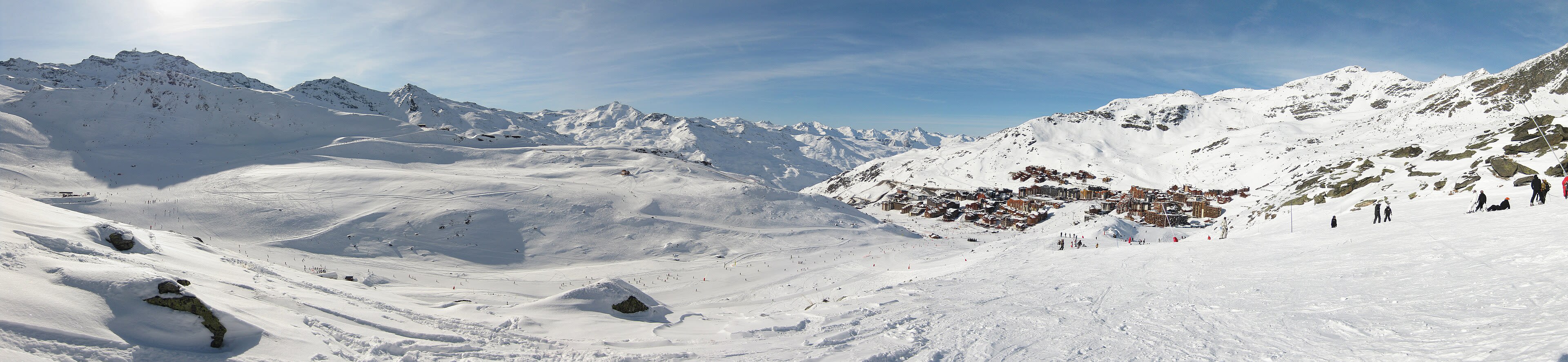
Val Thorens was purpose-built from the mid-1970s specifically to exploit its extreme altitude — at 2,300m, it remains the highest resort village in Europe, a fact the resort has built its entire identity around. Unlike the older, more organically developed villages of the French Alps, Val Thorens has no historic core: its architecture is unapologetically functional, designed to maximise snow-sure skiing rather than picture-postcard charm. What it lacks in traditional character it makes up for in energy — the resort has developed a reputation as one of the liveliest, most concentrated party destinations in the Alps, drawing a young, international, ski-focused crowd rather than the more sedate, multi-generational clientele of villages like Zermatt or St. Anton.
Val Thorens' own sector carries around 150km of pistes and 85 marked runs, but its real draw is direct, ungated access to Les 3 Vallées — at 600km of interconnected pistes across seven resorts (Val Thorens, Orelle, Les Menuires, Saint-Martin-de-Belleville, Méribel, Courchevel, and Brides-les-Bains), the largest linked ski area on earth. The Cime de Caron cable car reaches 3,230m and opens onto genuinely high-altitude, wide-open terrain and some of the area's best off-piste; lower down, the Val Thorens sector offers a strong mix of cruising blues and reds alongside more demanding black runs. A skier based in Val Thorens can realistically ski a different named village each day of a week-long trip without repeating terrain.
Val Thorens' altitude is its defining natural advantage: at 2,300m base and reaching 3,230m at the top, the resort experiences almost none of the low-altitude snow-reliability problems that affect villages sited below 2,000m elsewhere in the Alps. The season runs reliably from mid-November through early May, among the longest of any resort in this catalogue, with the upper mountain holding cold, dry snow deep into spring. Extensive snowmaking on the lower connector pistes provides additional insurance, though it is rarely needed given the base elevation. This altitude-driven reliability is the single biggest reason serious skiers choose Val Thorens over lower, more traditionally picturesque 3 Vallées villages.
Val Thorens runs 32 lifts within its own sector, including the Cime de Caron cable car and multiple high-speed chairs and gondolas providing efficient access to both the local terrain and the wider 3 Vallées network. The lift infrastructure across the whole 3 Vallées area is among the most heavily invested-in in the Alps, given the combined resources of seven resorts sharing the connected ski area; queuing can still develop at peak morning periods and at key connector lifts between valleys, particularly during French and UK school holidays, but the overall capacity is substantial relative to the terrain on offer.
Accommodation in Val Thorens is almost entirely purpose-built apartment and hotel stock, ranging from straightforward self-catering studios to increasingly high-end four- and five-star properties reflecting the resort's growing luxury positioning over the past decade. Ski-in/ski-out access is the norm given the compact, altitude-constrained village layout. The resort centre is walkable and pedestrianised, with restaurants, bars, and shops concentrated along a small number of streets — convenient, but without the historic charm of an older Alpine village.
Chambéry (CMF) is the nearest airport at roughly 1 hour 45 minutes, though its schedule is largely seasonal charter and low-cost flights and it is more prone to weather diversions than the larger hubs. Geneva (GVA) and Lyon (LYS), both around 2.5 hours away, offer considerably more year-round flight choice and are the more dependable options for visitors outside the core winter charter season. The final stretch of road into Val Thorens climbs steeply through the Belleville valley and can require snow chains after significant snowfall.
Chambéry (CMF) is the closest airport at roughly 1 hour 45 minutes, though it has limited seasonal-only flight schedules and is more exposed to fog and snow diversions than the larger hubs. Geneva (GVA) and Lyon (LYS) both run around 2.5 hours by road but offer far more year-round flight options and are generally the more reliable choice, particularly for international visitors outside the core UK/France charter market. As one of the highest resorts in the Alps, Val Thorens' final approach road can require snow chains after heavy storms.
Val Thorens is priced at the premium end of the French Alps market: a 6-day adult lift pass for the Val Thorens–Orelle sector runs roughly €200–250 for the 2025/26 main season, with a considerably more expensive option available for the full 3 Vallées pass covering all seven resorts. Accommodation, dining, and equipment hire are priced in line with a major destination resort, and the altitude and 3 Vallées access come at a cost premium relative to lower, smaller French resorts. Early and late-season dates offer meaningfully cheaper rates than the December–April core.
Adult 6-day Val Thorens-Orelle sector pass approximately €200–250 (2025/26 main season); full 3 Vallées pass priced higher. Verify current rates at valthorens.com.
This is an approximate editorial reference for the season noted. Always check the official resort website for current prices.
All price references are editorial estimates for the 2025/26 season. Current season prices may differ; verify at the official resort website before booking.
Val Thorens' après-ski scene is among the most energetic and internationally known in the Alps — La Folie Douce, the mountain restaurant-turned-daytime-nightclub chain, has one of its flagship locations here, drawing large crowds from early afternoon with live DJs and performers on an outdoor terrace. The resort centre's bars extend that energy into the evening, catering heavily to a young, party-focused international clientele. Dining ranges from straightforward pizza and burger fare to a small but growing number of more considered restaurants reflecting the resort's push toward a higher-end market in recent years.
Use Val Thorens as a base specifically to exploit Les 3 Vallées — buying the full multi-valley pass rather than the local sector-only ticket is essential to get the real value of staying here, since the point of the location is access to the wider network. Ride the Cime de Caron cable car early on a clear day for the best views and first tracks on the high-altitude terrain. Book La Folie Douce lunch tables in advance during peak weeks; the venue's popularity means walk-up access can be limited. Early (November/December) and late (April/May) season dates offer significantly better value while still benefiting from the resort's altitude-driven snow reliability.
Snow reliability (9.0) reflects Val Thorens' position as the highest resort village in Europe — few resorts in this catalogue can match its near-guaranteed cover across a full winter-length season. Village charm scored comparatively low (5.5): the resort was purpose-built for altitude and snow-sure access rather than aesthetics, and its functional 1970s-onward architecture lacks the historic character of villages like Val d'Isère or St. Anton. Terrain variety (9.0) is driven almost entirely by access to the wider Les 3 Vallées network rather than the Val Thorens sector alone.
Austria's most beautiful ski village — Lech Zürs anchors Ski Arlberg, Austria's largest connected ski area, with 305km of pistes.

The Jungfrau Ski Region — 211km of piste beneath the Eiger's north face, two car-free Alpine villages, and a UNESCO World Heritage backdrop.

Ski in the shadow of the Matterhorn across 322 kilometres of car-free Alpine perfection.
Support our independent research and help us add more ski resorts.
☕ Buy us a coffee