
9.0Exceptional
Aspen Snowmass
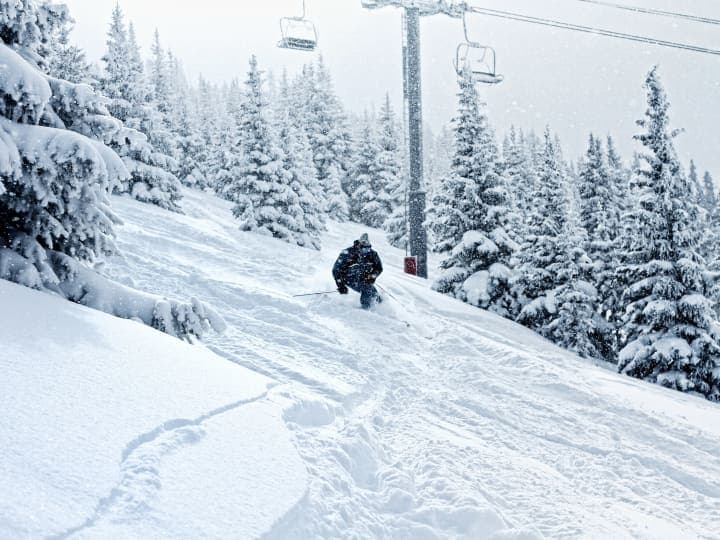
Four mountains, one legendary ski town — from Buttermilk's beginner slopes to Highlands Bowl's world-class hike-to terrain.

Murray Foubister / CC BY-SA 2.0
Best for
Strengths
Lower-scoring areas
Telluride occupies a unique position in American ski culture: it is unambiguously a luxury destination resort, yet it retains an authenticity that most comparable resorts have traded away. The historic town was a silver and gold mining centre in the 1870s and 1880s, and its grid of Victorian commercial buildings and residential homes survived the post-mining bust without the development pressures that transformed many Colorado mountain towns. The result is a National Historic Landmark District where the 1890s bank buildings, opera house, and miners' union hall sit alongside contemporary restaurants and boutique hotels — a genuine layering of history rather than a curated theme. The free gondola connecting the Victorian town to the purpose-built Mountain Village on the far side of the mountain is the physical embodiment of Telluride's democratic streak: no matter where you stay, the mountain is equally accessible.
Two thousand acres of terrain at 2,659–4,010m spans 127 trails with a distribution that skews significantly toward expert skiing: 23 per cent beginner, 36 per cent intermediate, 41 per cent advanced and expert. The resort divides into three main zones: the beginner and lower-intermediate Meadows area at the Mountain Village base; the main mountain with its extensive intermediate and expert terrain accessed from the high-speed Prospect Express and Gold Hill quads; and the Gold Hill area at the mountain's summit, home to the most challenging steep terrain including the Plunge, Kant-Mak-M, and See Forever runs. The Revelation Bowl in the upper mountain offers excellent off-piste terrain on a good powder day. At 4,010m, the summit provides consistent cold temperatures and longer snow preservation than lower-altitude Colorado alternatives.
Telluride's elevation in the San Juan Mountains puts it in a favourable snowfall zone — the area averages around 750cm per season, driven by moisture systems that push up from the southwest. The 4,010m summit receives consistent cold temperatures that preserve the snowpack well into spring, and north-facing aspects on Gold Hill can hold powder days after a storm longer than comparable terrain at lower Colorado resorts. The season typically runs Thanksgiving through early April, with January and February the most reliable window for deep powder. The resort's remoteness means it is rarely approached casually — visitors tend to commit to multi-day stays, which makes the mid-week crowd lighter and the powder days quieter than Vail or Breckenridge on an equivalent storm cycle.
Eighteen lifts include two gondolas (the free Town Gondola connecting historic Telluride to Mountain Village, and the Coonskin lift at the Mountain Village base), 12 chairlifts, two surface lifts, and two magic carpets. The lift count is modest for a resort of Telluride's ambitions and ticket pricing, and bottlenecks can develop at the Prospect Express and Gold Hill quads during peak periods. The Town Gondola runs year-round and is one of Telluride's most important pieces of infrastructure — a genuine quality-of-life amenity that allows visitors to skip the Mountain Village parking situation entirely. The gondola is free to use and operates from early morning into the evening, making it useful for movement between dining and accommodation across the mountain.
Accommodation divides between the historic town of Telluride and the purpose-built Mountain Village, each with a different character and logistics profile. Telluride's historic district offers boutique hotels, Victorian B&Bs, and a range of condominiums in converted commercial buildings; restaurants and bars are within walking distance; and the free gondola provides mountain access. Mountain Village is ski-in/ski-out by design, with a more conventional resort hotel layout — the Madeline Hotel and Residences and the Peaks Resort are the flagship properties — but lacks the authentic town character. Most experienced visitors choose Telluride town for the atmosphere and use the gondola for mountain access. The Telluride lodging market is small and books early; the premium weeks (Christmas, Presidents' Day) require months of advance planning.
The remoteness that makes Telluride special also complicates arrival. Montrose Regional (MTJ) is the most reliable jet-served option at 75 minutes — seasonal direct services from Denver, Dallas, Houston, Chicago, and Los Angeles. Telluride Regional (TEX) accepts small aircraft and some seasonal services but is highly weather-dependent at its 2,767m elevation. A rental car from Montrose is straightforward: US-50 to CO-62 over the Dallas Divide (scenic in clear conditions, challenging in heavy snow) to CO-145 into Telluride. The approach from Denver by car takes approximately 6–7 hours depending on road conditions on I-70 and CO-141. Driving is not recommended on the final approaches in a snowstorm without winter tyres.
Telluride Regional (TEX) is 15 minutes from the resort, but is served by only a handful of seasonal airlines with limited routes — primarily connecting through Denver. Montrose (MTJ) is the most reliable jet-served airport, handling regular seasonal services and offering a straightforward 75-minute drive south on US-550. Durango–La Plata (DRO) offers similar drive time from the south, with good connections from Denver and Dallas. Grand Junction (GJT) is further at around 2h 15min but has consistent year-round service. Renting a car is strongly recommended from any airport — public transfer options are limited. The approach road from Montrose over the Dallas Divide on CO-62 is scenic in clear weather but can be challenging in heavy snowfall.
Telluride's window lift ticket runs approximately $250–280 at peak (2024/25 season), placing it among the most expensive daily passes in North America. The resort is not part of Ikon Pass or Epic Pass, meaning day ticket buyers have fewer pass-ecosystem alternatives to the window rate. Multi-day passes provide incremental savings but the per-day rate remains high. Accommodation in Mountain Village or historic Telluride at peak periods runs $400–1,200+ per person per night in quality properties; budget options are extremely limited given the town's isolated location. Dining in Telluride proper reflects a sophisticated local food culture — the town has an unusually strong restaurant scene for its size — with meals running $35–70 for a main at mid-tier establishments.
Single-day adult lift ticket approximately $250–280 at peak season window rate (2024/25 season). Not included in Ikon or Epic Pass. Verify current rates at tellurideskiresort.com.
This is an approximate editorial reference for the season noted. Always check the official resort website for current prices.
All price references are editorial estimates for the 2024/25 season. Current season prices may differ; verify at the official resort website before booking.
Telluride's social atmosphere is distinctive: intellectually curious, physically adventurous, culturally eclectic, and less overtly status-conscious than Aspen despite similar pricing. The town's festival calendar (Telluride Film Festival, Telluride Bluegrass Festival, and the Mountainfilm documentary festival) shapes a visitor base that skews toward the arts and sciences alongside the expected luxury demographic. The dining scene is excellent for a town of 2,500 permanent residents: Allred's at the top gondola station, Brown Dog Pizza, and Rustico Ristorante are local institutions. The après-ski culture is low-key by Rocky Mountain standards — the New Sheridan Bar on the main street is Telluride's most historic gathering point, and the pace is more mountain community than nightclub circuit.
The See Forever trail from Gold Hill summit on a clear morning, before crowds arrive, is the singular Telluride experience — 1,300 metres of vertical with views to the La Sal Mountains in Utah on clear days. For powder, head to the Revelation Bowl immediately after a storm — the terrain there is north-facing and collects good snow; be there for first lift. The free gondola runs before and after ski hours — use it for pre-ski breakfast at Mountain Village or a post-ski return from the mountain to town without involving a car at any point. Book accommodation as far in advance as possible; Telluride's housing stock is genuinely limited and premium weeks sell months ahead. The shoulder weeks between New Year and Presidents' Day are the sweet spot for conditions, crowds, and availability.
Village charm (9.5) and scenic beauty (9.5) reflect Telluride's extraordinary setting — the box canyon geometry, the surrounding 14,000-foot peaks, and the Victorian historic district combine to create the most visually compelling ski resort setting in the United States. Lift infrastructure (7.5) reflects a modest count of 18 lifts relative to the terrain available and the resort's premium price positioning; mid-mountain connections can create bottlenecks on peak days. Value for money (4.5) acknowledges that Telluride is among the most expensive US ski resorts by every measure — window ticket prices, accommodation, dining — with limited budget options given the town's remoteness. Beginner suitability (6.0) reflects the terrain distribution: while beginner runs exist, the resort's character and layout favour intermediates and experts.
Four mountains, one legendary ski town — from Buttermilk's beginner slopes to Highlands Bowl's world-class hike-to terrain.
Colorado's most famous mountain — 5,473 acres of Front Range skiing anchored by the legendary Back Bowls.

Wyoming's authentic mountain — Corbet's Couloir, the Aerial Tram, and the steepest lift-served terrain in North America.
Support our independent research and help us add more ski resorts.
☕ Buy us a coffee