
9.0Exceptional
Aspen Snowmass
Four mountains, one legendary ski town — from Buttermilk's beginner slopes to Highlands Bowl's world-class hike-to terrain.
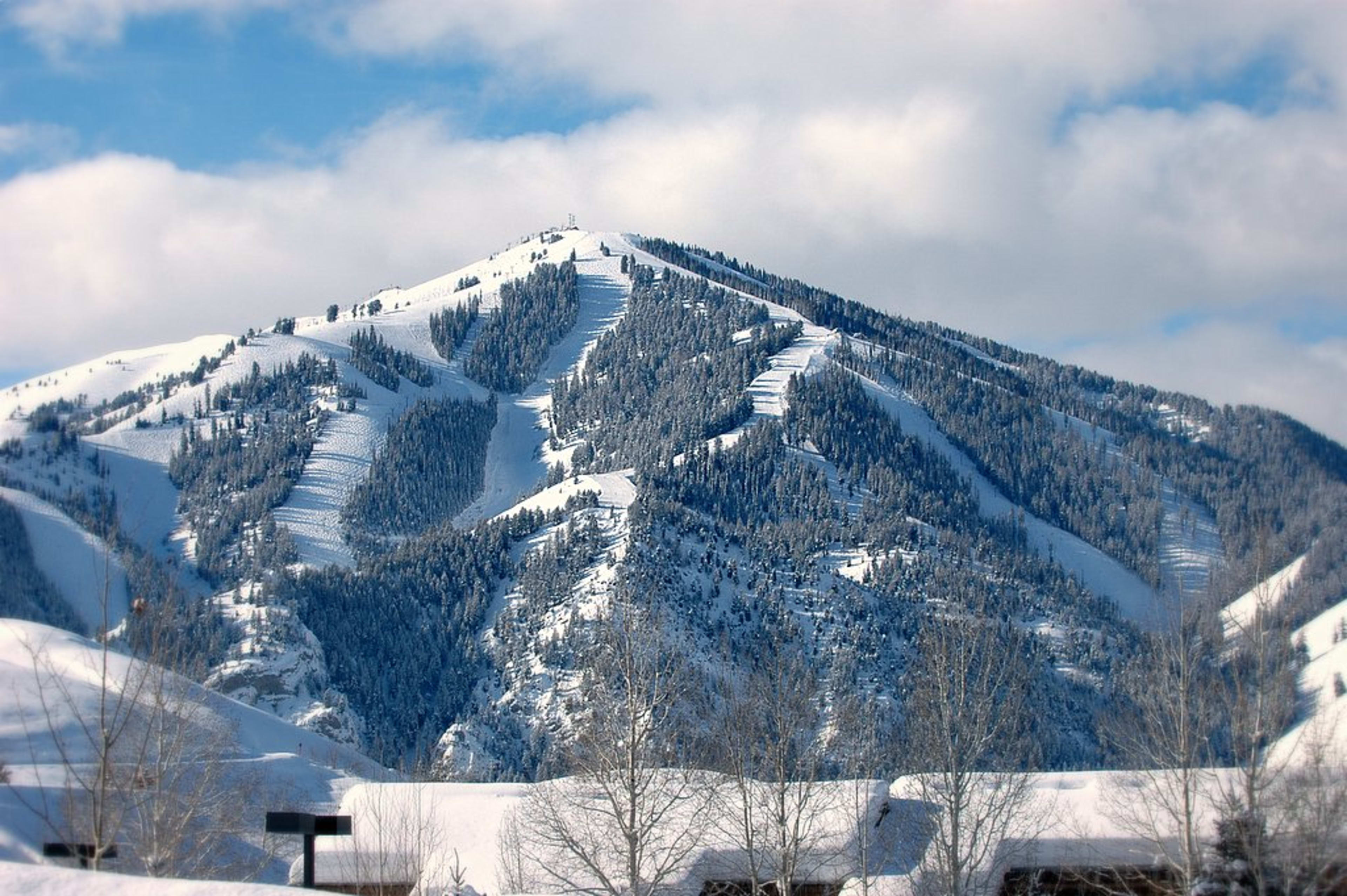
Greg L. Wright (SnapJag) / CC BY-SA 3.0
Best for
Strengths
Lower-scoring areas
Sun Valley occupies a unique position in American skiing: it predates the industry it helped define, and the 88 years since opening have given it a patina that no purpose-built resort village can replicate. Ketchum, the town adjacent to the resort, is a real place — population around 2,700 year-round, with butchers, bookshops, and bars that predate the ski business — and the combination of that authenticity with the resort's luxury infrastructure gives Sun Valley a quality of experience that wealthier newer resorts can approximate but not copy. The Hemingway connection (he wrote about the Wood River Valley, hunted its high country, and is buried in Ketchum) is the most famous cultural thread, but Sun Valley also ran early World Cup races in 1969 and has hosted generations of professional and Olympic skiers who value the uncrowded, high-quality terrain.
Bald Mountain's 121 trails across 2,829 acres offer a notably wide range of ability coverage, with 36% classified as easiest, 42% as more difficult, 20% as most difficult, and 2% as expert-only. The mountain's character is fundamentally intermediate-to-advanced: the midsection carries broad cruising terrain with excellent grooming, while the upper mountain reveals a steeper, more challenging face with sustained pitches and the resort's expert-only couloir access. Dollar Mountain, adjacent to the resort lodge rather than to Ketchum, serves as the dedicated beginner and lower-intermediate venue with 628 feet of vertical and a gentler pitch throughout. The separation of beginner terrain onto a dedicated mountain is one of Sun Valley's most practical features for mixed-ability groups.
Sun Valley averages 164 inches (420cm) of annual snowfall — less than Snowbird or Jackson Hole but delivered in cold, dry conditions typical of inland Idaho. The resort's snowmaking programme covers 78% of groomable terrain (645 acres of snowmaking capacity), providing reliable early-season depth and coverage in variable years. The Wood River Valley's high desert position produces low-humidity conditions that give the snow a dry quality even at relatively modest temperatures; Sun Valley's grooming operation is among the most respected in North America. Peak natural conditions typically run January through early March.
Seventeen lifts — one gondola, two six-person high-speed chairs, eight quad chairs, three triple chairs, one double chair, and two surface lifts — serve Bald Mountain with a combined capacity of 29,717 skiers per hour. The gondola from the base village provides a direct connection to the mid-mountain without a cold surface chair approach. The lift system reflects Sun Valley's private ownership model: infrastructure investment is consistent rather than transformative, with the overall lift fleet providing adequate capacity for the resort's controlled guest volume. Lift queues on Baldy are genuinely rare outside holiday periods.
Sun Valley Resort operates the Sun Valley Lodge (the 1936 original, recently restored) and the Sun Valley Inn at the resort base, providing the primary luxury accommodation. Ketchum, 2km away, has grown into a substantial independent accommodation and dining market across independent hotels, vacation rentals, and a selection of properties reflecting the town's year-round appeal. The distinction between the resort base and Ketchum town is part of Sun Valley's character: guests who want the pure resort experience stay at the Lodge; those who want a real Rocky Mountain town feel base in Ketchum and access the mountain via road.
Friedman Memorial Airport (SUN) in Hailey handles the majority of resort-season arrivals, with direct service from major US hub airports on American, Delta, and United. The 25km drive from Hailey to Ketchum/Sun Valley is straightforward. Year-round flight options are broader at Boise (BOI), approximately 225km west — a well-served regional airport with connections to most major US cities. Salt Lake City (SLC) is the international entry point for visitors arriving on long-haul connections, at approximately 300km and 4 hours. Car hire is practical for the Sun Valley area; the resort and town are navigable on foot once settled.
Friedman Memorial Airport (SUN) in Hailey is 25km from the resort and the recommended gateway for direct access — it is served by American, Delta, and United from major hub cities during the ski season, with seasonal service from Los Angeles, Denver, Salt Lake City, Seattle, and San Francisco. Boise (BOI) is approximately 225km at around 3 hours and provides a wider year-round schedule if the direct SUN connections don't work. Salt Lake City (SLC) is approximately 300km at 4 hours and is the practical backup for international arrivals. Car hire is strongly recommended — Sun Valley and Ketchum are best explored with one's own vehicle.
Sun Valley's lift tickets are deliberately premium. A single-day adult lift ticket runs approximately USD 195–255 (2025/26 season) at peak dates, with early-purchase and multi-day discounts providing meaningful reductions. The Ikon Pass includes Sun Valley at a destination tier. The Sun Valley Lodge accommodation reflects the resort's luxury positioning — rates at the Lodge compound can run considerably higher than the lift ticket. Ketchum lodging and dining provides a broader price range for the same mountain access.
Adult single-day lift ticket approximately USD 195–255 (2025/26 season, peak dates). Ikon Pass destination tier. Verify current rates at sunvalley.com.
This is an approximate editorial reference for the season noted. Always check the official resort website for current prices.
All price references are editorial estimates for the 2025/26 season. Current season prices may differ; verify at the official resort website before booking.
Ketchum's restaurant scene is disproportionately good for a town of 2,700: Trail Creek Cabin (an original 1930s Sun Valley property, accessible by horse-drawn sleigh), the Pioneer Saloon (the town's most beloved institution), Cristina's, and a handful of serious wine-focused restaurants provide dining quality well above resort-town norms. The Duchin Room at the Sun Valley Lodge retains the kind of mid-century hotel bar atmosphere that has almost completely disappeared from American resort hotels. Après-ski activity gravitates between the slope-side clock tower area and the Cornerstone restaurant at the base, before dispersing into Ketchum.
Seattle Ridge is Sun Valley's under-utilised sector — the ridge-top runs above 2,500m accessed from the Lookout lift see significantly fewer skiers than the heavily trafficked Warm Springs face. The Pioneer Mountains backcountry to the north of the resort area provides serious ski-touring objectives for those with the equipment and experience to pursue them; local guide services offer day trips. Book the Trail Creek Cabin sleigh dinner well in advance — it operates on limited days and fills within hours of reservations opening. The Sun Valley Museum of History in Ketchum gives excellent context on the Harriman family's role in shaping the resort and the broader Wood River Valley story.
Village charm (8.5) recognises Ketchum as one of the most genuinely appealing ski towns in North America — a real year-round community with independent restaurants, galleries, and a literary heritage rather than a purpose-built resort village. Scenic beauty (8.5) reflects the Wood River Valley setting and the open, treeless upper mountain views from Baldy's summit. Terrain variety (7.5) is an honest assessment of 2,829 acres with 3,400 feet of vertical — excellent by US standards, with meaningful expert terrain on the upper mountain, but not comparable to the mega-resorts. Off-piste (7.5) acknowledges the good guidance terrain and Pioneer Mountains backcountry access for experts. Value for money (5.5) reflects Sun Valley's deliberate premium positioning — it competes with Aspen and Jackson Hole for the luxury end of the American market. Snow reliability (7.0) reflects Idaho's moderate natural snowfall (164 inches average) backed by strong snowmaking on 78% of groomable terrain.
Four mountains, one legendary ski town — from Buttermilk's beginner slopes to Highlands Bowl's world-class hike-to terrain.
Colorado's most famous mountain — 5,473 acres of Front Range skiing anchored by the legendary Back Bowls.

Wyoming's authentic mountain — Corbet's Couloir, the Aerial Tram, and the steepest lift-served terrain in North America.
Support our independent research and help us add more ski resorts.
☕ Buy us a coffee