
9.0Exceptional
Lech Zürs am Arlberg
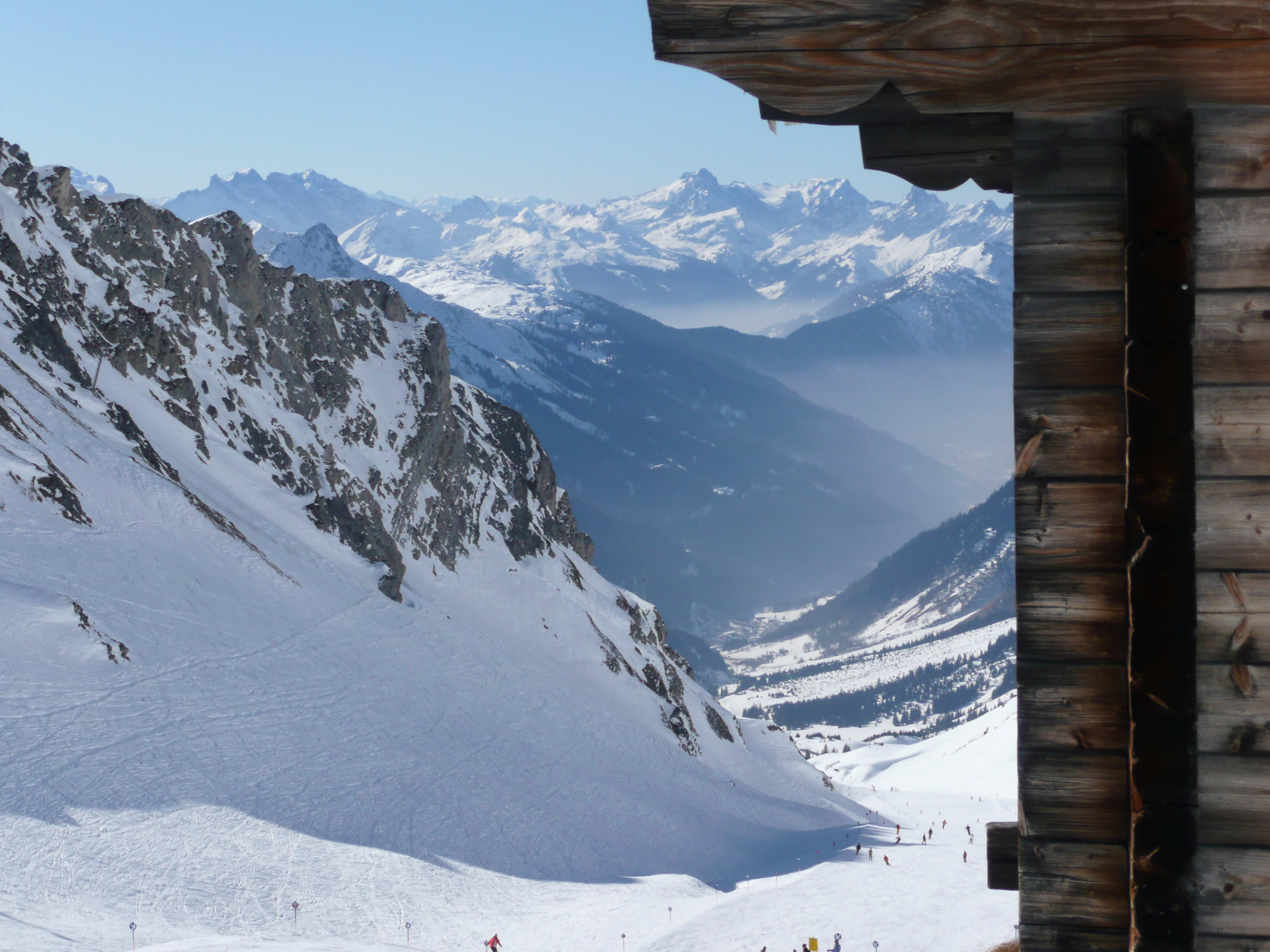
Austria's most beautiful ski village — Lech Zürs anchors Ski Arlberg, Austria's largest connected ski area, with 305km of pistes.
Best for
Strengths
Lower-scoring areas
St. Anton is the place where recreational skiing, as a global sport rather than a local activity, was shaped into the form it still holds today. Hannes Schneider's Arlberg technique — snowplough, stem turns, the linked parallel — gave skiing a teachable language in the 1920s, and the resort's reputation as a serious mountain has never wavered. The village retains the character of a working Austrian mountain town: timber-framed hotels, church spires, and narrow streets that were not designed with ski traffic in mind. The après-ski culture here is not imported glamour — the Mooserwirt on the mountain and the bars in the village are expressions of a community that has been partying hard after a demanding day on the mountain for a century, and they feel entirely genuine.
The Arlberg pass connects St. Anton (the eastern, Austrian side) with Lech, Zürs, Stuben, and the Warth-Schröcken extension (the western side) into a 305km network — one of Europe's most extensive linked areas. St. Anton's own sector, centred on the Valluga (2,811m), Schindlergrat, and the Rendl mountains, is demanding throughout. The marked pistes are substantial; the off-piste potential is the resort's signature. The Valluga Gipfel (the true summit) requires a separate cable car and is accessible only to those accompanied by a certified guide — the descent toward Lech off the back is among the most famous guided off-piste lines in Europe. Rendl, reached by gondola from the village, offers a quiet alternative with genuinely challenging lines and a fraction of the main-mountain crowds.
The Arlberg is one of the snowiest regions in the Alps. The pass sits at the meteorological boundary between the Atlantic systems approaching from the west and the continental air masses that dominate to the east — the result is heavy, frequent snowfall, typically 500–800cm annually in the upper mountain. Snow quality is consistently good: cold, dry powder is the norm above 2,000m, and the high-altitude aspects retain cover even in lower-snowfall seasons. The lower village slopes can be affected by warm southerly foehn conditions, but the main mountain sectors are reliably skiable from December through April.
The Arlberg area operates 87 lifts in total, with St. Anton's sector running approximately 30 installations including the Valluga cable car (two stages), the Galzigbahn gondola (the main village ascent), and multiple high-speed detachable chairs. The Flexenbahn, opened in December 2016, is the critical piece: a 10-person gondola from Stuben/Alpe Rauz that completed the fully ski-linked Arlberg — connecting St. Anton and Lech-Zürs without requiring bus transfers. Investment in lift technology has been sustained and the fleet is modern. Some bottlenecks exist at the Galzigbahn departure on busy mornings, but the network's capacity generally matches demand.
St. Anton's accommodation stock stretches from simple pensions in the adjacent hamlet of St. Jakob to the palatial Hotel Raffl's St. Antoner Hof and the Mooserwirt's own lodging complex (yes, the après-ski institution also rents rooms). Mid-range four-star hotels line the main pedestrian street and the lanes running off it — Arlberg Hospiz, Hotel Post, Schwarzer Adler. The village is linear, stretching along the valley floor, with most accommodation within reasonable walking distance of the lifts. Apartments and chalets are widely available through specialist operators. Restaurants span the full range: traditional Tyrolean stube, international kitchens, and a clutch of places serving food that would hold its own in any European city.
St. Anton is one of the most train-accessible major ski resorts in the Alps. The village station sits on the main Arlberg line, with direct services from Innsbruck (approximately 1 hour 20 minutes), Bregenz (1 hour), and Zurich (2 hours 30 minutes via the Arlberg tunnel). EuroCity services from Munich reach Innsbruck in 1 hour 45 minutes, making a same-day connection straightforward. By road from Innsbruck, the journey takes approximately 1 hour 35 minutes on the A12 and B197 (toll tunnel). The Arlberg motorway tunnel provides a direct road connection to the Lech-Zürs side of the pass in approximately 15 minutes.
St. Anton is directly on the main Arlberg rail line linking Innsbruck to Bregenz and Zurich — one of Europe's great ski train routes. Direct EuroCity and Railjet services stop at the village station; journey time from Innsbruck is approximately 1 hour 20 minutes, from Zurich approximately 2 hours 30 minutes. Driving from Innsbruck takes around 1 hour 35 minutes via the A12 and the Arlberg road tunnel (toll). The Arlberg motorway tunnel (B197) connects Austria and Switzerland.
The Arlberg lift pass — covering all connected sectors including Lech, Zürs, and Stuben — costs approximately €320–360 for 6 days for adults in the 2024/25 season. This represents excellent value for the size of the network, and is significantly cheaper than equivalent Swiss passes for comparable terrain. Accommodation is priced broadly in line with other major Austrian alpine resorts — cheaper than the Swiss equivalents, more expensive than eastern Austrian or Balkan alternatives. Food and drinks follow Austrian mountain resort pricing: hearty, generous, and moderately expensive.
Adult 6-day Arlberg lift pass approximately €320–360 (2024/25 season). Covers St. Anton, Lech, Zürs, Stuben, Warth-Schröcken. Verify current rates at arlberg.com.
This is an approximate editorial reference for the season noted. Always check the official resort website for current prices.
All price references are editorial estimates for the 2024/25 season. Current season prices may differ; verify at the official resort website before booking.
St. Anton's après-ski culture is the most famous in Austria and among the most famous in the world. The Mooserwirt, at 1,780m on the slope back to the village, begins filling at around 15:00 and by 15:30 is a standing crowd of skiers in boots on a wooden platform beneath an outdoor sound system that can be heard from the lift. The Krazy Kanguruh, a short distance lower on the same run, offers a slightly larger and slightly more chaotic version of the same experience. The Heustadl in the village centre takes over from around 17:00. In the evening, several good restaurants provide serious food — the Haa Haa Hut (above Nasserein), Restaurant Aquila, and the kitchen at Hotel Schwarzer Adler among the best options.
The Valluga Gipfel requires booking a private or group guide the day before — only 35 people can descend the back face per day and access requires a guide certificate at the cable car. Do not attempt it without local knowledge. Rendl is systematically underutilised by non-locals: the gondola has no queue most mornings, the north-facing bowls hold untracked powder for 48 hours after a storm, and the Rendlbeach at the base serves some of the best food on the mountain. For a full Arlberg day, take the early Galzigbahn, ski across to the Zürs sector via the Arlberg Express before 09:30, spend the morning on the quieter Lech pistes, and return in the afternoon when the crowds thin.
Beginner suitability scored 5.5 — St. Anton's terrain is overwhelmingly oriented toward experienced skiers; beginners can learn here but are better served by lower-intensity resorts. The 9.0 après-ski reflects the famous Mooserwirt and Krazy Kanguruh institutions that have defined Austrian ski culture globally.
Austria's most beautiful ski village — Lech Zürs anchors Ski Arlberg, Austria's largest connected ski area, with 305km of pistes.

The Jungfrau Ski Region — 211km of piste beneath the Eiger's north face, two car-free Alpine villages, and a UNESCO World Heritage backdrop.

Ski in the shadow of the Matterhorn across 322 kilometres of car-free Alpine perfection.
Support our independent research and help us add more ski resorts.
☕ Buy us a coffee