
9.0Exceptional
Lech Zürs am Arlberg
Austria's most beautiful ski village — Lech Zürs anchors Ski Arlberg, Austria's largest connected ski area, with 305km of pistes.
Best for
Strengths
Lower-scoring areas
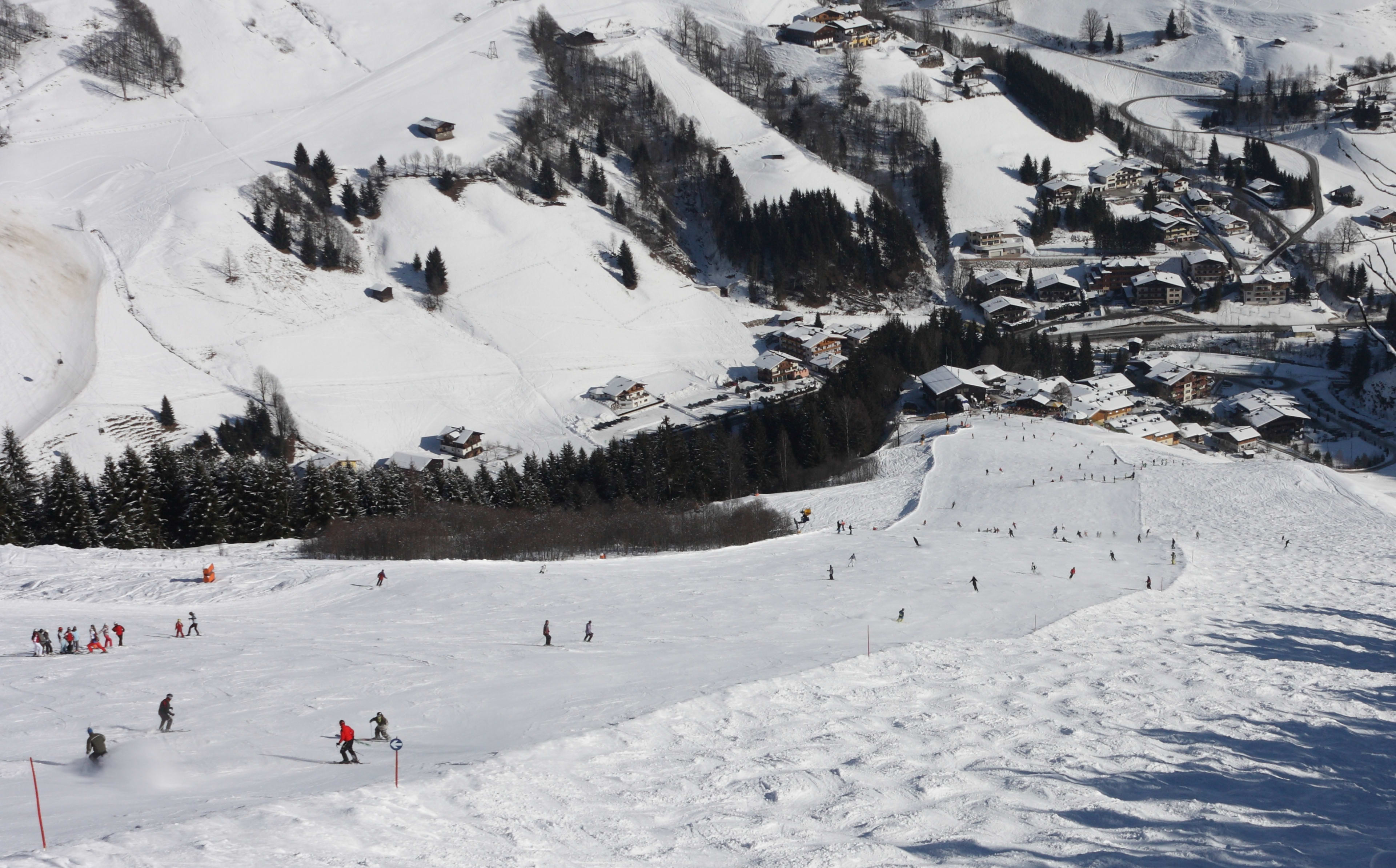
Saalbach Hinterglemm has built its international identity on a single concept: the outdoor après-ski terrace. The connecting piste between Saalbach and Hinterglemm village centres passes a chain of large outdoor bars — the Hinterhag Alm, Bauer's Schi Alm, and others — that fill with skiers from around 2pm every afternoon with a volume and energy that is unusual even in Austria. This après-ski culture is not incidental to the resort's identity; it is its core proposition. The skiing is extensive and genuinely good, but Saalbach draws a crowd that is as interested in the social side as the terrain, and the resort's infrastructure, pricing, and atmosphere all reflect this balance. The Skicircus designation captures the linked area's 2025 World Cup hosting ambition as well as its connected breadth.
The 270km Skicircus piste network links four resort sectors — Saalbach, Hinterglemm, Leogang (south slope), and Fieberbrunn — connected on a single area pass. The terrain is predominantly intermediate and advanced intermediate, with cruising red and blue runs forming the bulk of the ski area. Saalbach's own sector is the most varied, with steeper pitches off the Schattberg and Zwölferkogel tops complementing the wide intermediate pistes lower down. Leogang and Fieberbrunn extend the area significantly and are less busy than the Saalbach/Hinterglemm core. A note on the broader ALPIN CARD area (408km): this combined pass covers additional resorts in Zell am See–Kaprun, but these are separate valleys with no ski connection — the ALPIN CARD is a multi-resort pass, not a linked ski area.
The Skicircus base at 1,003m and summit at 2,169m places it in the mid-altitude category for Austrian resorts — reliable natural snow in a normal winter, with significant snowmaking coverage providing a baseline for early and late season. The resort's 2025 World Championship preparation included investment in piste infrastructure and grooming. The core season runs reliably December through April. At this altitude, natural snowfall is more variable than at glacier-accessed Austrian resorts, and warm spells can affect lower pistes; snow reliability on north-facing terrain above 1,500m is significantly stronger.
Seventy lifts serve the Skicircus — one of the densest lift networks in Austria for the area covered. The infrastructure includes high-speed gondolas and chairlifts that provide efficient circulation across the four resort sectors. The central connecting gondola between Saalbach and Hinterglemm forms the backbone of the ski area. Peak-season queuing at the most popular morning departure points (the Kohlmais gondola in Saalbach is the main bottleneck) can be managed by starting early or choosing less central departure points. The lift system's breadth means that strategic routing avoids most queues during typical weeks.
Saalbach and Hinterglemm are traditional Austrian ski villages connected by an undulating piste rather than road — the villages feel continuous when skiing between them. Accommodation ranges from family-run pensions and mid-range hotels through to high-end chalet-style properties and large hotel complexes. Ski-in/ski-out accommodation is available at various quality levels. The village infrastructure is well-developed: boot warmers, ski storage, and equipment hire are all easy to organise. Hinterglemm is quieter than Saalbach and suits families or those who want access to the après-ski proximity without being on top of it.
Salzburg is the most convenient airport for most European visitors — about 65 minutes by road via the B311 valley road, which is straightforward in normal conditions but can require snow chains after heavy snowfall. Munich (MUC) is the better choice for long-haul or non-charter visitors, at around 2 hours. A transfer coach service runs from both Salzburg and Munich airports during the winter season. The nearest town is Zell am See, about 20km away, with a train connection to Salzburg; from there, a connecting bus to Saalbach runs on a regular schedule in winter.
Salzburg (SZG) is the closest major airport at just over an hour via the B311 Pinzgau road, and is served by seasonal charter and scheduled services from across Europe. Munich (MUC) is a larger international hub at around 2 hours and is the practical choice for visitors from the USA, Asia, or beyond the European charter network. Innsbruck (INN) offers another well-connected alternative at around 1.5 hours via Kitzbühel. Road conditions in the approach valleys can require snow chains after heavy snowfall.
Saalbach is priced at the upper end of the Austrian resort market. A 6-day adult Skicircus lift pass runs approximately €270–310 for the 2025/26 season. The broader ALPIN CARD covering Zell am See–Kaprun is also available but priced higher and covers non-connected terrain. Day tickets are proportionally expensive. Accommodation and dining pricing reflects a major destination resort — comparable to Ischgl or St. Anton for the Austrian benchmark. The resort attracts a large UK charter ski market, and package deals bought early typically offer better value than walk-in pricing.
Adult 6-day Skicircus pass approximately €270–310 (2025/26 season). The broader ALPIN CARD covers Zell am See–Kaprun but is not a connected ski area. Verify current rates at saalbach.com.
This is an approximate editorial reference for the season noted. Always check the official resort website for current prices.
All price references are editorial estimates for the 2025/26 season. Current season prices may differ; verify at the official resort website before booking.
The après-ski terrace bars on the Saalbach–Hinterglemm connecting piste represent the defining characteristic of Saalbach's social identity. The Hinterhag Alm, Bauer's Schi Alm, and the Goaßstall are the most established institutions, each filling with hundreds of skiers from around 14:00, with live music, outdoor DJs, and an atmosphere that peaks between 15:00 and 17:30. The evening transitions into village bars and nightclubs; the après-ski energy extends through the night for those who commit to it. Dining covers all standard Austrian resort categories — hütten lunch, pizza, Austrian classics, and a small number of more considered restaurants in the larger hotels.
Ski to Fieberbrunn via Leogang on a clear day — the terrain on the far side of the Skicircus is consistently less busy than Saalbach's central sector, and the long cruising descents on the Fieberbrunn south-facing slopes are excellent. The Schattberg X-press gondola accesses the north-facing terrain above Saalbach village, which holds powder longest after snowfall — arrive at the gondola by 08:15 on powder mornings to ski the first runs before they fill in. The 2025 World Championships race piste (Super-G and Downhill course) is open as a red run for the general public outside race periods — a rare opportunity to ski a legitimate World Cup course. Book the outdoor terrace bars on particularly sunny spring days as tables fill very quickly.
Après-ski (9.5) reflects Saalbach's exceptional and well-deserved reputation as one of the top après-ski destinations in the Alps — the outdoor terrace bars on the connecting piste between Saalbach and Hinterglemm are among the most visited in Austria. Terrain variety (8.5) reflects the genuine breadth of the 270km Skicircus across four resort sectors. Snow reliability (7.5) is calibrated for mid-altitude Austrian resort conditions — the base at 1,003m and top at 2,169m give Saalbach less snow-certainty than higher glacier resorts, and the season is dependent on natural and artificial snow in a typical Alpine pattern.
Austria's most beautiful ski village — Lech Zürs anchors Ski Arlberg, Austria's largest connected ski area, with 305km of pistes.

The Jungfrau Ski Region — 211km of piste beneath the Eiger's north face, two car-free Alpine villages, and a UNESCO World Heritage backdrop.

Ski in the shadow of the Matterhorn across 322 kilometres of car-free Alpine perfection.
Support our independent research and help us add more ski resorts.
☕ Buy us a coffee