
9.0Exceptional
Aspen Snowmass
Four mountains, one legendary ski town — from Buttermilk's beginner slopes to Highlands Bowl's world-class hike-to terrain.
InSapphoWeTrust / CC BY-SA 2.0
Best for
Strengths
Lower-scoring areas
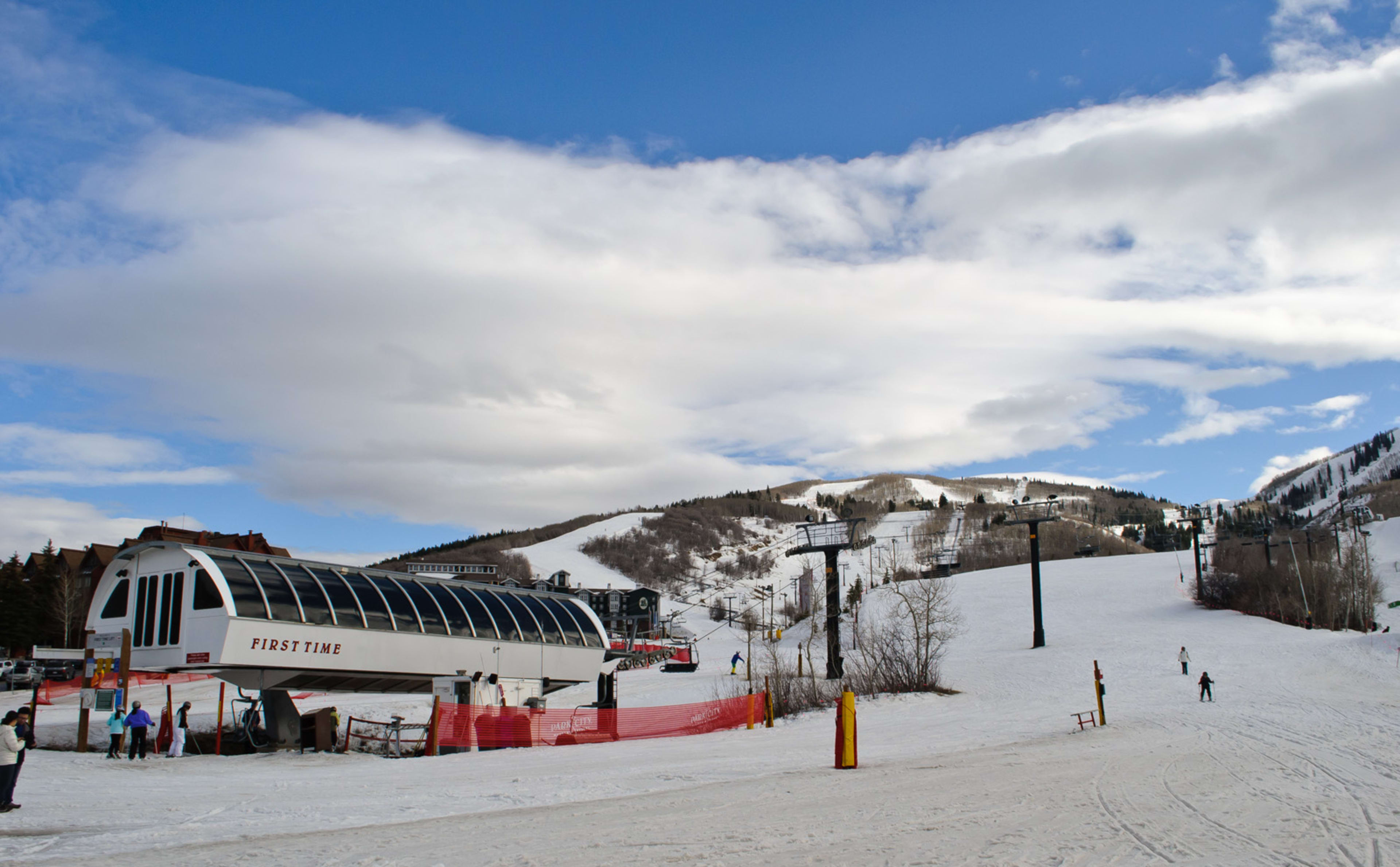
Park City was a silver-mining boomtown in the 1870s before the mines closed and skiing arrived in the 1960s, and Main Street still runs through the original townsite — brick storefronts, a genuine historic district, and a walkable pedestrian core that gives Park City a level of authenticity rare among large American resorts. The 2015 merger of the formerly separate Park City Mountain and Canyons Resort, engineered by Vail Resorts via a long legal dispute over lift-easement rights, created the current 7,300-acre single resort connected by the Quicksilver Gondola. The result is a resort of genuinely national scale operating out of a town that still feels, in its historic core, like the mining settlement it once was — an unusual combination of size and place-based character.
Park City's 346 trails spread across the original Park City Mountain side (steeper, more varied terrain closer to town) and Canyons Village (broader, more spread-out intermediate cruising with its own extensive bowl and glade terrain), connected by the Quicksilver Gondola. The terrain mix — 8% beginner, 41% intermediate, 28% advanced, and 23% expert — gives genuine breadth for mixed-ability groups, with long groomed runs on the intermediate side and a fair amount of steep, technical terrain (including several named double-black chutes) for stronger skiers. Six terrain parks cater to freestyle skiers and snowboarders. The scale means a full week is realistically needed to ski the whole resort without repeating runs.
Utah's climate produces the state's marketed 'Greatest Snow on Earth' — a low-moisture, light powder that falls in significant volume (averaging around 286 inches / 725cm annually) due to the specific interaction of Great Salt Lake moisture with the Wasatch Range's elevation and orographic lift. Park City's relatively high base elevation (2,073m) helps preserve snow quality through the season. Extensive snowmaking covers key connector and base-area runs, providing a hedge against any lean natural-snowfall stretches. Utah's snow is genuinely differentiated from Colorado's — lighter and drier on average — and is a significant part of Park City's international drawing power.
Park City runs 41 lifts, including the Quicksilver Gondola connecting the two mountain sides and numerous high-speed six-packs and quads distributed across both Park City Mountain and Canyons Village. Vail Resorts has invested heavily in lift infrastructure since acquiring and merging the two resorts, and the network is among the most modern and highest-capacity in North America. Queuing can still develop at peak base-area lifts on the busiest holiday and weekend days, given the resort's popularity and proximity to a major metro airport, but the overall lift-to-terrain ratio is generous by industry standards.
Old Town, around Main Street, offers the most character — historic buildings converted into boutique hotels, condominiums, and short-term rentals within walking distance of both restaurants and the Town Lift into the ski area. Canyons Village, by contrast, is a larger, more purpose-built base area with hotel towers, condominiums, and direct gondola access, better suited to families wanting ski-in/ski-out convenience over historic atmosphere. Deer Valley, a separate ski-only luxury resort a short drive away, adds a further high-end lodging option for visitors willing to base outside Park City Mountain's own footprint. The town overall has an unusually deep restaurant and retail scene for its size.
Salt Lake City International (SLC) is one of the most convenient major airports of any large North American resort, roughly 40 minutes away via Parleys Canyon on I-80. Extensive domestic and a growing number of international routes serve SLC directly. Shared shuttles, private transfers, and UTA's PC-SLC Connect public bus all run regularly between the airport and the resort; self-drive rental is popular given the short, generally well-maintained drive, though the Parleys Canyon grade demands caution during active snowstorms.
Salt Lake City International (SLC) is one of the closest major airports to any large North American resort, roughly 40 minutes by road via Parleys Canyon in normal conditions. Winter storms and holiday traffic can extend this to well over an hour, particularly on peak Saturdays. Shared and private shuttle services run frequently from the airport, alongside UTA's PC-SLC Connect public bus service; self-drive is straightforward but the Parleys Canyon grade should be treated with caution in active snowfall.
Park City is priced at the top of the North American resort market: dynamic single-day lift tickets for the 2025/26 season range from roughly USD 149 on the cheapest advance-purchase days to over USD 350–385 during Christmas and New Year peak periods, with the 2026/27 season's peak-day rate reaching USD 369. The Epic Pass (Vail Resorts' multi-resort season pass) is by far the most cost-effective option for repeat visitors, also covering Vail, Whistler Blackcomb, and dozens of other resorts. Accommodation and dining in Park City run at premium levels consistent with the resort's scale and its short, convenient airport transfer.
Adult single-day lift ticket ranges approximately USD 149–385 depending on date and advance booking (2025/26 season, dynamic pricing). Epic Pass season pass also available. Verify current rates at parkcitymountain.com.
This is an approximate editorial reference for the season noted. Always check the official resort website for current prices.
All price references are editorial estimates for the 2025/26 season. Current season prices may differ; verify at the official resort website before booking.
Main Street carries Park City's evening energy — bars, breweries, and a genuinely deep restaurant scene occupy the historic buildings, ranging from casual pub fare to some of Utah's most acclaimed fine dining. High West Distillery, a whiskey distillery and saloon on Main Street, is a signature Park City institution combining Utah's liquor-licensing history with a genuinely good restaurant. Canyons Village has its own, more resort-standard dining and bar scene closer to the base lifts. The overall atmosphere is more polished and less rowdy than some major destination resorts, reflecting both Utah's more restrained drinking culture and the town's historic-district character.
Buy lift tickets well in advance online — Park City's dynamic pricing rewards early purchase substantially, and walk-up window prices during peak weeks are among the highest in North America. Base in Old Town for restaurant variety and historic character, or in Canyons Village for more straightforward ski-in/ski-out family logistics — the two areas have genuinely different characters despite being on the same resort. The Epic Pass is worth serious consideration for anyone planning more than a few days across multiple visits, given its coverage of Vail, Whistler, and dozens of other resorts alongside Park City itself.
Terrain variety (9.0) and lift infrastructure (9.0) reflect Park City's scale as the largest single resort in the US, with two formerly separate mountains now fully connected. Village charm (8.0) is unusually high for a resort of this size — historic Main Street, a real 19th-century mining town, gives Park City a level of authenticity that most large purpose-built American resorts lack. Value for money scored low (4.5): Park City is priced at the top of the North American market, with peak-day lift tickets among the most expensive in the country.
Four mountains, one legendary ski town — from Buttermilk's beginner slopes to Highlands Bowl's world-class hike-to terrain.
Colorado's most famous mountain — 5,473 acres of Front Range skiing anchored by the legendary Back Bowls.

Wyoming's authentic mountain — Corbet's Couloir, the Aerial Tram, and the steepest lift-served terrain in North America.
Support our independent research and help us add more ski resorts.
☕ Buy us a coffee