
9.0Exceptional
Lech Zürs am Arlberg
Austria's most beautiful ski village — Lech Zürs anchors Ski Arlberg, Austria's largest connected ski area, with 305km of pistes.
Jean-Maurice Gouédard / CC BY 3.0
Best for
Strengths
Lower-scoring areas
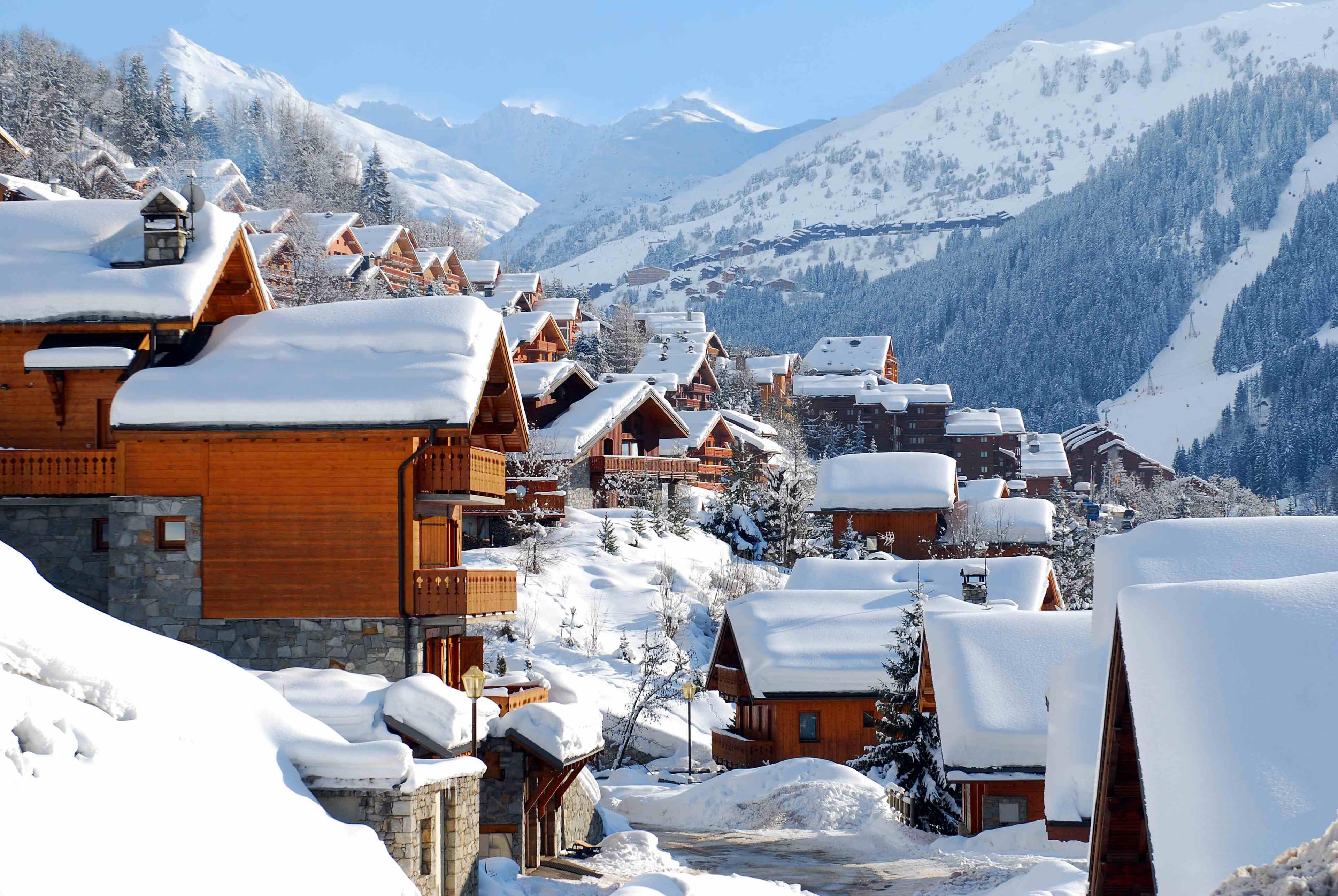
Méribel was founded in 1938 by Peter Lindsay, a British skier who fell in love with the valley and secured a concession to develop it. His insistence on a strictly enforced architectural code — all buildings in traditional Savoyard chalet style, with wood and stone facades — gave the resort a visual consistency unusual for a post-war purpose-built French station. The result is a resort that manages to feel both genuinely designed and genuinely warm, in a way that the more industrial-feeling stations of the 1970s ski boom do not. Today Méribel is firmly established as the British-market flagship of Les Trois Vallées, with a client base that skews toward affluent, return visitors — families who have been coming for decades and who value the combination of beautiful village architecture, excellent skiing access, and a lively international social scene.
The Méribel valley ski area covers 150 km of piste and 72 runs, with 43 lifts serving terrain from the village base at 1,450m to the 2,950m summit of Mont du Vallon. The valley's own terrain is strongly intermediate in character — broad, well-groomed reds and blues dominate the main face, making it an excellent home base for advancing skiers — but the diversity increases markedly as you move through the valley, particularly toward the Saulire summit above Courchevel and the Col de la Loze plateau connecting toward Courchevel 1850. The real draw for strong skiers is the Three Valleys connection: a full Three Valleys pass adds Courchevel's 150+ km and Val Thorens' 150+ km sectors to the Méribel base, creating an interconnected skiing network of 600 km that can be explored across an entire week without repeating terrain.
The Méribel valley's elevation range — 1,450m base to 2,950m summit — gives it solid but not exceptional snow reliability by high-Alpine standards; the mid-valley altitude can be affected by warm spells in late season, and snowmaking covers the key lower pistes and connector runs into the village. The upper mountain above 2,000m holds snow well through the main season, and the connection to the Val Thorens high-altitude sector at 2,300m base via the Col de la Loze gives access to the most snow-reliable skiing in the Three Valleys when conditions are marginal lower down. The resort's December–April window is reliable in most years, with the best powder days typically arriving with north-westerly weather systems in January and February.
The Méribel valley is served by 43 lifts — gondolas, high-speed detachable chairs, and older fixed chairs on less-trafficked runs — providing efficient access up the main valley face and to the inter-valley connections toward Courchevel and Val Thorens. The Olympe gondola from Méribel village and the Saulire gondola from Méribel-Mottaret are the principal connections to the upper mountain and the Courchevel boundary. The infrastructure is well-maintained and continuously renewed; lift queuing is most pronounced during French and British school holidays, when the Saulire gondola can generate 20–30 minute waits at peak morning hours.
Méribel village itself and the satellite of Méribel-Mottaret together form the main accommodation centre, with the village proper offering the best architectural quality and the highest concentration of restaurants and bars. Mottaret, 4 km up the valley and slightly higher at 1,750m, is more purpose-built in feel but has genuine ski-in/ski-out access advantages. Accommodation spans a wide range from self-catering studios to luxury catered chalets — the latter being something of a Méribel speciality, with the British chalet operator market particularly concentrated here. The village-level options are the most charming and the most expensive.
Chambéry Savoie Mont Blanc (CMF) is the nearest airport at approximately 1 hour 35 minutes and is principally used by seasonal UK charter flights in the winter season. Geneva International (GVA) and Lyon Saint-Exupéry (LYS), both around 2.5 hours, are the recommended options for most international travellers given their year-round schedules and breadth of carrier choice. The transfer road follows the main Tarentaise valley to Moûtiers before climbing the Méribel valley — well-serviced by transfer coaches and private taxis, and manageable by self-drive in most conditions, though the valley road can be heavy with traffic on peak Saturdays.
Chambéry (CMF) is the nearest airport at around 1 hour 35 minutes by road, though its schedules are largely seasonal charters and its capacity is limited compared to the major hubs. Geneva (GVA) and Lyon (LYS), both approximately 2.5 hours away, offer considerably more year-round and international flight options and are the recommended choices outside the peak British charter season. The transfer into Méribel follows the main Moûtiers valley road before climbing the Méribel valley — a straightforward if busy approach on peak changeover Saturdays.
Méribel is priced at the premium end of the French Alps market, and has been moving progressively upmarket over the past decade. A 6-day adult Méribel-only lift pass runs approximately €235–280 for the 2025/26 main season; a full Three Valleys pass covering Méribel, Courchevel, and Val Thorens is substantially more expensive and widely regarded as essential for getting full value from the location. Accommodation, dining, and après-ski costs are all at the upper end of the French Alps range — self-catering apartments are available and more affordable, but the resort's reputation for catered chalets and restaurant dining reflects where most visitors choose to spend.
Adult 6-day Méribel valley pass approximately €235–280 (2025/26 main season); full Three Valleys pass covers Méribel, Courchevel and Val Thorens at a higher rate. Verify current rates at meribel.net.
This is an approximate editorial reference for the season noted. Always check the official resort website for current prices.
Méribel's social scene is famously lively and British-heavy — the resort has more British bars, restaurants, and visitors per capita than almost any other French resort, with the pubs and après-ski bars around the centre of Méribel village filling rapidly as lifts close. The Lodge bar, the Jack's Bar area, and the numerous restaurant-bars along the main village street create a concentrated, walking-distance après-ski strip. Dining ranges from British pub food to serious French cuisine, with several mountain restaurants offering exceptional views from the Saulire and Plan de l'Homme sectors. La Folie Douce operates at Méribel-Mottaret's altitude, adding the daytime-party energy that characterises the brand's other Three Valleys locations.
Buy the full Three Valleys lift pass rather than the Méribel sector-only ticket — the point of basing yourself here is access to the network, and the Courchevel and Val Thorens sectors both offer terrain and villages well worth a day's exploration. Ski the Col de la Loze connection toward Courchevel on a quiet morning for the best of the Saulire ridge terrain. The Roc de Fer sector above Méribel-Mottaret is underutilised relative to the main village face and holds better snow through the week. For catered chalets, book as early as possible — the best operators fill the peak weeks by May.
Terrain variety (9.0) reflects Méribel's position as the gateway to Les Trois Vallées — while the profile statistics cover the 150 km Méribel valley sector only, a full Three Valleys lift pass gives access to 600 km of interconnected skiing across seven resorts. The valley's own 150 km domain is excellent in its own right. Value for money (5.0) reflects Méribel's positioning as one of the more expensive Three Valleys stations: accommodation, dining, and lift pass costs are at the premium end of the French Alps market.
Austria's most beautiful ski village — Lech Zürs anchors Ski Arlberg, Austria's largest connected ski area, with 305km of pistes.

The Jungfrau Ski Region — 211km of piste beneath the Eiger's north face, two car-free Alpine villages, and a UNESCO World Heritage backdrop.

Ski in the shadow of the Matterhorn across 322 kilometres of car-free Alpine perfection.
Support our independent research and help us add more ski resorts.
☕ Buy us a coffee