
9.0Exceptional
Lech Zürs am Arlberg
Austria's most beautiful ski village — Lech Zürs anchors Ski Arlberg, Austria's largest connected ski area, with 305km of pistes.
Best for
Strengths
Lower-scoring areas
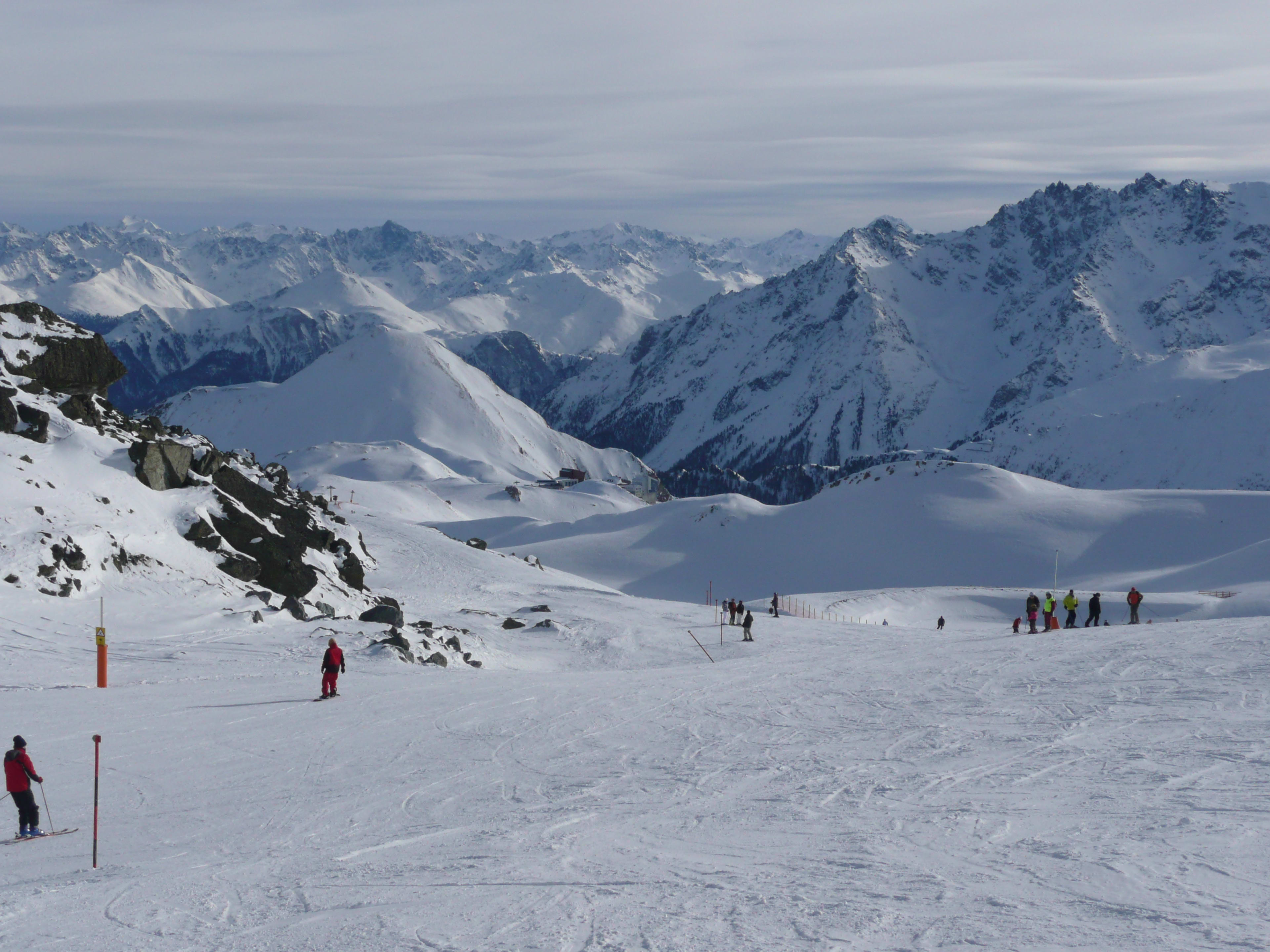
Ischgl built its international reputation on a single proposition: exceptional skiing at high altitude, packaged with Europe's most extravagant après-ski culture. The resort is not modest about this — the Top of the Mountain Opening and Closing concerts are genuinely extraordinary events by any standard, filling the slope beneath the Idalp plateau with 40,000 people listening to headliners who would command stadium shows elsewhere. Between those seasonal bookends, Ischgl operates as a serious high-altitude ski resort that takes justifiable pride in its infrastructure, its snowmaking capacity, and its season length — one of the longest in Austria. It attracts a heavily German and Austrian domestic market alongside Scandinavians and an increasingly international crowd who come for the combination of reliable skiing and reliable revelry.
The Silvretta Arena's 238km covers both the Austrian (Ischgl) and Swiss (Samnaun) sectors of the mountain. The Austrian side is the skiing side: long, high red runs descending from the Palinkopf (2,864m) and the Idalp plateau, with a genuine variety of terrain between the groomed arterials and the off-piste bowls that open up in good conditions. The Swiss sector at Samnaun is primarily a shopping district — duty-free perfume and alcohol — with adequate piste connections back to Ischgl but without the same skiing character. For intermediates, the main Ischgl runs offer some of the longest groomed descents in Tyrol; the Fimbatal run down the back of the mountain is 8km and a resort highlight. Off-piste is available but not the primary draw.
At 1,400–2,872m, Ischgl's altitude gives it reliable season-long snow conditions by Austrian standards. The resort opens in late November and reliably closes in early May — a six-month season that few Austrian resorts can match. Snowmaking covers the village return pistes; the upper mountain above 2,000m holds natural snow from December onwards and rarely requires artificial support. The Palinkopf's north-facing aspects hold cold, dry powder for several days after a storm. An overall snow reliability rating of 8.5 reflects genuine high-altitude consistency.
Ischgl runs 45 lifts — a relatively small number for the terrain size, but this is intentional: the infrastructure prioritises high-capacity gondolas and large chair lifts over multiple smaller installations. The result is one of the most efficient lift networks in Austria, with throughputs that handle weekend crowds without the chronic queuing problems that affect lower-investment resorts. The Silvretta cable car, the Pardatschgratbahn, and the Flimjochbahn are the key high-altitude access points. The cross-border connection to Samnaun operates by cable car from the Idalp plateau. Recent investment has included major gondola upgrades; the technology is modern throughout.
Ischgl's village is a purpose-built resort that grew from a small farming settlement in the 1960s and 1970s. It lacks the historic character of Kitzbühel or St. Anton's old town, but compensates with quality infrastructure: several four- and five-star hotels, extensive apartment and chalet stock, and a resort centre oriented entirely toward the skiing and après-ski experience. The Trofana Royal is the flagship five-star — a large, well-appointed property with a serious spa and one of Austria's best wine lists. Mid-range four-star hotels include the Madlein, Silvretta, and Elisabeth. Accommodation prices are high by Austrian standards, reflecting the resort's premium positioning.
By road, Ischgl is accessed via the A12 motorway (Inntal Autobahn) from Innsbruck, exiting at Landeck and then driving 35km up the Paznaun valley on the B188. There is a toll tunnel (Finstermünztunnel) on this route in winter; check conditions. No scheduled rail service reaches Ischgl — Landeck-Zams station, 35km away, is served by OBB from Innsbruck and transfer buses or taxis run onward. Coach services from Innsbruck, Munich, and Zurich operate during the ski season. Parking in the resort is managed; advance reservation of garages is recommended for busy periods.
Ischgl is most conveniently reached by road: the A12 Inntal motorway from Innsbruck exits at Landeck, then the Paznaun valley road (B188) runs 35km to the resort — approximately 1 hour 30 minutes total from Innsbruck. There is no rail station in Ischgl; the nearest is Landeck-Zams (35km), from which buses and taxis transfer to the resort. Driving from Munich Airport takes approximately 2 hours 55 minutes.
A 6-day Silvretta Arena adult lift pass costs approximately €280–315 for the 2024/25 season. This is competitive for the quality and size of the area. Accommodation in Ischgl commands a premium by Austrian standards — a four-star hotel week in high season (February) will typically cost €1,500–2,500 per person half-board. After-ski and dining costs are high: drinks in the Kitzloch and Trofana Alm are priced to match the experience. Budget somewhat more than comparable Austrian resorts of the same mountain standard.
Adult 6-day Silvretta Arena lift pass approximately €280–315 (2024/25 season). Covers both Ischgl (Austria) and Samnaun (Switzerland). Verify current rates at ischgl.com.
This is an approximate editorial reference for the season noted. Always check the official resort website for current prices.
All price references are editorial estimates for the 2024/25 season. Current season prices may differ; verify at the official resort website before booking.
The après-ski sequence in Ischgl is an institution. The Kitzloch, at the base of the main Idalp gondola, opens at 15:00 and by 15:30 is an indoor standing crowd in ski boots dancing to live music. The Trofana Alm — the outdoor section of the Trofana Royal hotel complex — draws a slightly older, wealthier crowd. The Elizabeth Hutte on the mountain serves good food alongside the après atmosphere. Moving into evening, the resort has a genuine club scene: Goldener Adler, Nachtflug, and Living Room take over from around 22:00. For food, the Trofana Royal's Paznauner Stube is Michelin-starred; more casual options include Steinböck and the mountain restaurant at the Idalp top station.
The Opening Concert (late November) and Closing Concert (late April/early May) are extraordinary experiences but require booking accommodation 12–18 months in advance — they are essentially sold out before the current season ends. For a quieter ski visit, the first two weeks of December and any weekday in March offer the mountain with manageable crowds and excellent conditions. The Fimbatal valley run — accessed from the Fimbajoch — is 8km of almost entirely off-piste terrain through a beautiful high valley; take it on a day when it is freshly marked open after snowfall. Samnaun for duty-free shopping: carry a small bag and declare your purchases at the Austrian customs checkpoint at the cable car — the process is routine but required.
Après-ski scored 10.0 — Ischgl's opening and closing concerts and the Kitzloch-to-village culture are simply unmatched anywhere in skiing. Village charm 7.0 reflects a purpose-built resort without historic character; it is a functional, modern ski village rather than an Alpine town. Family score 5.5 reflects the resort's clear primary identity as an adult party destination.
Austria's most beautiful ski village — Lech Zürs anchors Ski Arlberg, Austria's largest connected ski area, with 305km of pistes.

The Jungfrau Ski Region — 211km of piste beneath the Eiger's north face, two car-free Alpine villages, and a UNESCO World Heritage backdrop.

Ski in the shadow of the Matterhorn across 322 kilometres of car-free Alpine perfection.
Support our independent research and help us add more ski resorts.
☕ Buy us a coffee