
9.0Exceptional
Lech Zürs am Arlberg
Austria's most beautiful ski village — Lech Zürs anchors Ski Arlberg, Austria's largest connected ski area, with 305km of pistes.
Best for
Strengths
Lower-scoring areas
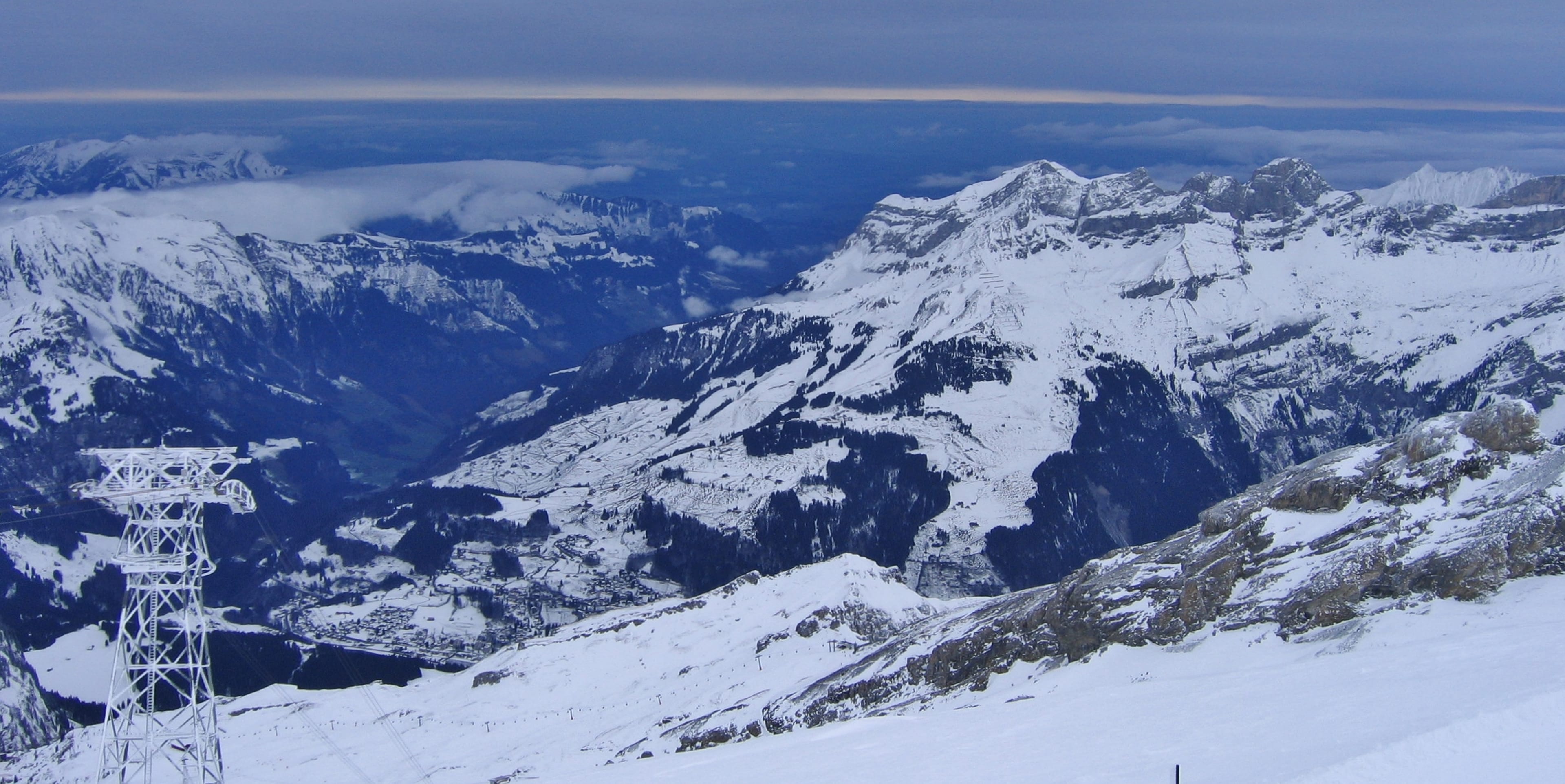
Engelberg's character is shaped by two things that coexist in unusual harmony: its history as a Benedictine monastic settlement (the Abbey at the valley floor dates to 1120) and its modern identity as one of Switzerland's highest-altitude ski resorts. The village has retained more authentic Swiss character than many Alpine ski towns that were rebuilt around resort infrastructure — the Abbey church still anchors the main square, and the valley floor retains the feel of a working mountain community. This combination of cultural depth and high-altitude skiing draws a notably diverse mix: Japanese and Chinese visitors flock to the Rotair for the glacier experience, while Swiss and European skiers come for the terrain and season length.
Engelberg's 82km of pistes spread across a single primary ski zone accessed via the Titlis cable car stages from the village, with the majority of runs concentrated above the Trübsee plateau. The 25 marked runs are heavily weighted toward red (14 runs, 53km) with 10 blues (25km) and a single demanding black (4km). The longest continuous descent runs approximately 12km from the top station to the valley. Gelände off the marked piste system is extensive — the powder fields and couloirs in the Laub, Galtiberg, and Stand areas are among the best ungroomed terrain accessible from a lift system in Central Switzerland. Deep powder days after significant snowfall attract a serious backcountry-adjacent crowd.
The Titlis Glacier holds consistent snow from October through May, and the upper mountain typically carries cold, dry conditions across a full winter-length season. The October opening and May closing dates are real rather than aspirational — the glacier terrain genuinely holds skiiable snow outside the core months, which is increasingly rare in the Alps as resort seasons compress. A note of realism: the Titlis Glacier is actively receding and is projected to diminish significantly over coming decades; the glacier skiing that exists today will be reduced in future seasons. Below 2,500m, conditions are more variable and snow quality varies with altitude and aspect.
Twenty-six lifts serve the Engelberg area, structured around a four-stage cable car ascent from the village: the Gondelbahn to Gerschnialp (1,262m), the Trübsee cable car (1,796m), Stand (2,428m), and the Rotair revolving cable car to Klein Titlis (3,028m). The Rotair completes a 360-degree rotation during its 5-minute ascent and has become one of the Alps' iconic lift experiences in its own right. The Titlis Cliff Walk, a 100m suspension bridge at the summit, is the highest suspension bridge in Europe. Supporting infrastructure includes multiple chairlifts and drag lifts serving the Trübsee and Jochstock areas. Weekend queuing for the upper cable cars can be significant during peak European school holidays.
Engelberg village is compact and easily walkable — the station, Abbey, and lower lift terminals are all within a short stroll of each other. Accommodation ranges from small family-run hotels and B&Bs through to a handful of 4-star properties, predominantly clustered along the main valley floor. The resort lacks the luxury ski-in/ski-out chalet economy of Swiss resorts like Verbier or Zermatt, which keeps prices somewhat lower while maintaining good accessibility. Several hotels operate on a half-board basis that suits the mountain schedule well. The village shuts down comparatively early by party-resort standards — Engelberg's evening scene is genteel rather than energetic.
Zurich (ZRH) is the primary gateway — about 90 minutes by road or rail, with the train journey via Lucerne and the Zentralbahn mountain railway delivering you directly to Engelberg station at the village centre. The train from Zurich runs hourly and is reliable year-round, making Engelberg one of the most car-free-accessible high-altitude Swiss resorts. Basel EuroAirport provides an alternative for visitors from the UK and northwest Europe at around two hours. Car is also practical: the A2 motorway runs past Stans before the valley road climbs to Engelberg, and parking is available at the resort base.
Zurich International (ZRH) is the natural gateway at around 90 minutes by car via Lucerne, and also accessible by train from Zurich HB to Engelberg station with a change in Lucerne (approximately 90 minutes total, with trains running hourly). Basel EuroAirport is around two hours by road or rail. Engelberg is one of the more car-free-friendly Swiss resorts; the train station sits at the base of the village and connects directly to the lower gondola stations.
Engelberg is Swiss in its pricing structure: a 6-day adult ski pass for the Titlis ski area runs approximately CHF 350–400 (roughly €370–420) for the 2025/26 peak season. Day tickets are proportionally high — CHF 75–80. Accommodation, food, and equipment hire follow Swiss norms and represent a meaningful premium over comparable Austrian or Italian resorts. The extended season (October–May) means early and late-season visitors find better rates across the board; April and early May in particular can combine good snow on the upper mountain with noticeably lower prices.
Adult 6-day ski pass approximately CHF 350–400 (2025/26 peak season). Day tickets approximately CHF 75–80. Verify current rates at titlis.ch.
This is an approximate editorial reference for the season noted. Always check the official resort website for current prices.
All price references are editorial estimates for the 2025/26 season. Current season prices may differ; verify at the official resort website before booking.
Engelberg's village atmosphere is quiet and family-oriented by Swiss ski resort standards, with the après-ski scene concentrated in a small number of bars and hotel terraces rather than the large outdoor concert venues of Austrian resorts. The mountain restaurant at Trübsee and the glacial experience at the Rotair top station serve as daytime social hubs; the Iglu-Dorf snow village at 2,428m is one of the most photogenic ice restaurant experiences in the Alps. Village dining tends toward Swiss comfort food and fondue, with a selection of international options. The resort attracts a notably multicultural crowd — the Titlis glacier experience is marketed heavily in Asia, and the resort's visitor base reflects this.
To ski the glacier in optimal conditions, time your Rotair ascent for before 10am on clear days — visibility and snow surface quality both degrade with sun and crowd traffic. The off-piste terrain in the Laub area below Klein Titlis is best accessed immediately after snowfall before it is tracked out; the Bowl beyond the Stand cable car is also exceptional after fresh snow but requires awareness of avalanche conditions. The Nid d'Aigle run off the back of the Stand area is not marked on the piste map but is a classic descent with a guide. For cost savings, the April ski pass dates offer significantly better value than peak January rates while the glacier terrain remains fully open. The Abbey Church and the Abbey cheese dairy in Engelberg village are worth visiting on a rest day.
Snow reliability (8.5) reflects the glacier-anchored season running October to May, with the Klein Titlis terminus at 3,028m providing genuine cold-season security across most of the upper mountain. Scenic beauty (9.0) acknowledges the extraordinary visual drama of the Rotair ascent and the high-alpine glacier environment. Terrain variety (7.5) is constrained by 82km of marked pistes — substantial for a single-valley Swiss resort but modest compared with larger linked areas; the 25 runs skew red and intermediate. Value for money (5.0) reflects Swiss pricing norms: Engelberg is not cheap, though it is comparably priced to similar-altitude Swiss resorts.
Austria's most beautiful ski village — Lech Zürs anchors Ski Arlberg, Austria's largest connected ski area, with 305km of pistes.

The Jungfrau Ski Region — 211km of piste beneath the Eiger's north face, two car-free Alpine villages, and a UNESCO World Heritage backdrop.

Ski in the shadow of the Matterhorn across 322 kilometres of car-free Alpine perfection.
Support our independent research and help us add more ski resorts.
☕ Buy us a coffee