
9.0Exceptional
Lech Zürs am Arlberg
Austria's most beautiful ski village — Lech Zürs anchors Ski Arlberg, Austria's largest connected ski area, with 305km of pistes.
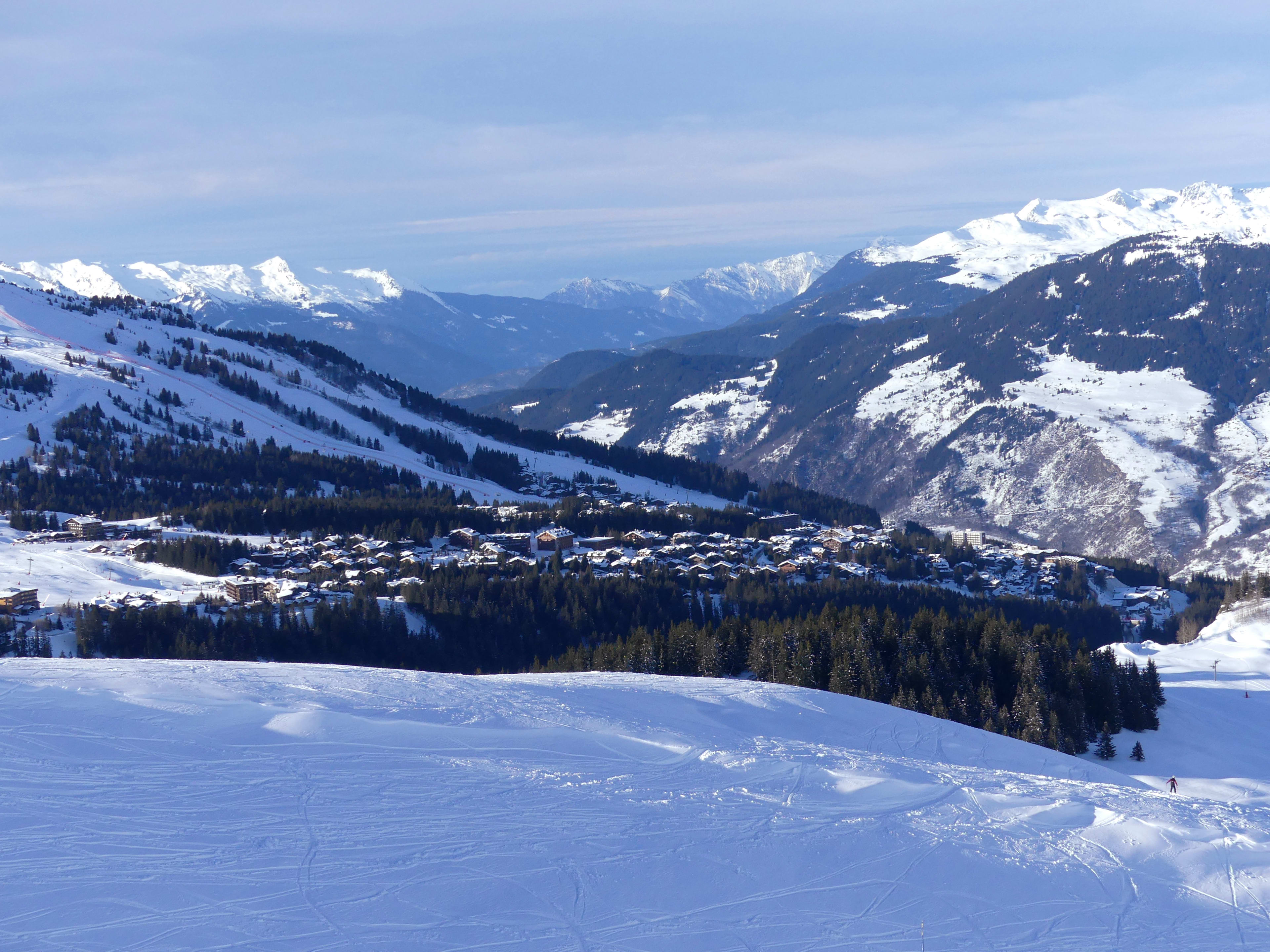
Florian Pépellin / CC BY-SA 4.0
Best for
Strengths
Lower-scoring areas
Courchevel has always been synonymous with prestige — it was purpose-built in 1946 as a showcase of French post-war modernism, and has spent the subsequent seven decades refining that vision into the most consistently rarefied resort experience in European skiing. The four villages have distinct personalities: Le Praz is the most authentic and understated, with traditional Savoyard character; Village and Moriond are quieter and more family-oriented; Courchevel 1850 is the global luxury benchmark, attracting the private-jet set and royalty alongside serious skiers who appreciate what world-class infrastructure feels like at altitude. The 2011 rebrand replaced altitude numbers with French names as part of a deliberate effort to emphasise place identity over technical specification. The resort co-hosted the 2023 FIS Alpine World Ski Championships, staging the technical events (slalom, giant slalom) on the Emile Allais piste.
Courchevel's 150 kilometres of pistes deliver a comprehensive range of difficulty across 96 marked runs, with the mountain split broadly between the open above-treeline terrain of the upper Courchevel sector (accessed from the top stations at La Vizelle and Signal) and more sheltered, varied mid-mountain runs. The 19 green and 35 blue runs make Courchevel genuinely accessible for beginners and confident intermediates, while the 34 red and 8 black pistes provide a meaningful challenge at altitude. The Trois Vallées connection — accessed via the Loze sector — unlocks access to Méribel's 150 kilometres and Val Thorens' 140 kilometres on a single pass, producing the world's largest linked ski network at 600 kilometres total. Expert skiers will find the Chanrossa sector and the ungroomed terrain below La Croix de Jean-Claude rewarding, though this is not an off-piste freerider's mountain in the Chamonix sense.
Courchevel's 1,850m base and 3,230m summit position it at the reliable end of the French Alps spectrum. The resort's high-altitude terrain holds snow well into April, and snowmaking coverage on the key approach pistes from all four villages protects the lower-mountain connections even in low-snow years. The Tarentaise Valley is one of the most consistent snow zones in the Alps — the statistical average for the sector is strong — and the resort's east-to-northeast aspect on the Courchevel side provides good cold-shadow preservation. The spring skiing window, typically extending through late April, is one of Courchevel's underrated periods: the snow base is established, the sun angle is generous, and the crowds are thinner than Christmas and February half-term.
Fifty-six lifts serve the Courchevel sector, including a fleet of modern gondolas (including the landmark Verdons gondola) and high-speed heated chairlifts that set the standard for French resort infrastructure. The network is engineered to minimise bottlenecks: priority lanes for ski-school and guest passes, heated cabins across the main gondola fleet, and an efficient mid-mountain topology that rarely requires long traverses. The Aquarel gondola from Le Praz provides valley-floor access for the lowest-altitude village. Within the Trois Vallées, two main connections reach Méribel: the Plan Peclet and La Loze links, both high-speed. The Aiguille du Fruit chair (3,002m) is one of the highest in the Courchevel sector and a landmark starting point for the couloir routes.
The accommodation spread across Courchevel's four stations covers the full range from chalets and apartments in Le Praz to the five-star palace hotels of 1850 — L'Apogée, Airelles, and Les Grandes Alpes among them. The 1850 station has been identified by several international surveys as the resort with the highest concentration of luxury hotel beds in Europe. Ski-in/ski-out access is genuinely available across most of the 1850 and Moriond stations, with direct slope access from the upper floors of many hotels at those elevations. The lower villages (Village, Le Praz) offer considerably better value with resort buses providing the connection up-mountain. The self-catered chalet market is significant throughout the resort and represents the dominant accommodation format for groups.
Geneva Airport (GVA) handles most international arrivals and is the practical first choice for visitors flying from outside France or western Europe. The A40/A43 motorway route to Moutiers and then the D915 toll road up to Courchevel takes around 2h 45min in normal winter conditions. Chambéry Airport (CMF) is the closest airport at around 1h 45min but serves primarily domestic and European short-haul routes. Lyon Saint-Exupéry (LYS) is the same distance as Geneva but offers domestic French connections and some international routes. The Courchevel altiport (LFLJ) accepts helicopter and small fixed-wing traffic seasonally; transfers from Geneva by helicopter take around 20 minutes and are widely used by the resort's top-tier clientele. Train services reach Moutiers from Paris in around 3 hours (TGV); resort transfers from the station take a further 45 minutes.
Geneva (GVA) is the primary international gateway, with the widest range of direct long-haul connections and a transfer time of around 2h 45min by road. Chambéry (CMF) is closer and well-suited to European short-haul flights, but has a significantly smaller route network. Turin (TRN) is a viable alternative at around 1h 30min, particularly useful for transalpine routes. Courchevel also has its own private altiport (LFLJ/CVF) at 2,008m with a sloped runway — operated seasonally for private jets and helicopters, and a landmark in its own right. Road transfers involve a final climb through the resort road from the valley floor; winter tyres or chains may be required.
Courchevel operates at the upper tier of Alpine lift pass pricing. A six-day Trois Vallées adult pass runs approximately €370–420 depending on the season period (2024/25 rates); Courchevel-only passes are marginally cheaper. Courchevel 1850 accommodation at the luxury end runs to €1,500–5,000+ per person per week for chalet or hotel stays in peak weeks. More affordable options exist at Le Praz and Courchevel Village, where self-catered apartments offer considerably better value. Dining in the 1850 village ranges from €25–40 for a simple mountain lunch to €200+ for a full dinner at a Michelin-starred restaurant on the mountain. Equipment hire and ski school fees are at the top end of the European market across all stations.
Six-day Trois Vallées adult pass approximately €370–420 (2024/25 season, varies by booking date). Courchevel-sector-only pass available at lower price. Verify current rates at courchevel.com.
This is an approximate editorial reference for the season noted. Always check the official resort website for current prices.
All price references are editorial estimates for the 2024/25 season. Current season prices may differ; verify at the official resort website before booking.
The social atmosphere at Courchevel 1850 is unlike any other ski resort — a genuine meeting point for the international luxury market where privacy, discretion, and access to exceptional experiences are the dominant themes. Le Strato, L'Apogée, and La Saulire are all recognised for serious cuisine at serious altitude; the standard of mountain dining on the slopes compares with top-tier city restaurants. The post-skiing atmosphere in the village centres on hotel bars and exclusive member spaces rather than the mass-outdoor-terrace format of Austrian après-ski; the Courchevel sound is distinctly reserved and international rather than raucous. The lower villages, particularly Le Praz, offer a warmer, more traditionally French atmosphere with local restaurants that draw residents of all villages for dinner.
The early-morning first-lift window at Courchevel 1850 — before 09:30 — provides untracked pistes on the upper mountain before the mainstream crowd arrives. The Combe de la Saulire red run off the back of the summit lifts is one of the finest sustained descents in the sector and worth doing in freshly groomed morning condition. For off-piste, the Chanrossa sector on the Méribel side of the link offers consistently good snow on north-facing aspects; a local guide is strongly recommended for routes beyond the marked boundary. The January and early February window, between Christmas crowds and February half-term, offers the best combination of snow conditions and resort accessibility. Les Trois Vallées lift passes bought seven or more days in advance online represent the most significant available saving on standard window prices.
Value for money (4.0) reflects Courchevel's position as one of the most expensive ski resorts in the world — lift passes, accommodation, and dining at the top end sit at the absolute pinnacle of resort pricing globally. Village charm (8.0) acknowledges a genuine tension: Courchevel 1850 is architecturally purpose-built and lacks the organic Alpine village character of Lech or Zermatt, but the infrastructure quality and social atmosphere are exceptional. Lift infrastructure (9.0) reflects a modern fleet of heated gondolas and high-speed chairs that set the standard for French resort engineering. Off-piste (8.0) is strong within the Trois Vallées context — in particular the Chanrossa and La Vizelle couloirs — though dedicated freeriders may prefer Chamonix's alpinist culture.
Austria's most beautiful ski village — Lech Zürs anchors Ski Arlberg, Austria's largest connected ski area, with 305km of pistes.

The Jungfrau Ski Region — 211km of piste beneath the Eiger's north face, two car-free Alpine villages, and a UNESCO World Heritage backdrop.

Ski in the shadow of the Matterhorn across 322 kilometres of car-free Alpine perfection.
Support our independent research and help us add more ski resorts.
☕ Buy us a coffee