
9.0Exceptional
Lech Zürs am Arlberg
Austria's most beautiful ski village — Lech Zürs anchors Ski Arlberg, Austria's largest connected ski area, with 305km of pistes.
Best for
Strengths
Lower-scoring areas
Chamonix is the place where the sport was invented and where it reaches its logical extreme. The town itself pre-dates skiing by a century: it was an alpinist destination when Walter Parry Haskett Smith and the pioneers of the sport were still children. That heritage shows everywhere — in the equipment shops crammed between fondue restaurants, in the guides' offices on the rue du Docteur Paccard, in the laconic manner of locals who have watched the world's best skiers quietly walk past for decades. This is not a designed resort. It is a mountain town that happens to be the most compelling ski destination on earth, and it treats the sport with corresponding seriousness.
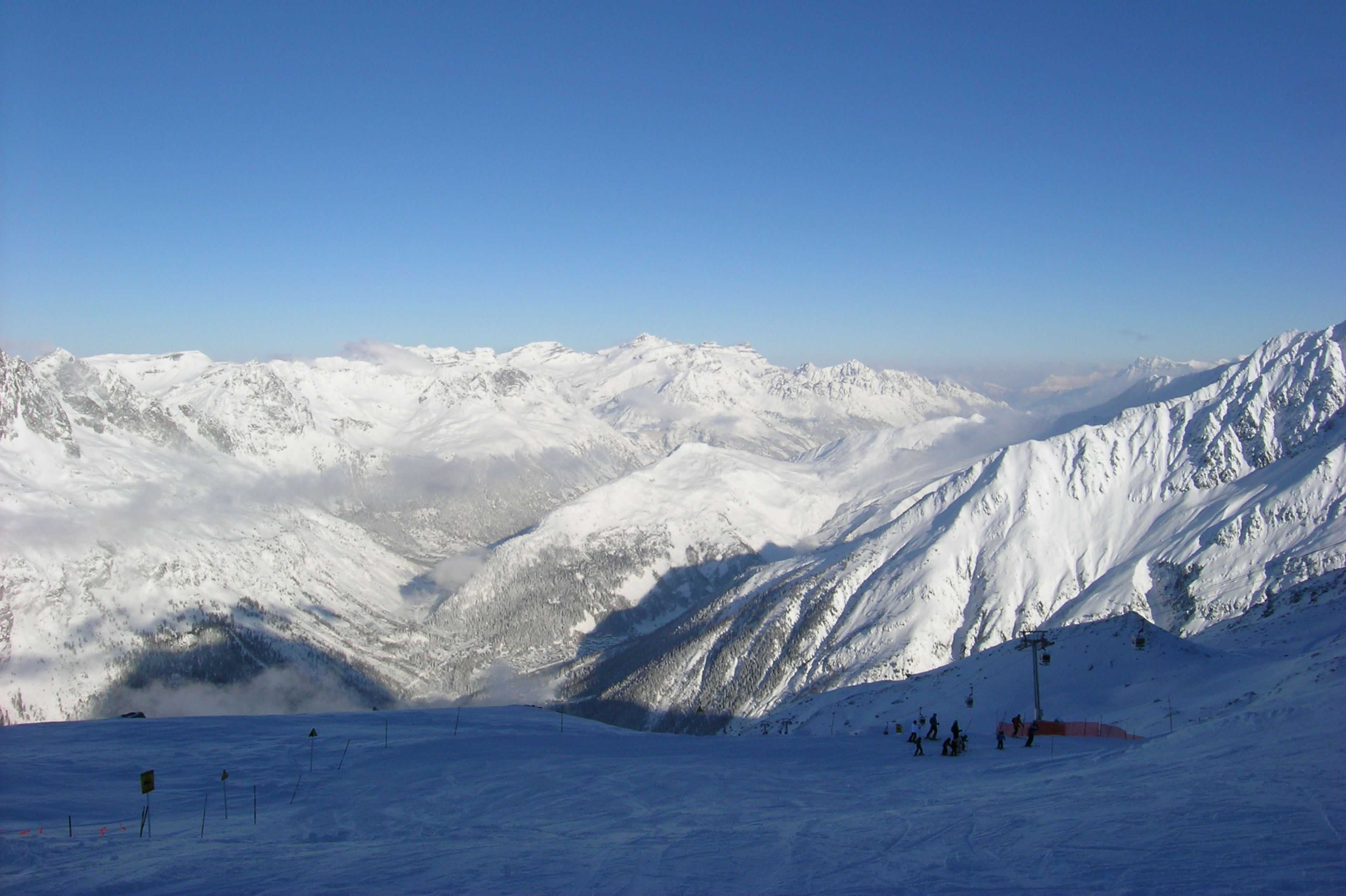
Six separate ski areas, reached by their own lift systems, stretch the length of the Chamonix valley. Les Grands Montets (Argentière sector) is the technical heart: north-facing, cold, with demanding steeps. After the 2018 gondola fire, the Lognan cable car reopened in 2022; the upper section above 3,000m is closed while a new 3S cable car system is built (due December 2026). Le Brévent and La Flégère share a linked pass and face south with fine views of Mont Blanc. Les Houches is the family zone — broad, forested, and reliably snowy. The Aiguille du Midi rises to 3,842m and is the departure point for the Vallée Blanche, which is not a ski run so much as an experience: 20km of glacier descent requiring crampons for the ridge section and a guide in all but the best conditions. Unmarked powder lines exist everywhere off the main sectors, but all carry serious avalanche and crevasse risk.
Snow at altitude — above 2,500m — is superb and among the driest in the Alps due to the Continental-inflected microclimate north of the Mont Blanc tunnel. Lower sectors, particularly Brévent and Flégère below 1,600m, suffer when warm Atlantic weather arrives; they can be brown at valley level even when the upper mountain holds perfect conditions. Overall season reliability is good in statistical terms but the character of snow is extreme: either powder above and variable below, or a uniform cement after rain on warm southwesterlies. The Grands Montets north face holds cold powder for many days after a storm.
Chamonix runs approximately 49 lifts across all sectors on the Mont Blanc Unlimited pass — cable cars, gondolas, chair lifts, and a single funicular (Montenvers railway to Mer de Glace). The Aiguille du Midi cable car is the resort's most famous installation, rising 2,807m in two stages to 3,842m; queues form quickly on clear mornings and advance booking is strongly recommended. The non-linked layout is a deliberate characteristic of the resort, not an oversight — moving between sectors requires descending to the valley by bus or taxi. The ski bus is free with a lift pass and runs frequently, but the multi-sector layout adds logistical complexity that demands planning.
Chamonix is a proper town of around 9,000 permanent residents — bakeries, a supermarket, a hospital, and a cinema exist alongside the ski shops and fondue restaurants. Accommodation ranges from no-frills dormitory hostels that cater to the alpinist crowd to the Hôtel Mont Blanc (five-star, central, historic) and a growing number of luxury chalet rentals on the hillsides. The Argentière quarter — closer to Grands Montets — attracts the serious skiers and feels a generation younger than central Chamonix. Les Houches at the valley's southern end is quieter and cheaper. In general, Chamonix offers a wider range of affordable accommodation than Zermatt or Verbier.
From Geneva Airport, the most direct option is the direct shuttle bus (multiple operators; Sat-Nav Bus being the best known) that runs the 90km valley road in approximately 1 hour 20 minutes. Car hire gives flexibility for day-trips to different sectors. The Mont Blanc Express train from Martigny (Switzerland) provides an alternative for rail travellers via Geneva Cornavin, taking approximately 2 hours 30 minutes in total. French motorway access is excellent: the A40 autoroute de Mont Blanc terminates at the valley.
Geneva is the gateway airport for Chamonix — a direct bus (Sat-Nav) or taxi runs the 90km valley road in 1 hour 20 minutes under normal conditions. The Mont Blanc Express narrow-gauge train from St-Gervais-les-Bains-Le Fayet covers the last 19km. Train from Geneva Cornavin via Martigny takes approximately 2 hours 30 minutes.
A 6-day Mont Blanc Unlimited adult lift pass costs approximately €330–370 for the 2024/25 season, covering all Chamonix sectors and the Aiguille du Midi (but not the train to Mer de Glace). The Aiguille du Midi cable car is separately ticketed for sightseers (around €68 return), though included in the ski pass for those skiing the Vallée Blanche. Food and accommodation prices are moderate by Alpine standards — considerably less expensive than Zermatt or Verbier. Equipment hire, ski schools (ESF is the main operator), and guide services are all available at competitive rates.
Adult 6-day Mont Blanc Unlimited lift pass approximately €330–370 (2024/25 season). Prices vary by booking window and age; verify current rates at chamonix.com.
This is an approximate editorial reference for the season noted. Always check the official resort website for current prices.
All price references are editorial estimates for the 2024/25 season. Current season prices may differ; verify at the official resort website before booking.
Après-ski in Chamonix centres on the rue du Docteur Paccard and the area around the pedestrian centre: Chambre Neuf (a Scandinavian bar tradition at Hôtel Gustavia) is the famous institution, pulling a young and international crowd from mid-afternoon. The MBC (Mont Blanc Brewing Company) offers craft beer in a large, relaxed space. Elevation 1904 at Le Tour serves good mountain food at the foot of the glacier lifts. For dinner, Chamonix punches above its weight for a resort town: Le Bistrot (at the Hôtel du Hameau), Atmosphère, and the Maison Carrier in Argentière have serious kitchen credentials. The town's international character — a permanent population that includes guides from across Europe — keeps the dining scene alive year-round.
Book the Aiguille du Midi cable car online at least 24 hours ahead on any clear morning — the queue without a reservation can exceed 3 hours in February. For the Vallée Blanche, hire a guide through the Compagnie des Guides de Chamonix regardless of your experience level: the crevasse zones change each season and an independent descent without route knowledge is genuinely dangerous. Grands Montets (Argentière): the Herse lifts serve the north-facing steeps in the current configuration — the upper section above 3,000m is closed while a new 3S cable car is built (due December 2026). Check chamonix.com for current sector status before travel. Carry a transceiver, probe, and shovel as a minimum in any off-piste terrain; Chamonix's guides' offices offer briefings on current conditions.
Lift infrastructure scored 7.0 reflects the deliberately traditional cable-car-heavy network across disconnected sectors; individual lift technology is excellent but the resort intentionally resists full interconnection. Beginner score 4.5 reflects genuine unsuitability — Chamonix's terrain and culture are advanced by design.
Austria's most beautiful ski village — Lech Zürs anchors Ski Arlberg, Austria's largest connected ski area, with 305km of pistes.

The Jungfrau Ski Region — 211km of piste beneath the Eiger's north face, two car-free Alpine villages, and a UNESCO World Heritage backdrop.

Ski in the shadow of the Matterhorn across 322 kilometres of car-free Alpine perfection.
Support our independent research and help us add more ski resorts.
☕ Buy us a coffee