
9.0Exceptional
Lech Zürs am Arlberg
Austria's most beautiful ski village — Lech Zürs anchors Ski Arlberg, Austria's largest connected ski area, with 305km of pistes.
Best for
Strengths
Lower-scoring areas
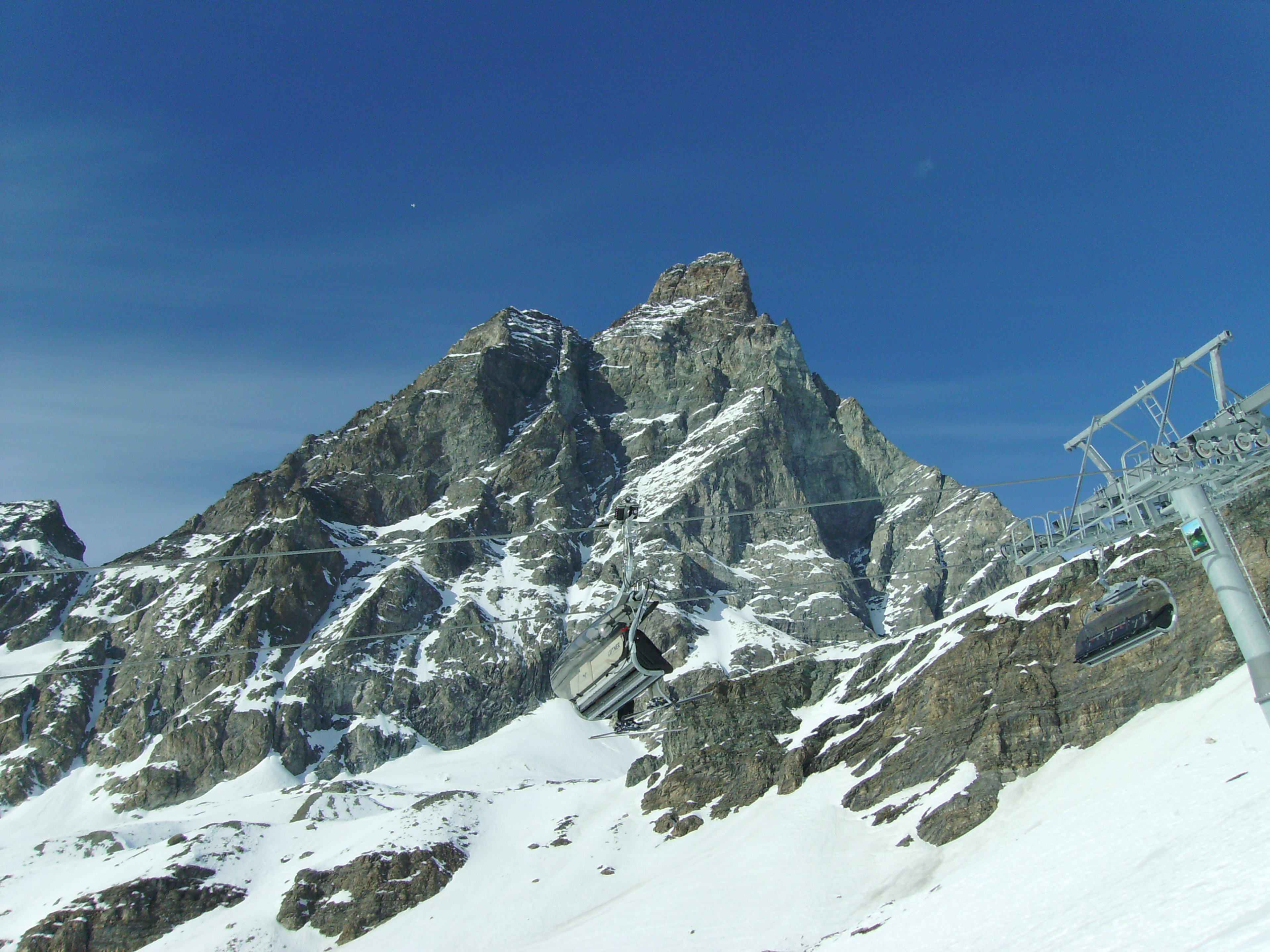
Cervinia occupies one of the most dramatic positions of any ski resort in the Alps — the valley dead-ends beneath the sheer 4,478m Matterhorn, and the Italian ski area climbs to within 1,000m of the summit on the Plateau Rosa glacier. The resort developed in the late 1930s under Mussolini-era promotion of alpine sports and has a slightly faded grand-hotel character at its lower levels, overlaid with decades of tourist infrastructure investment. It attracts an Italian domestic market alongside Northern European visitors drawn by the altitude, the views, and the snow certainty that the glacier provides. Cervinia's character is defined by its altitude first and foremost — skiers come here for the high-mountain experience, the early and late season availability, and the Matterhorn backdrop, more than for the village itself.
The Italian ski area spans approximately 160 km of piste across the Breuil-Cervinia and linked Valtournenche sectors, with 73 runs that are predominantly intermediate in character. The terrain is dominated by wide, open, well-groomed slopes on the upper mountain — the Plateau Rosa plateau is particularly suited to cruising, with long descents back toward the village on broad red and blue runs that maximise the area's exceptional vertical drop. Technical terrain is limited; there are a handful of black runs and some good off-piste opportunities from the upper glacier edges, but Cervinia is not the resort of choice for experts seeking varied or challenging lines. A separate international lift pass connection to Zermatt via the Theodul pass creates a combined ski area of over 350 km and materially expands the skiing experience — though those statistics and terrain are Zermatt's and not reflected in this profile.
Snow reliability is Cervinia's single greatest strength. The Plateau Rosa glacier at 3,480m gives the resort one of the longest and most dependable snow seasons in the Alps — the ski area regularly opens in late October, sometimes earlier, and the season extends through early May on the upper glacier and most mid-mountain pistes. Even in low-snowfall years, the altitude of the glacier zone provides reliable surface conditions from opening day through the core winter months. The base altitude of 2,050m also means that the village and lower pistes maintain snow cover for longer than comparable resorts situated at 1,400–1,800m. Snowmaking supplements the natural snowpack on lower runs and connector pistes.
The Italian sector is served by approximately 20 lifts including gondolas from the resort base and a series of high-speed chairs and telecabines ascending to the Plateau Rosa. The lift infrastructure has been progressively modernised over the past two decades, replacing older téléfériques with higher-capacity detachable chairs. Peak-period queuing can develop at the main Cervinia gondola base and at the Plateau Rosa cable car during busy weekends and school holidays, but the mid-week mountain is typically uncrowded relative to its scale. Lifts to Valtournenche extend the skiing south down the valley for those seeking additional terrain on the Italian side.
The resort village at 2,050m is compact and predominantly oriented toward skiing rather than village atmosphere. Hotels range from budget to comfortable mid-market, with a smaller number of higher-end properties; self-catering apartments supplement the hotel stock. The village's position at such high altitude means ski-in/ski-out access is the norm — most accommodation is within easy reach of the lift base. The valley below at Valtournenche and Antey-Saint-André offers more affordable accommodation options for visitors willing to commute up to the ski area by telecabine each morning.
Turin Caselle (TRN) is the most practical airport for Cervinia at approximately 1 hour 40 minutes, with good connectivity from Italian domestic routes and increasing European services. Milan Malpensa (MXP) at around 2 hours 25 minutes offers the widest range of European and long-haul connections and is strongly recommended for visitors outside Italy. The route from both airports follows the A5 motorway through the Aosta Valley — fast and well-maintained — before turning up the Val Tournanche for the final 28 km climb to the resort. The valley road is well-managed in winter but the altitude of the resort means that snow chains may be required after significant snowfall.
Turin Caselle (TRN) is the nearest major airport at roughly 1 hour 40 minutes, with direct road access via the A5 motorway through the Aosta Valley before climbing the Val Tournanche. Milan Malpensa (MXP) is around 2 hours 25 minutes and offers broader long-haul connectivity. Geneva (GVA) at approximately 2 hours 55 minutes is the best-connected hub for visitors from northern Europe and beyond. The final approach from Châtillon up the Val Tournanche is a well-maintained mountain road that can require snow chains after significant snowfall given the altitude of the resort.
Cervinia is priced at the upper-mid level of the Italian Alps market. A 6-day Italian-sector adult lift pass runs approximately €190–230 for the 2025/26 main season; the international pass including Zermatt access is priced higher and represents a significant premium that is only worthwhile for visitors planning to ski the Swiss side over multiple days. Accommodation and dining reflect the resort's tourist orientation — hotel prices are broadly comparable to mid-tier French resorts, with better value at the more affordable hotel and apartment end of the market than in the French destination-resort equivalents.
Adult 6-day Italian-sector pass approximately €190–230 (2025/26 main season); international pass including Zermatt access priced higher. Verify current rates at cervinia.it.
This is an approximate editorial reference for the season noted. Always check the official resort website for current prices.
Cervinia's après-ski scene is relatively quiet by French Alps standards — the resort's Italian domestic clientele tends toward a more relaxed, restaurant-focused post-ski culture than the drink-heavy bar-scene that characterises the British-oriented resorts of the French Alps. There are lively bars on the piste above the resort and in the village, but the energy dissipates earlier in the evening. Dining is a genuine strength, as it is throughout the Aosta Valley: Italian mountain cooking — polenta, fonduta valdostana, local charcuterie, and pasta dishes — is available at good standards across a range of price points, and the wine list at better restaurants reflects the strong Aosta Valley viticultural tradition.
Arrive in late October or early November if you want the long-season experience at its best — the resort often opens among the first in continental Europe, and the upper glacier in early season is exceptionally quiet and in perfect condition. The morning views from the Plateau Rosa on clear days are among the most spectacular in the Alps — be on the first cable car if the weather is right. For variety, the Valtournenche sector lower down the valley provides quieter, north-facing terrain that holds better snow in warmer conditions. Experts who find the Italian terrain limited should factor in the Zermatt connection cost when planning the trip.
Scenic beauty (9.5) reflects the unrivalled visual drama of skiing directly beneath the Matterhorn's Italian face — the views from Plateau Rosa are among the most spectacular in the Alps. Snow reliability (9.0) is driven by the Plateau Rosa glacier at 3,480m and the resort's late-October opening: Cervinia has one of the longest reliable ski seasons in the Alps. Terrain variety (6.5) is the trade-off: the Italian ski area is predominantly wide, unchallenging intermediate terrain with limited steep or technical options, and off-piste is scored accordingly. Beginners (8.5) benefit greatly from the wide, well-surfaced pistes at high altitude.
Austria's most beautiful ski village — Lech Zürs anchors Ski Arlberg, Austria's largest connected ski area, with 305km of pistes.

The Jungfrau Ski Region — 211km of piste beneath the Eiger's north face, two car-free Alpine villages, and a UNESCO World Heritage backdrop.

Ski in the shadow of the Matterhorn across 322 kilometres of car-free Alpine perfection.
Support our independent research and help us add more ski resorts.
☕ Buy us a coffee