7.5Good
Åre
Scandinavia's premier ski resort — a full-service mountain destination with Sweden's biggest vertical and a vibrant village.
Best for
Strengths
Lower-scoring areas
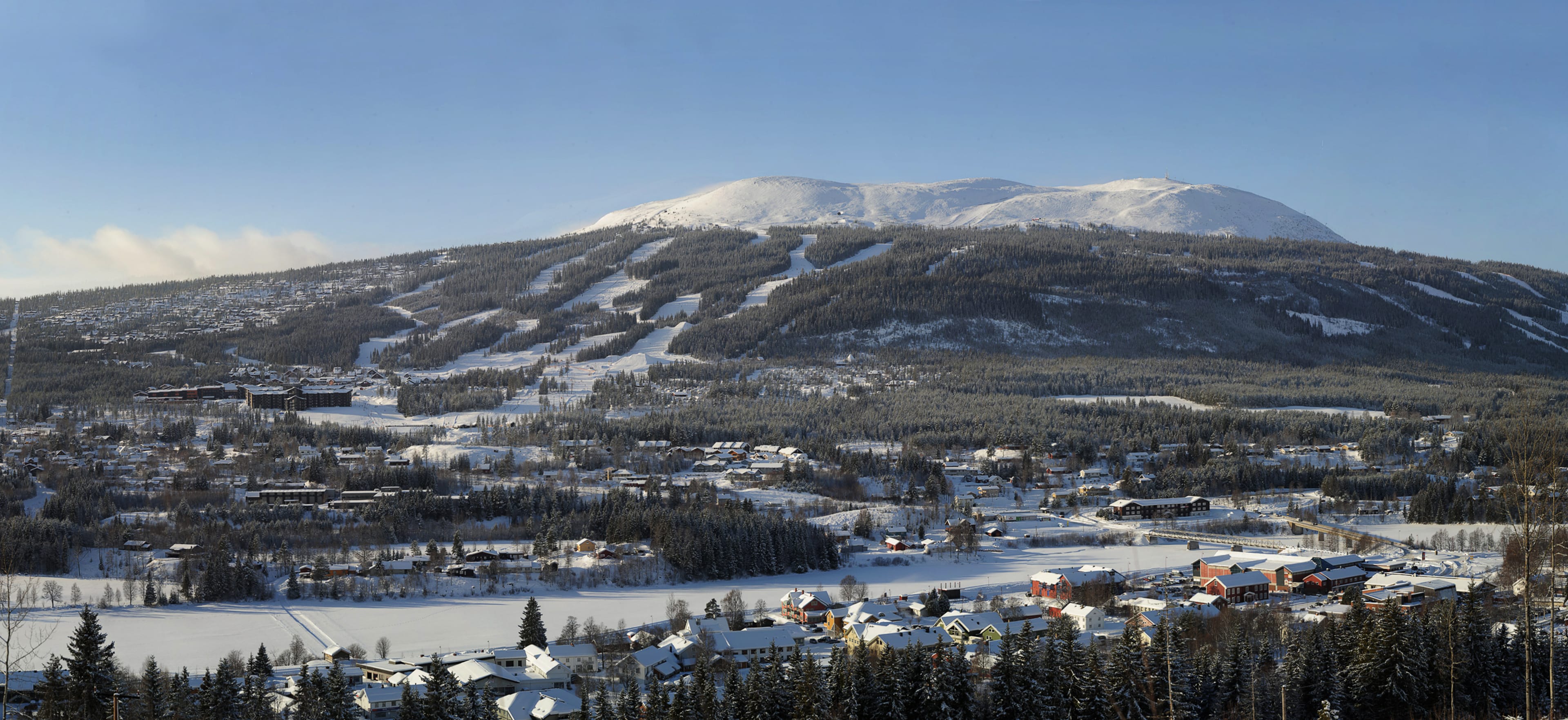
Trysil grew from a modest local ski hill into Norway's largest resort under SkiStar's ownership, which has applied the same systematic investment model it uses at Åre in Sweden: a purpose-built base village, a signature gondola, and heated high-speed chairlifts replacing older infrastructure year on year. The result is efficient and family-oriented rather than historic or characterful — this is not a centuries-old alpine village but a well-run modern ski destination that prioritises convenience and reliability. The clientele is heavily Norwegian and Swedish, with a smaller international presence than Åre; Trysil markets itself explicitly on family logistics — ski-in/ski-out lodging, extensive childcare and ski-school infrastructure, and terrain forgiving enough for a first-time skier to progress quickly.
Trysilfjellet's four connected sectors — Turistsenteret, Høyfjellssenteret, Høgegga, and Skihytta — offer 69 runs across 81km of predominantly gentle, wide pistes, with roughly half the terrain rated easy. The longest run stretches 5.4km from the summit back to the base village, and the overall mountain is built for long, uninterrupted cruising rather than technical challenge. There is some steeper terrain in pockets, but Trysil's modest 685m vertical and largely forested, rolling topography mean strong experts will find the mountain limited after a day or two; the resort's core audience — families, beginners, and intermediates — is well served by the sheer volume of accessible, well-groomed piste.
Trysil's inland Scandinavian climate produces reliably cold temperatures through the core winter months, supporting one of the more extensive snowmaking systems in Norway, which covers the key connecting runs between the four sectors. Natural snowfall is generally dependable from December through March, though the resort's relatively low base elevation (415m) means the lower slopes can be more exposed to occasional mild spells than higher-altitude Alpine resorts. Late-season skiing into April benefits from Norway's long daylight hours and a snowpack that, at this latitude, tends to hold up well into spring.
Trysil runs 41 lifts, including the Trysilgondolen — a modern gondola with a capacity of 3,000 skiers per hour connecting the base village directly to the upper mountain — alongside numerous heated chairlifts, several of which include weather-shielding bubble covers, a distinctive SkiStar investment aimed at family comfort in Nordic winter conditions. The lift network is dense relative to the size of the ski area, meaning queuing is rarely a significant issue outside the busiest Norwegian and Swedish school-holiday weeks, and the base village's layout keeps most lifts within easy walking distance of accommodation.
Trysil's base village is built around ski-in/ski-out convenience, with SkiStar-operated apartments, cabins, and hotels arranged close to the gondola and main lift stations. Accommodation ranges from simple self-catering cabins — popular with Norwegian and Swedish families on multi-generational trips — to higher-end serviced apartments near the village centre. The village itself is compact and functional, with a supermarket, ski rental, restaurants, and a handful of bars; it does not aim for the historic charm of an Alpine town, prioritising instead the practical logistics of a family ski holiday.
Oslo Gardermoen (OSL) is the standard international gateway, with a road transfer of roughly 2 hours 10 minutes on generally well-maintained Norwegian highways, extendable in poor winter weather. Nor-Way Bussekspress operates a direct coach service timed to flight arrivals as an alternative to self-drive or private transfer. There is no direct rail connection to Trysil; visitors travelling by train from Oslo would need to combine rail to a nearby town with a bus or taxi transfer, making road transport from the airport the most practical option for the majority of visitors.
Oslo Gardermoen (OSL) is the standard gateway, roughly 2 hours 10 minutes by road on well-maintained Norwegian highways, though winter conditions can extend this. Nor-Way Bussekspress runs a direct coach service from the airport to the resort. There is no direct rail link to Trysil itself; the drive or coach transfer from Oslo is the practical option for the great majority of visitors.
Trysil uses SkiStar's dynamic pricing model, under which a 6-day adult lift pass for the 2025/26 season runs roughly NOK 2,250–3,550 depending on dates and how far in advance it is booked — booking early and travelling outside peak Norwegian and Swedish school holidays brings meaningful savings. Norway's overall cost of living is high by European standards, and this is reflected in accommodation and dining prices, though self-catering cabins (the dominant accommodation type at Trysil) help offset restaurant costs for families willing to cook some of their own meals.
Adult 6-day lift pass approximately NOK 2,250–3,550 depending on dates and booking window (2025/26 season, dynamic pricing). Verify current rates at skistar.com/trysil.
This is an approximate editorial reference for the season noted. Always check the official resort website for current prices.
All price references are editorial estimates for the 2025/26 season. Current season prices may differ; verify at the official resort website before booking.
Après-ski at Trysil is low-key and family-oriented rather than boisterous — the base-area cafes and bars fill gently as skiers finish for the day, with SkiStar-run venues offering a relaxed, child-friendly atmosphere rather than a loud nightlife scene. Dining in the village centres on straightforward Norwegian and international fare — burgers, pizza, and traditional Norwegian dishes — geared toward feeding families efficiently rather than fine dining. Visitors seeking a livelier evening scene are better served at Åre in Sweden or the larger Alpine resorts; Trysil's strength lies in daytime skiing and family logistics rather than nightlife.
Book the Trysilgondolen-adjacent accommodation for the shortest walk to the lifts — the base village spreads out further than it first appears, and ski-in/ski-out listings vary in how literally that applies. Strong intermediates and experts looking for more challenge than Trysil's own terrain offers should consider a side trip or combined stay at Åre in Sweden, roughly 4–5 hours away by road, which SkiStar's shared pass system supports. Book well ahead of the Norwegian winter school holiday (typically late February) when both prices and crowds peak significantly above the rest of the season.
Family friendliness (8.5) and beginner suitability (8.5) drive the overall score — Trysil's long, gentle, well-groomed terrain and heavily invested lift infrastructure are purpose-built for confidence-building and family logistics. Off-piste scored low (4.0): the resort's modest vertical and rolling, forested topography offer little of the steep or high-alpine terrain found at Åre or the major Alpine resorts in this catalogue.
Scandinavia's premier ski resort — a full-service mountain destination with Sweden's biggest vertical and a vibrant village.
Finland's largest ski resort — Arctic skiing under the Northern Lights in Finnish Lapland, with a season from October to May.

The Scandinavian Alps — Norway's premier ski resort, above-treeline terrain, reliable snowfall, and the steepest pitches in Scandinavia.
Support our independent research and help us add more ski resorts.
☕ Buy us a coffee