7.5Good
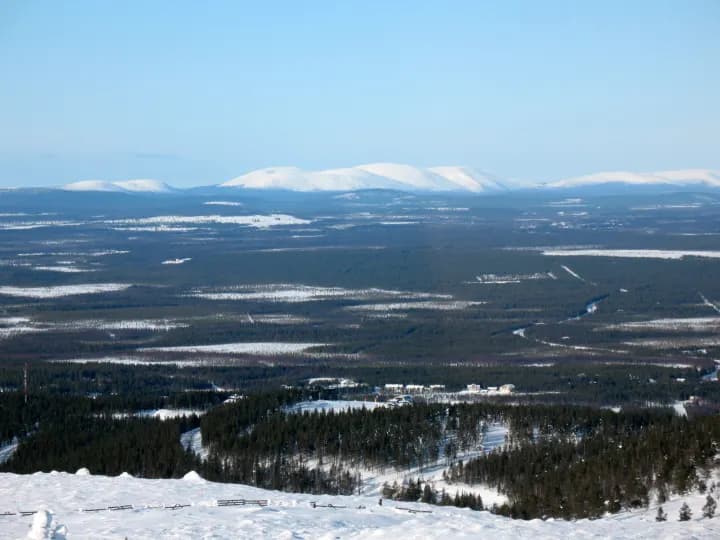
Levi
Finland's largest ski resort — Arctic skiing under the Northern Lights in Finnish Lapland, with a season from October to May.
Best for
Strengths
Lower-scoring areas
Åre has been a winter resort since the 1880s, when Swedish aristocrats began arriving by train to experience the mountain air. The resort town retains elements of that early identity — a central square, a historic hotel, the Åre church on the hill — alongside the infrastructure of a modern four-season mountain destination. SkiStar's ownership since the 1980s has driven substantial commercial development: the resort now includes multiple hotels, a spa complex, and a dining scene that operates year-round around hiking, cycling, and the Åre Bike Park in summer. The clientele is primarily Scandinavian — Swedish, Norwegian, and Danish — with a growing international presence following the 2019 World Championships. The atmosphere is family-oriented and efficiently organised.
Åre's 112 runs spread across the Åreskutan massif in four broadly connected sectors. The main Åreskutan sector, reached by the cable car from the village centre, accesses the resort's highest terrain: exposed ridges, open bowls, and steeper north-facing blacks that offer genuine challenges in good conditions. The Duved sector (reached by a separate gondola 2km from the village) provides gentler intermediate cruising over long, wide pistes. The Björnen area, purpose-built for families, has its own beginner lifts, a dedicated children's ski school area, and gentle progression terrain largely separated from the main mountain. The full circuit of all sectors requires some connecting buses, but the core Åre-Duved connection is skiable.
Åre's northern latitude (63° N) provides reliable cold temperatures — a significant advantage for snowmaking and for preserving natural snow quality. The resort operates one of the largest snowmaking systems in Scandinavia, covering the key pistes and enabling the season to open reliably in late November even in low natural snowfall years. Natural snowfall averages around 200–300cm annually, with the upper mountain sectors receiving the most consistent cover. Spring conditions can extend well into April; the long daylight hours of late March and April (approaching 14 hours of light) combined with good snow make the end of the season particularly pleasant. Ice and wind can be factors on the exposed upper mountain.
Åre runs 46 lifts including the Kabinbanan cable car, a 4-person gondola rising directly from the village centre to 1,274m — the resort's iconic installation, operating since 1954 and rebuilt in 2011. SkiStar has invested consistently in modern high-capacity chairs and gondolas; the infrastructure is well-maintained and efficient. The Duved gondola and the Björnen chair systems are modern installations. The main village cable car has finite capacity and can develop queues on busy days; the mid-mountain access points using chair lifts from various base points offer an alternative. Total lift capacity across the resort is high relative to visitor numbers outside peak periods.
Åre's resort centre sits at 380m around the central square (Torg), with hotels, apartments, and ski rental arranged along the main pedestrian street and surrounding blocks. The SkiStar-operated Åre By offers the most ski-in/ski-out access; Hotel Åregården (the historic property dating from 1892) and the larger Copperhill Mountain Lodge are the premium properties. Self-catering apartments throughout the village and outlying hamlets of Duved, Mörviken, and Björnen cover the mid-range. The resort's year-round function means restaurants and services operate at full capacity in winter; the dining and bar scene is more developed than at comparably sized Scandinavian resorts.
Åre Östersund Airport is the primary access point, with a 90-minute drive on the E14. In the main ski season (December–March), SAS, Norwegian, and charter operators fly direct from Stockholm Arlanda, Gothenburg Landvetter, and Copenhagen; the season also sees charter flights from other European cities. Driving from Stockholm takes approximately 8 hours on the E14; the road is well-maintained in winter with mandatory winter tyre requirements. The direct rail connection from Stockholm Central to Åre Central station (6–7 hours) is a popular and comfortable alternative, arriving directly in the resort.
Åre Östersund Airport (OSD) is the resort's gateway, with seasonal direct flights from Stockholm Arlanda, Gothenburg, and Copenhagen operating from December to April; charter flights from other European cities also serve the season. Drive time from OSD to resort is approximately 90 minutes on the E14 road. Åre is also on the main Mittbanan rail line: direct trains from Stockholm Central take approximately 6–7 hours. SkiStar operates ski buses connecting OSD arrivals with the resort on a timetable linked to scheduled flights.
Åre is priced at Scandinavian levels — which means higher than comparable Austrian or Italian resorts, but broadly competitive with French and Swiss destinations. A 6-day adult lift pass costs approximately SEK 3,500–4,000 (approximately €300–350 at 2024/25 exchange rates). SkiStar's season pass system (Skistar Pass+) offers good value for regular visitors and links Åre with the company's other resorts at Sälen, Vemdalen, and Trysil (Norway). Hotel accommodation in the village averages SEK 1,500–3,000 per room per night in the main season; dining is expensive by European standards (a main course SEK 220–350, beer SEK 90–130).
Adult 6-day lift pass approximately SEK 3,500–4,000 (2024/25 season). SkiStar Pass+ season pass available with access to multiple Nordic resorts. Verify current rates at skistar.com/are.
This is an approximate editorial reference for the season noted. Always check the official resort website for current prices.
All price references are editorial estimates for the 2024/25 season. Current season prices may differ; verify at the official resort website before booking.
Åre's après-ski is the strongest in Scandinavia and compares with mid-tier Austrian resorts for energy and consistency. Wärdshuset Åregården hosts a terrace that fills from 15:00; Broken bar (the main après-ski institution, operated by SkiStar in the base area) runs a programme of live music and DJ nights through the week. The central square fills in the late afternoon as skiers return from the mountain. For dinner, Villa Tottebo (consistently rated among the best mountain restaurants in Sweden) serves modern Nordic cooking; Fjällgården on the mountain is a classic hut-style restaurant with outdoor seating and traditional Swedish food. The village has options across price points from pizza and burgers to serious culinary cooking.
The upper Kabinbanan cable car accesses the most challenging terrain — the Hummelbacken and the north-facing steeps above 1,000m. After fresh snow, these sectors hold powder far longer than the groomed lower pistes; the bowl terrain above the tree line is excellent in good visibility but requires caution in the frequent Jämtland cloud. The FIS championship course (Olimpia piste) is open to the public and is worth a run for the experience — a steep, wide piste with a substantial pitch that demands respect. For beginners: the Björnen sector operates entirely separately from the main mountain and is far better suited to first-timers than the steeper terrain at Åre central.
Family friendliness 8.5 and beginner suitability 8.5 reflect Åre's substantial investment in progression terrain and ski school infrastructure. Value for money 6.5 acknowledges Sweden's Nordic pricing — restaurant meals, lift passes, and accommodation are expensive by the standards of eastern European alternatives, though broadly comparable to mid-tier Austrian resorts.
Finland's largest ski resort — Arctic skiing under the Northern Lights in Finnish Lapland, with a season from October to May.

The Scandinavian Alps — Norway's premier ski resort, above-treeline terrain, reliable snowfall, and the steepest pitches in Scandinavia.
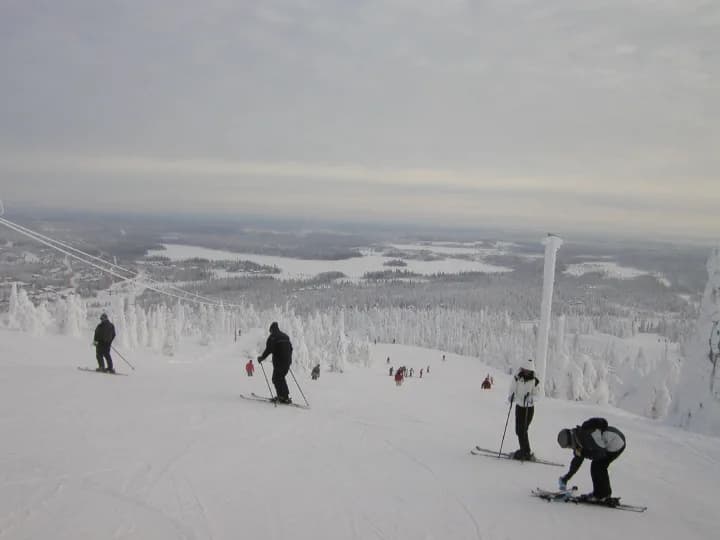
Finnish Lapland's other great resort — one of Europe's longest seasons, and an airport close enough to walk to on a clear day.
Support our independent research and help us add more ski resorts.
☕ Buy us a coffee