
7.5Good
Bansko
Bulgaria's flagship mountain resort — 75km of well-groomed pistes above a medieval market town.
Best for
Strengths
Lower-scoring areas
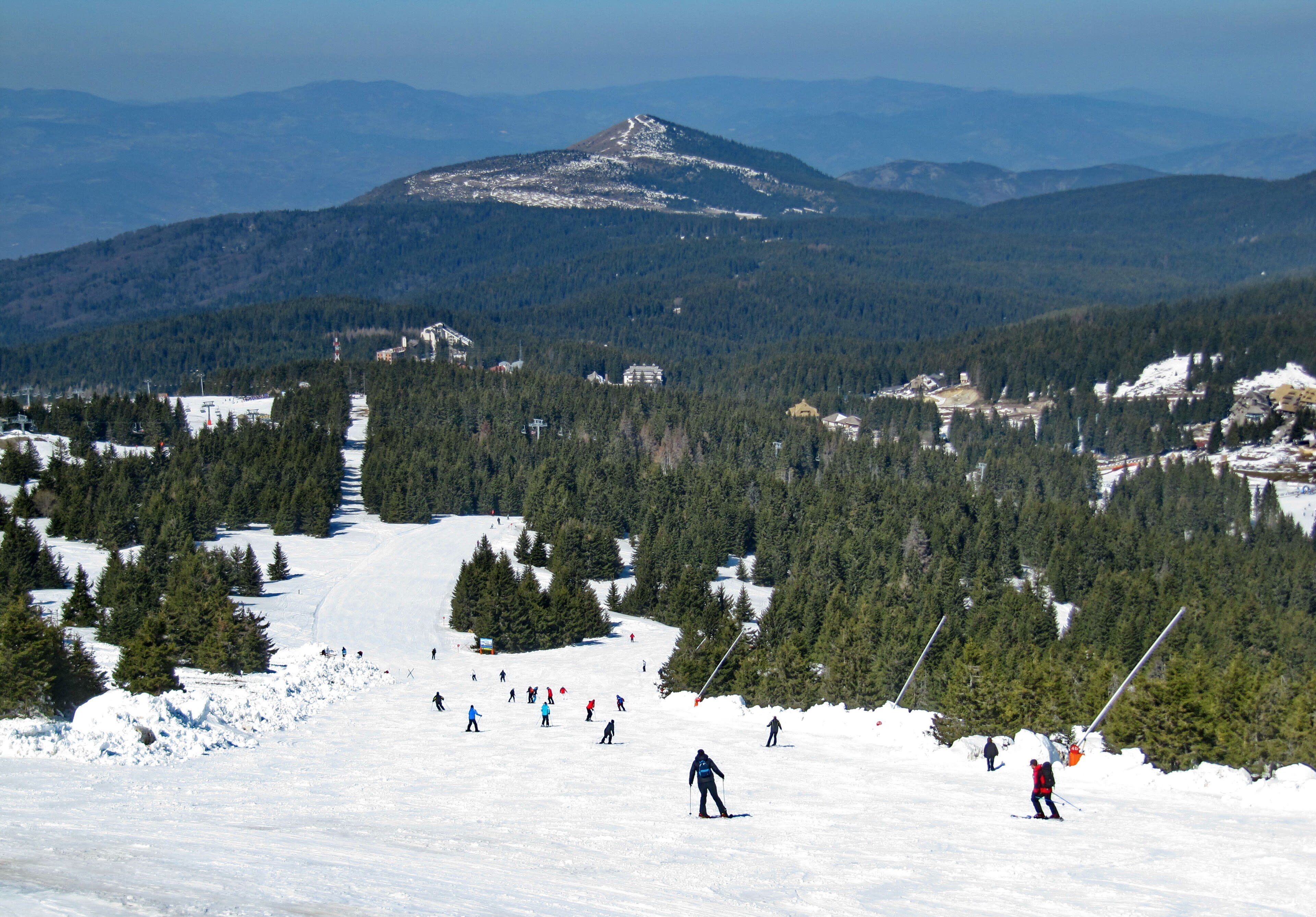
Kopaonik does not try to be an Alpine resort. Its character is distinctly Balkan — a high plateau deep in Serbia's interior, surrounded by beech and spruce forest inside a working National Park, with a resort infrastructure built pragmatically upwards since the first chairlift opened in 1964. What it lacks in vertical drama it compensates for with quantity: 55km of groomed runs, a modern lift system, and an operating ecosystem of hotels, restaurants, and ski schools that serves a primarily Serbian and regional audience with quiet confidence. The result is a resort that feels genuinely lived-in rather than purpose-manufactured, and where prices reflect local economic reality rather than a global luxury premium.
The mountain's 247m vertical (1,770m base to 2,017m summit at Pančić's Peak) sets the scale for Kopaonik's terrain honestly: this is primarily an intermediate and beginner destination. Twenty-five named slopes totalling 55km include the gondola-accessed Brzeće run (3.7km, 844m height difference — the mountain's longest and most varied descent), the Karaman Greben sector for easier cruising, and the Gvozdac and Duboka runs for more confident intermediates. A dedicated Snow Park serves freestyle riders and progressing beginners. The absence of technical black runs or significant off-piste terrain means experts will exhaust the marked runs quickly, but for the target audience — families, beginners progressing through their first real ski week, and intermediates seeking mileage — the piste network is ample.
Kopaonik's climate is one of its genuine strengths. The mountain records around 160 snow days per year, with a sub-alpine climate that brings reliable cold temperatures throughout the ski season. Snowmaking covers most of the piste network, providing a backstop against the variable natural snowfall of Balkan winters. The forested terrain helps protect snow quality on lower slopes. Season typically runs from early December to late March, with peak conditions in January and February. While snowfall patterns cannot match the consistency of the highest Alpine resorts, the combination of altitude, cold temperatures, and snowmaking investment makes Kopaonik a reliable winter destination within its region.
Twenty-five lifts including a ten-passenger gondola, three high-speed six-person superchairs, and seven high-speed quad chairs serve the resort with a combined capacity of 32,000 skiers per hour. This high lift-to-piste ratio means queues are rare outside Serbian school holidays and the Christmas–New Year peak. The gondola from Brzeće village is the main access point from the valley; most accommodation is positioned directly on the ski area at resort level, avoiding the need for daily cable-car approaches. The lift system has been consistently upgraded over the past decade with modern detachable chairlifts that compare well with mid-tier Alpine infrastructure.
Accommodation at Kopaonik is concentrated on the summit plateau at resort level — around 2,000m — in a cluster of hotels ranging from functional ski-in/ski-out properties to mid-range options with wellness facilities. The resort area operates as a managed pedestrian zone during the ski day. Hotel Grand Kopaonik and Hotel Nebeske Stolice are among the established landmarks. Pricing throughout is substantially below Western European equivalents. The resort lacks a genuine traditional village in the Alpine sense — the base area is purpose-built — but the National Park setting and the absence of car traffic during the season give it a calm, unhurried atmosphere that families in particular find appealing.
Niš (INI) is the recommended gateway for international visitors — it is served by several low-cost carriers from Western European cities and sits about 127km from Kopaonik via the Ibar highway, roughly a 2-hour drive. Belgrade (BEG) offers the widest flight connections and is approximately 287km away at around 4 hours, with ski-season transfers readily available. Serbian motorway connections make the approach straightforward in dry conditions; winter tyres are essential on the final mountain ascent. Car hire is available at both airports. For visitors combining Kopaonik with Belgrade, the capital's food and cultural scene is a genuine draw alongside the ski trip.
Niš (INI) is the closest international airport at approximately 127km and 2 hours' drive via the Ibar highway — the most practical gateway for visitors flying from regional European hubs. Belgrade (BEG) is Serbia's main hub with the widest international connections but is 287km away at around 4 hours; direct airport buses and private transfers are available for the ski season. The recently opened Morava Airport near Kraljevo (approximately 102km, ~1.5 hours) is closer still but has limited scheduled services. The road to Kopaonik climbs steeply on the final approach — mountain-rated tyres are strongly recommended in winter conditions.
Kopaonik is the most affordable resort in this catalogue by a meaningful margin. A 6-day adult lift ticket runs approximately €100–130 (2025/26 season), with day tickets around €20–30. Hotel packages including half-board are available at rates well below comparable Alpine options. Equipment hire and ski school are priced proportionally. The value proposition extends to dining and après-ski: Serbian cuisine and local wine at resort prices are a fraction of Alpine equivalents.
Adult 6-day lift ticket approximately €100–130 (2025/26 season). Day ticket approximately €20–30. Verify current rates at kopaonik.net.
This is an approximate editorial reference for the season noted. Always check the official resort website for current prices.
All price references are editorial estimates for the 2025/26 season. Current season prices may differ; verify at the official resort website before booking.
The atmosphere is energetic and domestic: Kopaonik's main clientele is Serbian and regional Balkan, with weekends and holiday periods bringing Belgrade families and groups up to the mountain. The resort's Big Snow festival (late March, free entry) brings reggae, jazz, and electronic music acts to the slope base — a distinct feature that no other resort in this catalogue offers. Mountain restaurants serve pljeskavica, ćevapi, and Serbian comfort food alongside standard European ski catering. The après-ski scene is concentrated at the base area bars and hotel terraces rather than mid-mountain.
The Brzeće gondola sector is the mountain's most varied terrain — ski it on a fresh snow morning when the sun hits the eastern-facing Gvozdac and Duboka runs. The resort is at its most enjoyable outside Serbian school holidays (Christmas–New Year, winter half-term in February) when the lift capacity-to-visitor ratio is most favourable. Niš is worth an evening stop if travelling by road from the south — the Niš fortress and čaršija (old market quarter) are genuinely worthwhile. Book accommodation early for the Big Snow festival week in March; it attracts a very different crowd from the standard ski week.
Value for money (9.5) is Kopaonik's defining advantage: 55km of well-maintained National Park pistes at a fraction of Alpine pricing, with a modern lift fleet capable of 32,000 skiers per hour. Terrain variety (6.0) and off-piste (5.5) reflect an honest assessment of a resort oriented toward beginner and intermediate skiers — the 25 named slopes are predominantly easy-to-medium gradient with limited technical challenge for advanced skiers. Beginner suitability (8.5) and family friendliness (8.5) are genuine strengths. Snow reliability (7.0) acknowledges the Balkan continental climate: cold winters with around 160 snow days per year, but more variable than the high-altitude Alpine average. Lift infrastructure (7.5) reflects a modern fleet with high capacity relative to the piste area.
Bulgaria's flagship mountain resort — 75km of well-groomed pistes above a medieval market town.

Bulgaria's oldest mountain resort — a former royal hunting ground in the Rila range, and the country's largest ski area.

A 1984 Winter Olympic venue above Sarajevo, and one of the shortest, cheapest airport transfers of any resort in this catalogue.
Support our independent research and help us add more ski resorts.
☕ Buy us a coffee