
8.0Very Good
Nozawa Onsen
Japan's most storied ski village — traditional onsen town in Nagano, 1,085m vertical, and 1998 Winter Olympics biathlon host.
Best for
Strengths
Lower-scoring areas
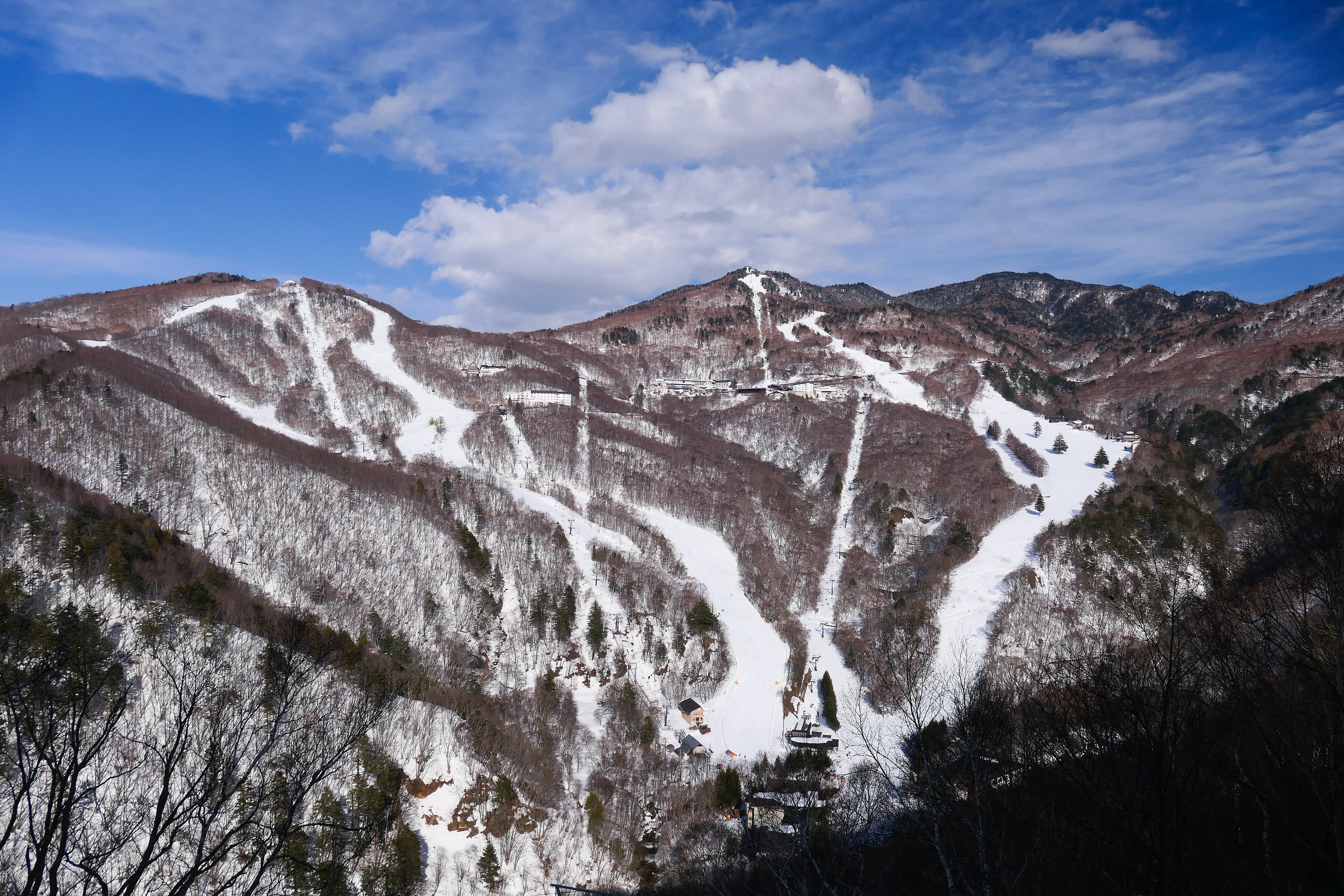
Shiga Kogen's character is defined by scale and diversity. Where most Japanese resorts — Niseko, Nozawa Onsen, Hakuba — have a clear centre and a coherent village identity, Shiga Kogen is a plateau of 18 ski fields developed by different operators over 80 years, connected by an inter-area lift pass and a network of shuttle buses that knit the whole into a single logical area. The result is a resort that rewards exploration: each sub-area (Ichinose, Okushiga, Western Resort, Higashitateyama, Kanbayashi, Yokoteyama, and more) has a different character, terrain mix, and accommodation cluster. The UNESCO Biosphere Reserve designation shapes both the environment and the resort culture: the plateau's forests, wetlands, and Japanese macaque habitats coexist with the ski infrastructure, and the macaques famously soak in the natural hot-spring pools at Jigokudani Monkey Park, accessible by a 30-minute walk from the Kanbayashi sub-area.
Eighteen ski fields with an estimated 80km of marked piste distribute across the plateau's 1,500–2,305m elevation range. The terrain profile covers all ability levels: wide, gently pitched runs at Ichinose and Okushiga serve beginners and intermediates; the steeper Mount Yakebitai (site of the 1998 Olympic slalom and giant slalom) and the Kanbayashi area provide advanced and expert terrain; the high bowl terrain above Yokoteyama gives the best views and some of the most consistent powder. The inter-area skiing that connects the 18 fields is the resort's central pleasure for experienced skiers — a full day's circuit of the plateau covering multiple sub-areas requires navigation, stamina, and a reasonable snow year, and rewards with a variety of terrain and experience that no single-mountain Japanese resort can match. Night skiing is available in several sub-areas.
The Joshinetsu Kogen plateau sits at the critical elevation where winter northwest air masses crossing the Sea of Japan produce heavy, cold snowfall through December, January, and February. Average snowfall is approximately 5–8m per season depending on the sub-area and elevation. The cold, dry inland position of the plateau (compared with the more oceanic Niigata slopes) tends to produce lighter, drier snow than the west-facing Myoko and Madarao ranges, with quality comparable to Hokkaido powder on cold storm cycles. The long season (mid-November to early May, with the high areas opening and closing across a range of dates) reflects consistent cold temperatures and deep snowpack through the plateau's winter.
Forty-eight lifts across the 18 sub-areas include gondolas, cable cars, and a mixture of fixed-grip and detachable chairlifts. The Shiga Kogen Ski Resort All-Area pass covers all 18 ski fields and connects them through both lift systems and shuttle buses. The shuttle bus network is an important practical feature: several sub-area connections require a short bus ride rather than a direct lift link. Individual sub-area day passes are available for visitors who want to focus on a specific area. The lift infrastructure reflects the resort's multi-operator character — some sub-areas have been more recently modernised than others, and the overall fleet age varies across the plateau.
Accommodation is distributed across the sub-areas rather than concentrated in a single village. The Ichinose area carries the densest concentration of hotels and pension-style accommodation, forming the closest equivalent to a resort hub. Okushiga Kogen, at 1,600m at the northern end of the plateau, has a cluster of mid-range hotels with a quieter, more isolated character. Many properties are Japanese inn style (minshuku or ryokan) with onsen bathing, multi-course dinners, and futon sleeping — a fundamentally different accommodation experience from Alpine hotels, and one that is central to the Shiga Kogen experience for international visitors. The macaque monkey park visit from the Kanbayashi area is typically combined with an overnight stay at one of the Kanbayashi pension properties.
The Hokuriku Shinkansen from Tokyo Station to Nagano is the practical approach — 1h40 at full speed, with frequent daily departures. From Nagano Station, the Nagano Electric Railway Yukemuri Express (approximately 45 minutes) serves Yudanaka Station at the foot of the plateau; from there, resort shuttle buses and taxis complete the journey to the ski area. The full door-to-door journey from central Tokyo to the ski base runs approximately 2.5–3 hours on a well-timed connection. In peak winter weeks and on holiday Saturdays, Shinkansen seats and shuttle buses should be booked in advance. Car access is possible via Route 292 from Yudanaka — the road is kept clear of snow through the season but winter tyres are required.
Tokyo's two airports (Haneda and Narita) are the primary international gateways. From either airport, the standard approach combines the Hokuriku Shinkansen from Tokyo Station to Nagano Station (approximately 1h40 from central Tokyo) with onward access by local train to Yudanaka Station and resort shuttle bus to the ski area — total travel time from central Tokyo approximately 2.5–3 hours. The Shinkansen connection from Tokyo to Nagano is fast and reliable; book seats in advance during peak season and holiday periods. Car hire provides flexibility for exploring the broader Nagano ski region (Nozawa Onsen, Madarao, Hakuba are all within 1–2 hours) but is less practical for visitors who want a car-free transport experience. Yudanaka Onsen, at the foot of the road up to Shiga Kogen, provides hot-spring accommodation with easy shuttle access to the ski area.
Shiga Kogen's all-area lift pass is competitive by international standards. An adult single-day all-area pass runs approximately JPY 6,000–7,500 (2025/26 season; roughly €37–47), significantly below comparable European or North American full-area day rates. Multi-day passes and packages combining lift access with accommodation (the standard Japanese resort booking model) provide the best value. Accommodation in traditional Japanese inns (ryokan and minshuku) includes breakfast and dinner at rates typically between JPY 15,000–30,000 per person per night — a full-board model that is excellent value relative to European equivalents.
Adult single-day all-area pass approximately JPY 6,000–7,500 (2025/26 season). Multi-day passes and accommodation packages available. Ski area km is an estimate — verify current figures at the official resort website.
This is an approximate editorial reference for the season noted. Always check the official resort website for current prices.
All price references are editorial estimates for the 2025/26 season. Current season prices may differ; verify at the official resort website before booking.
Shiga Kogen's resort atmosphere reflects the Japanese ski resort model: the pace is more contemplative than European, the social ritual centres on the communal onsen rather than the après-ski bar, and the multi-course ryokan dinner (typically kaiseki or Western/Japanese hybrid) is the culinary event of the day. On-mountain restaurant options are distributed across the sub-areas — the Okushiga Kogen Hotel restaurant provides the most acclaimed on-mountain dining; various cafeteria and curry-house options service the more popular sub-areas. The macaque monkey park at Jigokudani — accessible by a 30-minute walk through snow-covered forest from Kanbayashi — is Shiga Kogen's most famous off-mountain experience and an attraction that merits a morning or afternoon regardless of snow conditions.
Plan the cross-plateau circuit on a clear day with good snow cover — the best days at Shiga Kogen are those when an early morning powder run at Yokoteyama can be followed by the long connection to Ichinose for lunch before an afternoon at the Mount Yakebitai Olympic courses. The macaque hot-spring visit works best as a morning excursion on a midweek day — weekend visitors to the monkey park can be substantial. Book ryokan accommodation in advance for January and February — the high-season weeks, particularly the late-January school holiday (daikyūka), fill the Ichinose and Okushiga sub-areas completely. The Kanbayashi sub-area (Olympic snowboard halfpipe site) is a good choice for a quieter day away from the Ichinose crowds.
Terrain variety (8.5) reflects the genuine breadth of 18 interconnected ski fields across an 800m vertical range — no other resort in Japan provides equivalent terrain diversity across a single lift pass. Snow reliability (8.5) is a consistent strength of the Joshinetsu Kogen plateau, which sits at the right elevation to receive heavy Honshu powder from winter northwest flows off the Sea of Japan. Value for money (8.5) reflects competitive Japanese lift pass pricing relative to Alpine or North American equivalents with comparable area. The Olympic credentials (alpine events and snowboarding halfpipe at the 1998 Nagano Games) are specific and verified: Shiga Kogen hosted alpine skiing at Mount Yakebitai and snowboard halfpipe at the Kanbayashi sub-area — not cross-country or biathlon, which were held at other Nagano venues. Village charm (7.0) reflects the decentralised nature of the resort: 18 separate ski areas with lodging concentrated around each sub-area's base do not produce a single coherent village centre. Ski area km (80) is an estimate based on available sources; Shiga Kogen publishes course counts and lengths by sub-area rather than a single combined figure — verify at the official resort website.
Japan's most storied ski village — traditional onsen town in Nagano, 1,085m vertical, and 1998 Winter Olympics biathlon host.

Ten linked resorts in the Northern Japanese Alps — Japan's largest ski area, and a deeper, less internationalised alternative to Hokkaido.

The lift-connected Akakura Onsen and Akakura Kanko areas on Mount Myoko, an onsen-town alternative to Niseko's international scale.
Support our independent research and help us add more ski resorts.
☕ Buy us a coffee