
7.5Good
Las Leñas
The Andes at their most uncompromising — a legendary freeride mountain with one of the longest lift-accessed descents on earth.
Best for
Strengths
Lower-scoring areas
Southern Hemisphere winter season. Mid-June through early October. The resort provides off-season skiing for northern hemisphere visitors and race teams during their summer months.
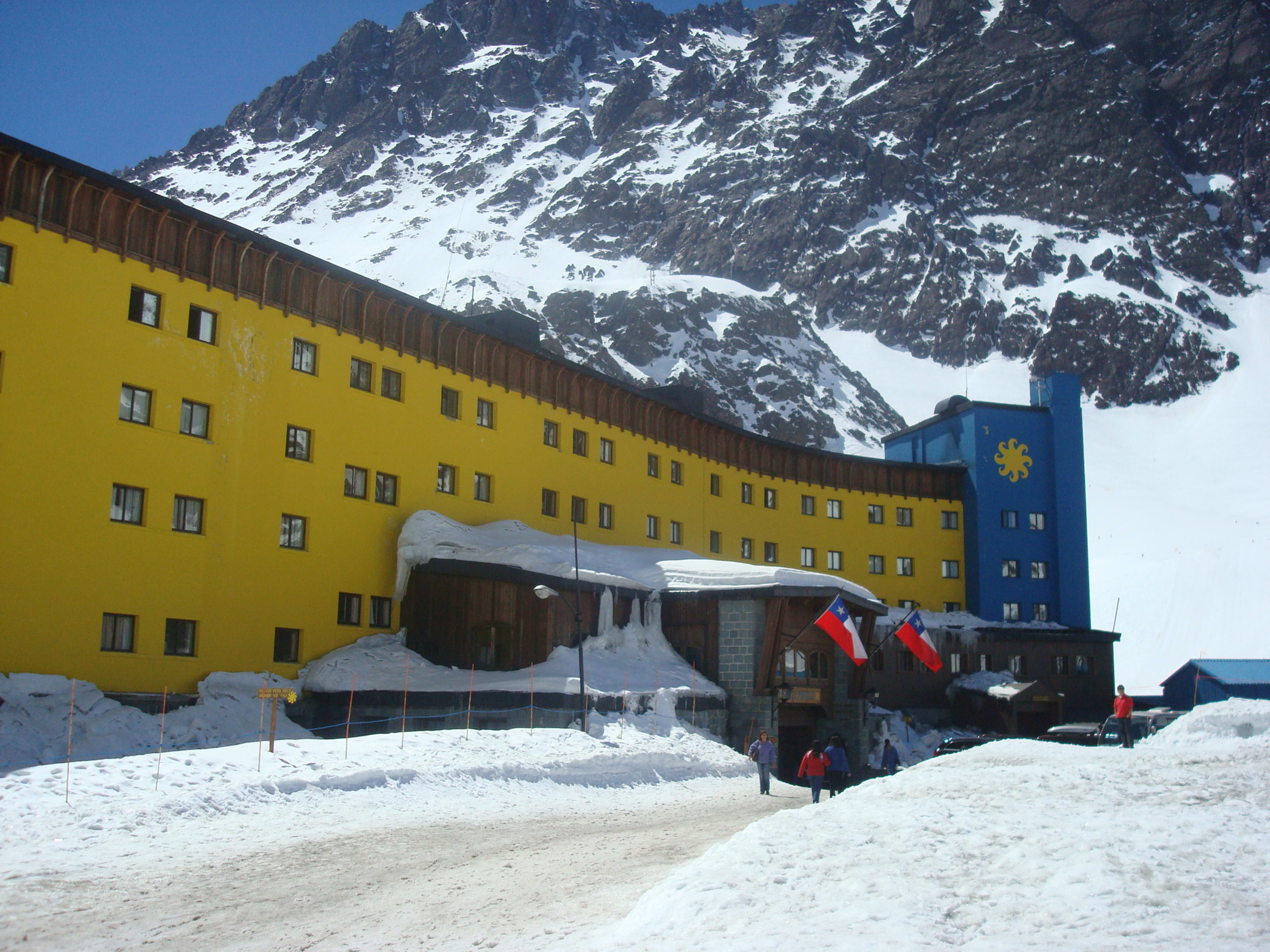
Portillo is probably the most singular ski resort in the world — a single hotel at altitude in the Andes, 160km from Santiago, at which a fixed group of guests arrives every Saturday, skis all week with the same people, and leaves the following Saturday. The weekly rhythm, the communal dining tables, the resident instructors and guides, the altitude (2,880m to sleep at, which takes acclimatisation), the afternoon Andean light on the Laguna del Inca, and the history — 1966 World Championships, decades of national team training, the va-et-vient tows that appeared in every ski magazine of the 1970s — give the resort an atmosphere that cannot be replicated anywhere else in skiing. The Purcell family, who have owned Portillo since 1961, have resisted modernisation in the ways that would have changed the product's essential character, while making targeted infrastructure investments that maintain the resort's technical standards.
Thirty-five runs across 1,240 acres (5.0 km²) climb from the resort base at 2,548m to Portillo Pass at 3,310m. The terrain distributes across three main zones: the main bowl directly above the hotel (intermediates and lower-advanced), the Juncalillo sector to the south (more mellow, beginner-friendly), and the expert terrain accessible from Roca Jack and the plateau toward the pass. The va-et-vient slingshot tows are the resort's most distinctive infrastructure feature: horizontal cables carry multiple groups of three or four skiers per handle simultaneously uphill, providing high-capacity access to the main bowl without a traditional chair infrastructure. The Super C couloir (accessed from the plateau via a short hike from the top of Roca Jack) is 35 degrees and approximately 500m long — the most celebrated off-piste line at the resort and one of the classic couloir descents in the Andes.
Portillo's snowfall pattern is characterised by Andean storm cycles that arrive from the Pacific and deliver heavy snowfall in 48–72 hour windows, followed by periods of clear cold weather. The resort's high base altitude (2,548m) and the Andes' continental cold ensure that snowfall is typically dry and of high quality. Annual snowfall averages approximately 250–300cm, with significant variation between years. The season from mid-June to early October spans the austral winter; early July through late August typically provides the deepest snowpack and most consistent conditions. The altitude and aspect mean that once snow falls it is preserved in cold, dry conditions — powder days after a major storm cycle are exceptional, and the resort's limited guest numbers mean that fresh snow is not tracked out rapidly.
Fourteen lifts including five va-et-vient (slingshot) tows, three chairlifts, one gondola, one poma, and two beginner surface lifts serve the 35-run ski area. The va-et-vient tows are the resort's signature infrastructure — each carries a group of skiers on a shared handle, with the momentum of the system providing efficient uphill transport in the bowl terrain. The gondola serves the main access from the hotel base to the Portillo plateau. The lift count is modest relative to larger resorts, but the weekly package model ensures that the guest-to-lift ratio remains low and queues are minimal in practice.
There is no village — only the Hotel Portillo and its three satellite lodging options: the Octógono Lodge (octagonal form, pool-facing), the Inca Lodge (more casual, dormitory-adjacent), and the resort Chalets (self-contained units for families or groups). The weekly all-inclusive package covers accommodation, all meals, lift access, and most activities. The hotel's facilities include a heated outdoor pool (heated and serviced at altitude year-round), multiple dining rooms (the main dining room with assigned seating creating the communal character), a cinema, a kindergarten, ski school, and a small gym. Day skiing is available via the Portillo por el día option — day-only lift access without the hotel package — but the hotel experience and the weekly rhythm are the product's essential feature.
Santiago Arturo Merino Benítez (SCL) is one of South America's major international airports with connections from Europe, North America, Brazil, and Argentina. The drive north and east from Santiago on Ruta 60 climbs through the Aconcagua Valley and the Andean foothills before the final ascent to Portillo at 2,880m. The road is well-maintained and the ascent is gradual enough to allow acclimatisation during the drive. The resort's official transfers from Santiago are scheduled to coincide with Saturday package changeovers. International arrivals on non-Saturday flights can stay overnight in Santiago and take a private transfer the following morning; Santiago has accommodation and restaurant options at all price levels for the pre-trip night.
Santiago Arturo Merino Benítez International (SCL) is the only practical gateway — 160km southwest of the resort via Ruta 60 (the Trans-Andean Highway), a drive of approximately 90 minutes. The route climbs from Santiago's 520m metropolitan altitude through the Central Valley and into the high Andes, passing through Portillo village and ascending to the resort at 2,880m. The road is well-maintained but altitude acclimatisation is relevant — the ascent from Santiago to Portillo covers over 2,300m of elevation gain. The resort operates official transfers from Santiago for weekly package guests, which are the recommended option. Portillo is one of the few major ski resorts in the world where there is genuinely only one airport.
Portillo operates exclusively on all-inclusive weekly packages. Rates for the 2025/26 Andean winter season range from approximately USD 3,200–3,800 per person per week in the Inca Lodge (the most affordable accommodation tier) to USD 5,500–7,500+ per person per week in superior Hotel Portillo rooms, all-inclusive of accommodation, meals, and lift access. Single-day access (Portillo por el día) is available at approximately USD 95–120 (lift only; no hotel meals or accommodation). The all-inclusive model makes direct cost comparisons with per-item European pricing difficult, but the weekly package rate is high in absolute terms — Portillo competes on uniqueness rather than value.
All-inclusive weekly packages USD 3,200–7,500+ per person (2025/26 season, varies by room tier and week). Day skiing (Portillo por el día) approximately USD 95–120. Verify current rates at skiportillo.com.
This is an approximate editorial reference for the season noted. Always check the official resort website for current prices.
All price references are editorial estimates for the 2025/26 southern hemisphere winter season. Current season prices may differ; verify at the official resort website before booking.
The Hotel Portillo's dining room is the social hub of the resort experience — assigned seating at communal tables, three meals a day, and the physical impossibility of avoiding fellow guests over seven days creates a genuine community atmosphere that weekly package resorts like Club Med have tried to replicate but never quite matched. By Wednesday, guests who arrived as strangers are typically skiing together, comparing notes on the Super C, and debating the afternoon's plans over lunch. The main bar and the poolside area are the après-ski gathering points; the hotel's cinema screens nightly. Dinner quality reflects the remoteness and the captive market — competent Andean-Chilean cuisine without the culinary ambition of Santiago's restaurant scene, but reliably excellent by resort standards.
Acclimatise slowly on day one — arriving from sea-level Santiago to 2,880m sleeping altitude causes genuine altitude effects for most visitors, and pushing hard on the first skiing day is the most common mistake. The Super C couloir should only be attempted in stable conditions with a guide or very experienced local knowledge — it faces northwest and can carry significant wind-loaded slab deposits after a storm. Book as early as possible: the resort's weekly packages have limited total capacity (approximately 450 guests per week maximum) and the best rooms and weeks sell out months in advance. A pre-trip day in Santiago before the Saturday transfer allows acclimatisation and the opportunity to visit the ski and adventure-gear shops in Barrio Italia if any equipment needs arise.
Portillo's scores reflect a unique resort that is genuinely in a category of its own. Scenic beauty (9.5) is non-negotiable — the Laguna del Inca beside the resort, the Hotel Portillo's yellow facade above the lake, the Andes wall rising beyond the ski area toward Argentina, and the clear high-altitude Andean light combine to create a setting that no photograph adequately captures. Off-piste (8.5) reflects the serious expert terrain that national team coaches have used for decades — the Super C couloir, the out-of-bounds descents from Roca Jack, and the backcountry terrain toward the Argentine border are legitimate expert objectives. Village charm (8.0) and après-ski (8.0) are high for a resort of 35 runs specifically because the hotel model creates an unusually intimate and convivial atmosphere — guests eat together at communal tables, aprés-ski is a natural function of knowing everyone by Wednesday, and the confined, intentional nature of the experience creates a social dynamic unlike any other ski resort in the world. Terrain variety (6.5) honestly reflects 35 runs across 1,240 acres — genuinely compact by the standards of the other catalogue resorts, with the expert and beginner terrain split heavily toward expert. Value for money (5.0) reflects the all-inclusive weekly package pricing, which is high in absolute terms (USD 3,000–7,000+ per person per week depending on room category and season).
Support our independent research and help us add more ski resorts.
☕ Buy us a coffee