
8.5Very Good
Portillo
South America's most iconic ski destination — a legendary hotel at 2,880m in the Chilean Andes, 160km from Santiago.
Best for
Strengths
Lower-scoring areas
Southern Hemisphere resort: ski season runs late June to early October, the Argentine winter. Conditions and the Marte lift's operating status vary significantly with Andean wind patterns; check current status directly with the resort before travelling.
Las Leñas built its reputation in the 1990s as South America's answer to the great freeride destinations of the Alps and the Rockies, and it has held that identity with little compromise since. There is no historic village here, no gentle beginner culture, and little pretence toward being anything other than what it is: a single, treeless mountain in a remote corner of the Mendoza Andes, built almost entirely around serious, committed skiing. The resort's isolation — genuinely difficult to reach, with limited surrounding infrastructure — filters its visitor base naturally toward those who have made a deliberate decision to be there rather than those passing through.
The mountain's above-treeline terrain concentrates around the Marte sector, which unlocks more than 200 off-piste itineraries including couloirs, open faces, and long backcountry descents. The often-cited 24-kilometre run via Cenidor, Marte, and Mercurio is among the longest continuous ski descents documented anywhere. Excluding Marte, the resort's more conventional lift-served terrain covers a considerably more modest 530m of vertical — a distinction worth understanding before booking, since Marte's variable operating status directly determines how much of the mountain's signature terrain is actually accessible on any given day.
Andean precipitation at Las Leñas is less predictable than Alpine snowfall, arriving in more concentrated storm cycles rather than steady accumulation. Once snow falls, the treeless, high-altitude terrain preserves it well, and the resort's reputation for deep, wind-affected powder is well earned in a good season. Wind is the recurring variable: it drives both snow redistribution across the open terrain and the Marte chairlift's approximately 40% operating rate, and visitors should treat both as genuine planning considerations rather than occasional inconvenience.
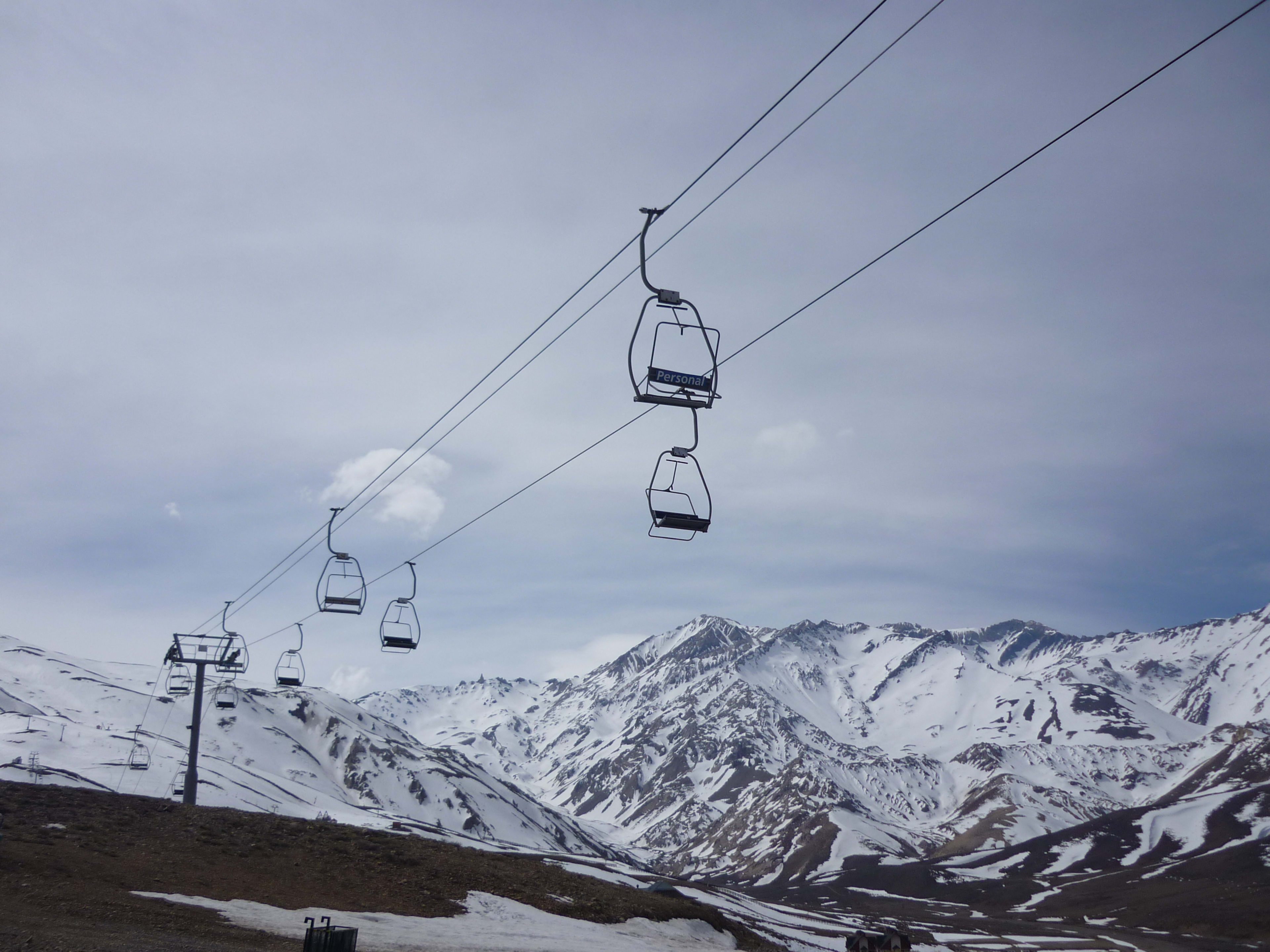
Fourteen lifts serve the mountain, with the Marte chairlift as the gateway to the resort's most celebrated terrain — and its most significant operational limitation. Wind exposure on the upper mountain means Marte operates only around 40% of the time across a season, a figure confirmed by multiple independent sources rather than an occasional caveat. Visitors travelling specifically for Las Leñas's freeride reputation should build flexibility into their itinerary rather than assuming guaranteed access.
Las Leñas operates as a self-contained destination resort rather than a town with independent existence — accommodation is concentrated in a small number of hotels at the base, built specifically to serve the ski area. This is not a resort with a wider selection of independent lodging; visitors typically book through the resort's own hotel stock or specialist tour operators.
Malargüe Airport offers the shortest transfer at roughly an hour, but scheduled service is limited and seasonal. Mendoza Airport, Argentina's main gateway to the region with substantially better flight connectivity, is a four-to-four-and-a-half-hour road transfer; San Rafael sits at an intermediate two hours. Most international visitors accept the longer Mendoza transfer in exchange for reliable flight scheduling.
Malargüe Airport is the closest gateway at approximately 60 minutes by road, but scheduled service is limited and seasonal — confirm current routes before relying on it. Mendoza Airport, Argentina's main regional hub with far more extensive flight connections, is roughly four to four and a half hours away by road or private transfer; San Rafael offers an intermediate option at around two hours from the resort. Most international visitors route through Mendoza despite the longer transfer, given its considerably better air connectivity.
Las Leñas is priced as a remote, all-inclusive-style destination resort rather than a day-trip mountain, and typically costs more than Argentina's other major resort, Cerro Catedral, once transfers and lodging are factored in. Verify current lift-pass and accommodation rates directly with the resort before booking, and note that Argentina's currency history makes advance price confirmation especially important.
All price references are editorial estimates. Verify current rates at laslenas.com before booking.
The atmosphere at Las Leñas is unpretentious and ski-focused, without the broader town infrastructure of Bariloche to draw on for évening variety. Dining is concentrated in the resort's own hotels, functional rather than a destination in its own right — the appeal here is entirely the mountain, not the surrounding hospitality scene.
Build a flexible itinerary around Marte's variable operating status rather than assuming guaranteed access to the resort's best terrain on any given day — a longer stay materially improves the odds of catching the lift running in good conditions. Hire a local guide for any off-piste beyond the immediately obvious lines; the terrain is genuinely serious and the resort's remoteness means help is further away than at a comparable Alpine destination.
Off-piste (9.5) is Las Leñas's defining strength and among the highest scores in this dimension anywhere in the catalogue — the sheer scale and quality of lift-accessed freeride terrain here rivals resorts many times its size. Lift infrastructure (5.5) is an honest reflection of the Marte chairlift's approximately 40% operating rate, a genuine and well-documented limitation driven by the mountain's exposure to Andean wind rather than a management shortfall. Beginner suitability (4.0) and family friendliness (4.5) reflect a mountain built overwhelmingly for experienced, confident skiers — this is not the resort for a first-time visitor or a family ski week. Snow reliability (6.5) reflects the Andes' more variable precipitation pattern compared with the Alps, though the resort's above-treeline exposure preserves quality well once snow falls.
South America's most iconic ski destination — a legendary hotel at 2,880m in the Chilean Andes, 160km from Santiago.

South America's premier ski resort — 120 km of piste in Patagonian Andes above the lakes and forests of Bariloche.

South America's largest ski resort — high-Andes terrain 46km from Santiago, open when the northern hemisphere is in summer.
Support our independent research and help us add more ski resorts.
☕ Buy us a coffee