
7.0Good
Jasná
Central Europe's largest ski area — Mount Chopok's twin faces in the Low Tatras, 51km of pistes and a 1,081m vertical.
Best for
Strengths
Lower-scoring areas
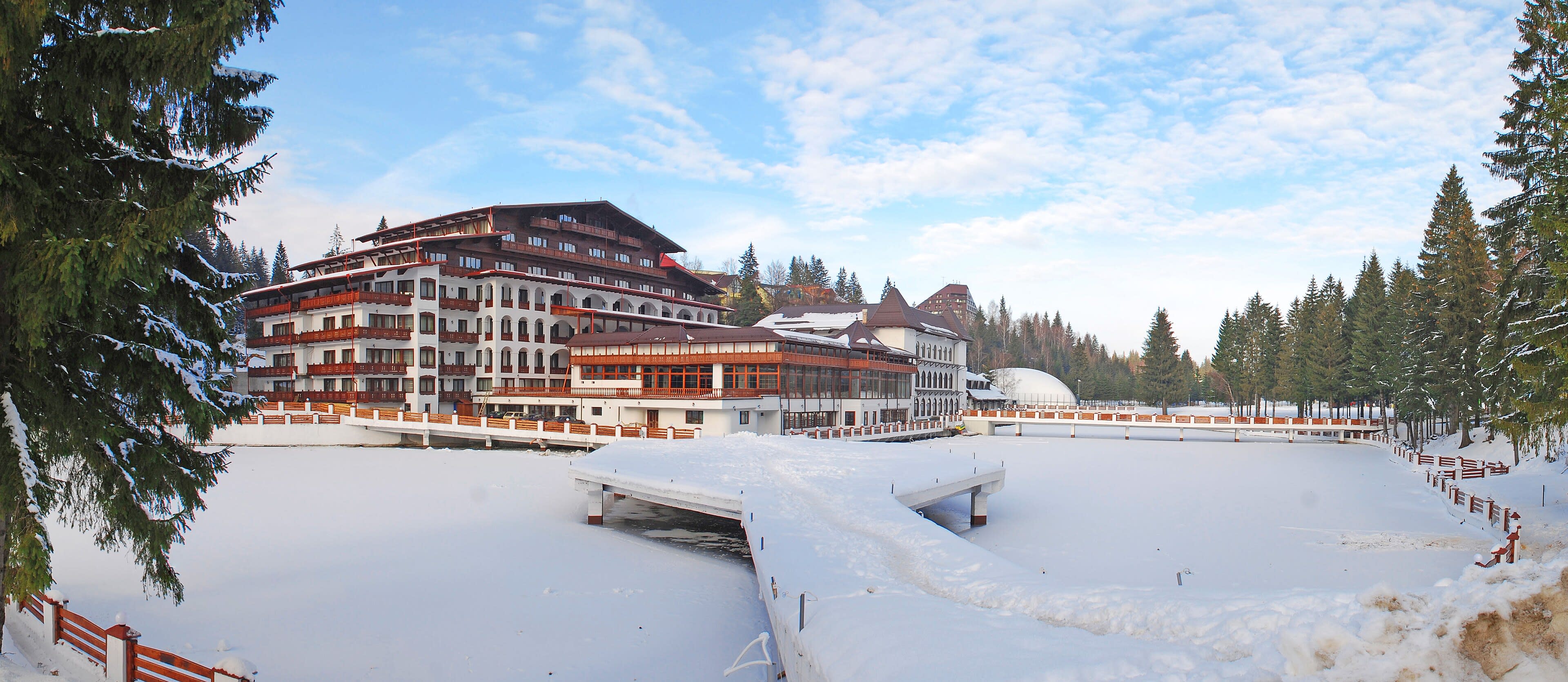
Poiana Brașov has the feel of a mountain resort that grew organically around a popular Transylvanian winter destination rather than being purpose-engineered as a ski area. Its status as Romania's leading ski resort is partly a function of its relative accessibility from Bucharest and the absence of obvious competition — the Carpathian ski resorts are modest by Alpine standards, but Poiana Brașov is genuinely the benchmark. The resort sits within a beautiful conifer-forested plateau, and the view from the upper pistes toward the Bucegi range and the Brașov basin below has a grandeur that the modest ski statistics don't fully prepare you for. Visitors from Western Europe arriving here for the first time tend to be struck by the quality of the mountain setting relative to the very low cost.
Twelve trails cover 23.9km across a ski area that expanded significantly between 2010 and 2015. The seven named main pistes range from the beginner Bradul (430m) and Stadion (325m) runs through to the 4.75km intermediate Drumul Roșu — the longest descent at the resort — and the short but steep Kanzel black. The expansion added additional beginner and intermediate terrain that broadened the resort's family appeal. The terrain is almost entirely groomed piste; significant off-piste or ungroomed terrain is not part of Poiana Brașov's offering, and the ski area does not lend itself to guided off-piste exploration in the way that larger Alpine resorts do.
The South Carpathian climate produces cold, reliable winters but comparatively limited natural snowfall — the base typically receives 50–60cm of accumulated snow annually, lasting for about 120 skiing days from mid-November to mid-March. The resort supplements natural snow with snowmaking covering the main pistes. Conditions are most reliable from late December through February; the early and late season edges of the 120-day window can be patchy. The resort sits on north-facing slopes that retain snow and shade well compared to south-facing terrain.
Ten lifts serve the resort: two aerial tramways, two chairlifts, five ski lifts (surface tows), and one gondola. The gondola from the resort base to the mid-mountain area provides the main people-mover for the ski area, supplemented by the chairlifts to the upper slopes. The lift infrastructure reflects the resort's mid-range development status — functional and adequate for the terrain, but without the high-speed detachable chairlift systems seen at larger Western European resorts. Queuing is rarely a problem except on Romanian national school holidays.
Poiana Brașov is a genuine resort village rather than a town that services a mountain — accommodation, restaurants, and resort facilities are clustered within the 80ha plateau at the base of the ski runs. Hotels range from communist-era structures (some still operating, others renovated) to newer boutique properties. Ski-in/ski-out access is available from several hotels. The village is walkable between the main facilities. For those wanting more variety in accommodation or dining, Brașov city centre — with its beautifully preserved medieval Saxon old town — is 12km away and makes an excellent base with regular bus connections to the resort.
Bucharest's Henri Coandă Airport (OTP) is the main gateway at about 2.5 hours by road. The DN1/E60 highway connects Bucharest to Brașov and is the most direct route; the motorway section of this road was partially completed as of 2026. The city bus service (lines 20 and 100) from Brașov city centre to Poiana Brașov runs regularly and cheaply. For visitors wanting to explore Transylvania — Brașov's medieval centre, Bran Castle, Peles Castle — the combination of mountain skiing and regional sightseeing makes a compelling week-long programme.
Bucharest Henri Coandă International (OTP) is the primary gateway at approximately 2.5 hours by road via the DN1 highway — the same route used to reach Brașov from the capital. Băneasa (BBU) is marginally closer but serves primarily domestic routes. The journey from OTP to the resort involves the Bucharest–Brașov motorway section (partially completed as of 2026) and then the 12km mountain road from Brașov to Poiana Brașov. City buses 20 and 100 run regularly between Brașov city centre and the resort base; car hire from Bucharest is the most flexible option.
Poiana Brașov is among the least expensive ski resort experiences available to a European visitor. Day lift tickets run approximately RON 150–200 (roughly €30–40) in peak season (2025/26). Accommodation in a mid-range hotel runs €40–80 per night; restaurant meals are RON 50–100 (€10–20) per person. Equipment rental is available at very reasonable rates. The affordability extends across the full experience — a week's skiing here at total cost would be comparable to a day's lift ticket at a major Swiss resort.
Adult day lift ticket approximately RON 150–200 (roughly €30–40, 2025/26 season). Verify current rates at poiana-brasov.com.
This is an approximate editorial reference for the season noted. Always check the official resort website for current prices.
All price references are editorial estimates for the 2025/26 season. Current season prices may differ; verify at the official resort website before booking.
The resort has a relaxed, Central European ski holiday atmosphere — unhurried, family-oriented, and without the intense consumption of the major Western destination resorts. Several mountain restaurants and terrace bars operate on the slopes. The village offers Romanian mountain cuisine — sarmale (stuffed cabbage), mici (grilled meat rolls), and local țuică plum brandy — alongside international standards. The evening scene is quiet and food-focused rather than late-night club-oriented. Brașov city itself is 12km away and has a strong restaurant and bar scene reflecting its status as one of Romania's most visited cities.
Combine the skiing at Poiana Brașov with Brașov's medieval centre (the Black Church, Piața Sfatului, and the Saxon fortifications are among the finest medieval streetscapes in Central Europe) and the Bran Castle day trip — often marketed as 'Dracula's Castle.' The resort-to-Brașov bus is both cheap and reliable. For skiers, the most technically challenging terrain is the Kanzel black run and the upper section of Drumul Roșu — the rest of the mountain is firmly intermediate and beginner-friendly. Visit in January or February for the most reliable snow conditions. Book accommodation in advance for the Christmas and New Year period, which is heavily booked by Romanian domestic visitors.
Value for money (9.0) reflects Poiana Brașov's position as one of the most affordable ski resort experiences in Europe accessible to an international visitor — lift tickets, accommodation, dining, and equipment rental are all significantly below comparable Western European resort pricing. Terrain variety (5.0) and off-piste (4.0) reflect the resort's compact footprint: 24km of piste and 12 runs across a modest 80ha do not constitute a diverse terrain library for experienced skiers. Snow reliability (5.5) reflects the South Carpathian climate — the season is relatively short (mid-November to mid-March, approximately 120 days) and natural snowfall averages 50–60cm, supplemented by snowmaking.
Central Europe's largest ski area — Mount Chopok's twin faces in the Low Tatras, 51km of pistes and a 1,081m vertical.

Poland's highest ski mountain — a UNESCO Biosphere Reserve above Zakopane, almost entirely expert terrain, and a cultural pull as strong as the powder.
Support our independent research and help us add more ski resorts.
☕ Buy us a coffee