
6.0Above Average
Genting Resort Secret Garden
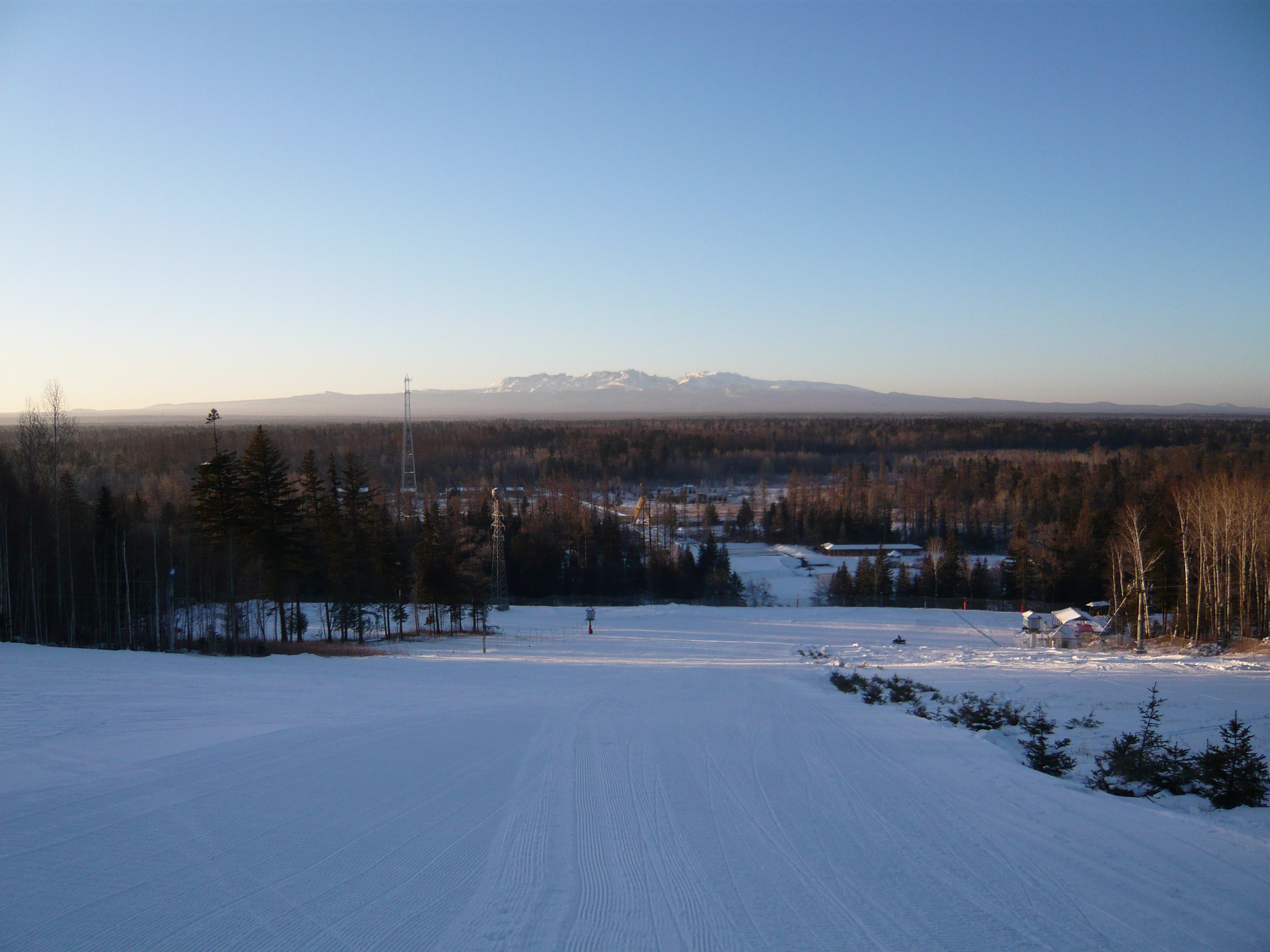
China's Olympic freestyle stage — the Beijing 2022 venue for slopestyle, halfpipe, and moguls, two hours from the capital.
Best for
Strengths
Lower-scoring areas
Changbaishan's character is defined by ambition and contrast. The Wanda Group's investment — multiple five-star hotels, a Club Med, and modern lift infrastructure — transplanted European destination-resort standards onto a volcanic mountain in one of China's most remote provinces. The result is a resort that sits at the intersection of China's skiing boom, the country's most iconic northeastern landscape, and a luxury hospitality model designed for both domestic high-earners and international visitors. The ski area itself is modest by global standards: 33km of piste, a 370m vertical, and 12 lifts cover the western slopes of Changbai Mountain without competing with the great Alpine or North American complexes in scale. What Changbaishan offers instead is consistency, comfort, and context — the reliability of Siberian cold and powder on a mountain that matters culturally and geographically to a billion-person market.
Forty-three runs across 33km of piste span the mountain from base at 835m to summit at 1,205m, a vertical of 370m that delivers adequate mileage for beginners and intermediates and a limited but respectable challenge for advancing skiers. The terrain distributes as 20 beginner runs (47%), 14 intermediate runs (32%), and 9 expert runs (21%). The expert sector, served by dedicated lifts on the upper mountain, includes the steepest and most interesting terrain; intermediate cruising runs dominate the mid-mountain. The beginner areas are well-appointed — separate from faster-moving intermediate traffic — and consistent with the resort's strong emphasis on the developing Chinese ski market. A terrain park serves freestyle progression. For guests staying a full week, the mountain's scale means repeat laps are inevitable; the skiing is best understood as a component of a broader resort experience rather than a destination in its own right for terrain-focused skiers.
The Siberian continental climate is Changbaishan's defining snow asset. Winter high-pressure systems over Siberia deliver persistent cold temperatures — January averages hover around -20°C to -25°C at resort altitude — that keep natural snow dry and light throughout the season. Snowfall is moderate by alpine standards but consistent: cold temperatures from November through March preserve what falls in excellent condition, and the resort's snowmaking infrastructure supplements low-snowfall periods. The ski area typically opens by mid-November and closes in early April, giving a five-month season at altitude. Powder days after storm cycles are genuine and relatively frequent; the low humidity of the continental climate keeps snow quality high for several days after fresh snowfall, unlike the heavier wet snows of more maritime climates.
Twelve lifts serve the ski area, with gondola access from the resort base and a combination of high-speed and fixed-grip chairlifts covering the mid and upper mountain. The resort's lift capacity is adequate for its current visitor numbers, and modern Wanda-era infrastructure means the equipment is relatively recent. Lift queues are largely a phenomenon of Chinese public holidays (Spring Festival, Golden Week, winter school holidays) when the resort operates at or near capacity; weekday and off-peak skiing is generally queue-free. The base area is purpose-built for resort-level efficiency: gondola, rental shops, ski school meeting points, and F&B facilities are all accessible on a single level from the hotel zone.
The Wanda Changbaishan International Resort comprises four hotels — the Westin (5★), the Sheraton (5★), the Wanda Jin (5★), and Wanda Yue — together with the Club Med all-inclusive resort. All are ski-in/ski-out or within a short walk of the gondola base. Accommodation quality is consistently high: the hotels operate to international five-star standards with Western and Chinese dining, spas with geothermal hot-spring pools, fitness centres, and multilingual staff. The Club Med resort provides an all-inclusive format with buffet dining, ski instruction, and structured activities. This concentration of high-end accommodation within a resort that is otherwise surrounded by forested mountain wilderness creates a cocoon-like experience — very comfortable, fully serviced, and with limited reason to leave the resort perimeter.
Changchun Longjia International Airport (CGQ), 280km and approximately 3.5 hours by road, is the primary gateway for visitors arriving by air. Direct flights connect Changchun with Beijing, Shanghai, Guangzhou, and several Korean and Japanese cities. The Wanda resort and Club Med both organise package-inclusive transfers from Changchun during the ski season. Yanji Chaoyangchuan Airport (YNJ), approximately 200km and 2.5 hours away, is an alternative with connections from Seoul and several Chinese cities. High-speed rail from Beijing to Baishan (a journey of approximately 6 hours via Changchun on the Harbin line) followed by a short resort shuttle is a viable option for visitors from the capital. Road conditions in winter are reliable on major highways but temperatures demand winter tyres on approach roads.
Changchun Longjia (CGQ) is the main international gateway for the resort, approximately 280km and 3.5 hours' drive via the Chang-Bai expressway. Yanji Chaoyangchuan (YNJ) in Yanbian Korean Autonomous Prefecture is closer at around 200km and 2.5 hours and may be the better option depending on your departure city. High-speed rail to Baishan City followed by a transfer shuttle is an increasingly practical alternative. The Wanda resort and Club Med both operate organised transfer services for package guests from Changchun during the ski season. Domestic connections from Beijing, Shanghai, and Guangzhou to CGQ are frequent; international visitors typically connect via Beijing Capital (PEK) or Beijing Daxing (PKX). Sub-zero temperatures are routine during winter transfers — pack for -20°C outdoors.
Day lift tickets at Changbaishan are priced at the premium end of the Chinese market — approximately CNY 400–600 for an adult day ticket (2025/26 season; equivalent to roughly USD 55–83), which represents a significant premium over China's budget ski areas while remaining well below European or North American equivalent rates. Club Med all-inclusive packages combine accommodation, meals, and lift access with structured ski tuition at rates aligned with the global Club Med pricing tier. Hotel packages at the Westin or Sheraton with lift access included command rates comparable to mid-tier European alpine hotels. Full pricing details should be verified at wandaresorts.com or clubmed.com for current-season rates.
Adult day lift ticket approximately CNY 400–600 (2025/26 season; ~USD 55–83). Club Med all-inclusive packages include lift access. Verify current rates at wandaresorts.com or clubmed.com.
This is an approximate editorial reference for the season noted. Always check the official resort website for current prices.
All price references are editorial estimates for the 2025/26 season. Current season prices may differ; verify at the official resort website before booking.
Changbaishan operates as a self-contained resort world: guests move between hotels, the Club Med property, and the ski area without needing to venture beyond the development. On-mountain dining options include a mid-mountain restaurant at the ski area summit with views across the Changbai Mountain landscape. Base-area dining spans hotel restaurants (Western, Chinese, hot pot) and the Club Med buffet. The après-ski culture is developing in line with Chinese skiing norms — hot spring soaking is the primary recovery ritual, with the hotels' geothermal spa facilities drawing guests off the slope at the end of the day. The broader Changbai Mountain area — with its Tianchi crater lake, waterfalls, and hot spring valleys — provides off-slope attractions for non-skiing days.
Time a visit for January or February to experience the Siberian cold at its most consistent — February typically sees the deepest snowpack and the best powder conditions before spring warming begins in March. The Club Med format works well for first-time visitors to China: pre-arranged transfers, all-inclusive meals, and multilingual ski instruction remove the logistical friction of a new destination. The Changbai Mountain crater lake (Tianchi) is accessible in summer only — a ski trip does not include this attraction; the volcanic scenery is impressive regardless. If visiting during Chinese school holidays, book accommodation and lift tickets in advance; domestic demand during Spring Festival is intense.
Terrain variety (5.5) and off-piste (4.5) honestly reflect a 33km ski area with a 370m vertical — Changbaishan is not a large mountain by international standards, and expert skiers will exhaust the marked terrain quickly. Snow reliability (8.0) is a genuine strength: the Siberian continental climate delivers consistent cold temperatures and dry, light powder snow from mid-November through late March, with the high-altitude cold preserving quality well. Village charm (7.5) and après-ski (7.0) reflect the Wanda resort infrastructure — five-star hotels, hot spring spas, Club Med dining, and resort-standard restaurants represent a standard well above most Chinese ski destinations and comparable to purpose-built European resort villages. Scenic beauty (8.0) benefits significantly from the Changbai Mountain volcanic landscape and its proximity to the Tianchi crater lake. Value for money (6.5) reflects premium Chinese resort pricing that, while below Alpine or North American equivalents in absolute terms, represents the upper tier of Chinese ski market rates.
Support our independent research and help us add more ski resorts.
☕ Buy us a coffee