
8.0Very Good
Palisades Tahoe
Lake Tahoe's largest ski complex — 6,000 acres across six Sierra Nevada peaks, 1960 Winter Olympics heritage, and an enviable skier-to-acre ratio.
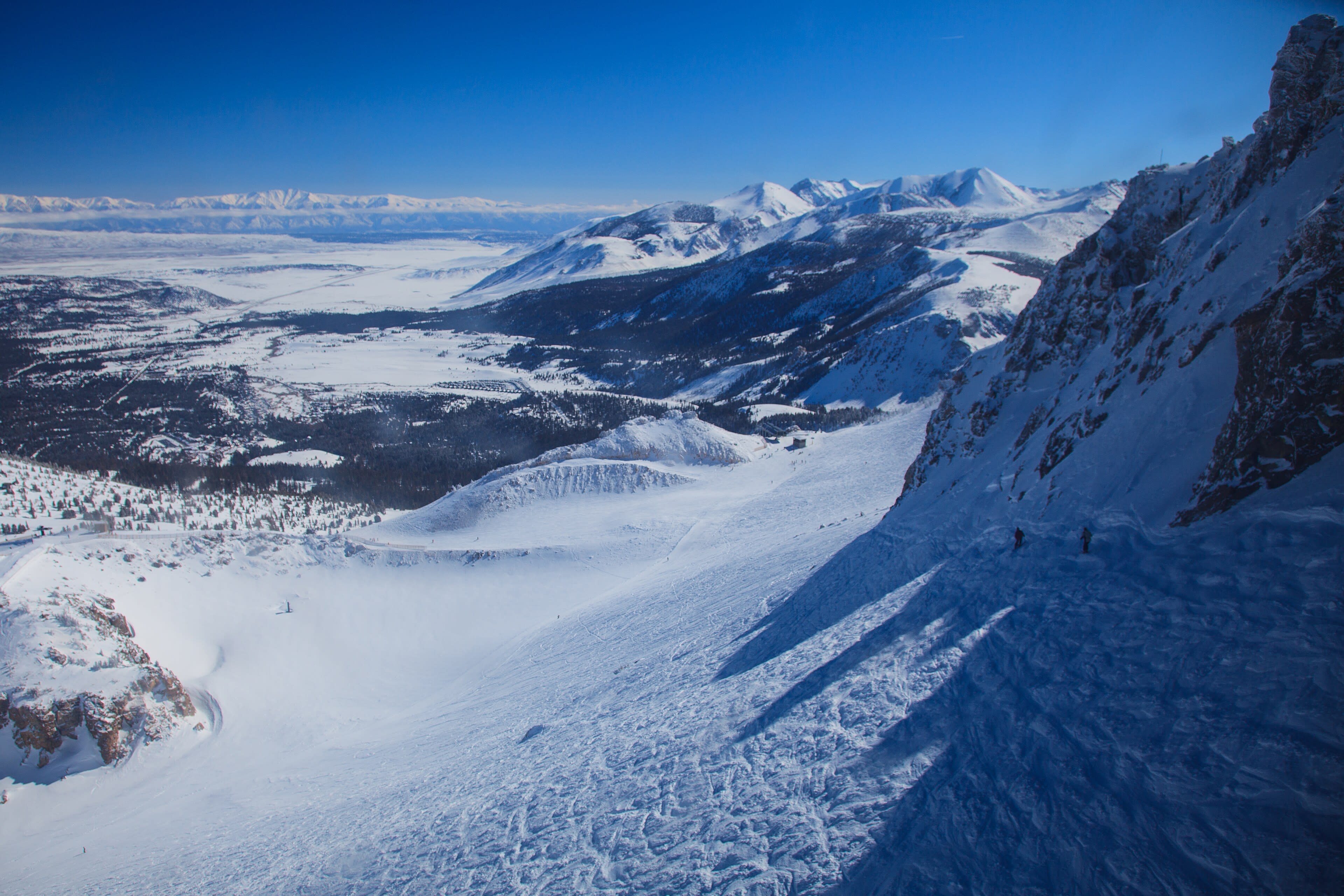
Murray Foubister / CC BY-SA 2.0
Best for
Strengths
Lower-scoring areas
Mammoth Mountain opened in 1955 under founder Dave McCoy, who built the resort from scratch with a single rope tow and a vision of high-altitude California skiing. McCoy ran the mountain as a family operation for over four decades, and the resort retains a certain California-relaxed character that distinguishes it from the corporate polish of Vail-owned or Alterra-premium properties. Today Mammoth is operated by Alterra Mountain Company (owners of the Ikon Pass) and has benefited from sustained infrastructure investment while preserving the town-and-mountain culture that defines it. Mammoth Lakes below the mountain is a genuine town of 8,000 permanent residents — year-round restaurants, shops, and services rather than a purpose-built resort cluster — giving the destination a lived-in authenticity unusual among major American ski areas.
The 175 trails and 3,500 acres of skiable terrain span every difficulty level across a mountain that rewards exploration. The summit at 3,369m (11,053ft) opens onto a series of exposed chutes and bowls — the Broadway and Main Lodge summit access lifts put skiers on terrain that demands both skill and awareness — while the main mountain face carries an excellent network of intermediate cruisers and groomed blacks accessible to advancing skiers. The Unbound Park terrain park system is one of the largest and best-maintained in the US. Expert skiers prize the steep couloirs off the summit cornice, the tree skiing in the Lincoln Mountain sector, and the challenging blacks of the Southern Exposure area. The resort's lower mountain provides ample beginner and progression terrain well separated from the expert routes.
Mammoth's snow record is among the best in the United States in good years — the resort's high elevation and position to catch both Pacific Northwest and Southern California storm tracks can produce extraordinary snowfall accumulations, and 10+ metre winters are not uncommon. The Sierra Nevada's snowfall pattern is feast-or-famine, however: drought years driven by the El Niño/La Niña cycle can deliver thin cover at lower elevations even while the summit stays skiable. Mammoth's high base altitude of 2,424m provides significant buffer against warm spells that devastate lower-elevation California resorts, and the summit snowpack regularly survives into June — the extended season is a distinctive feature of the resort's calendar. Snowmaking covers key lower pistes and the main access runs.
The 25-lift network includes high-speed six-packs, gondolas, and a fleet of fixed and detachable quads providing 59,000 riders per hour of uphill capacity. The infrastructure is modern and well-maintained, reflecting Alterra's sustained capital investment. Gondola access from the Canyon Lodge and Main Lodge base areas provides weather-protected ascent on the coldest days. Weekend and holiday congestion at the primary base areas can generate significant queuing — the resort is within driving distance of 23 million Southern California residents and fills on powder weekends. Midweek skiing is markedly quieter.
Mammoth Lakes is a year-round resort town at 2,400m with a substantial permanent residential base, which means accommodation and services are considerably more developed and varied than a purpose-built ski village. The town centre, 5 minutes from the ski area, has restaurants, grocery stores, and independent businesses alongside the ski-specific infrastructure. Ski-in/ski-out access is available from a number of purpose-built complexes adjacent to the Canyon Lodge and Main Lodge base areas. The range spans from budget motels and hostel-style accommodation in Mammoth Lakes to high-end slopeside condominiums.
The majority of Mammoth's visitors drive from Southern California — the resort is roughly 300 miles from Los Angeles via US-395, a straightforward 5–6 hour drive in clear conditions. Chain controls and occasional road closures add time during active snowstorms, and the final approach is a designated chain-control zone. Reno-Tahoe International (RNO), 3 hours north on US-395, is the most practically useful commercial airport for fly-in visitors. Mammoth Yosemite Airport (MMH) in the town serves limited seasonal charter flights from Southern California on a Thursday–Sunday schedule. Non-stop flights to Reno from major US cities and some international connections make Reno the recommended option for most visitors outside Southern California.
Mammoth Yosemite Airport (MMH) in Mammoth Lakes provides near-resort access — roughly 15 minutes from the lifts — on seasonal charter services operated by Advanced Air, typically running Thursday to Sunday from Hawthorne and Carlsbad in Southern California; commercial service here is limited. Reno-Tahoe International (RNO), approximately 3 hours north on US-395, offers the widest commercial flight options in the region and is the recommended airport for most visitors. The majority of Mammoth's visitors drive from the Los Angeles area — the journey covers roughly 300 miles via US-395 and takes 5–6 hours in normal conditions; winter storms can add significant time and chain controls are common on the eastern Sierra approaches.
Mammoth is priced at the premium end of the US ski market. A daily adult lift ticket purchased at the window runs approximately $175–210 (2025/26 season); the Ikon Pass — Alterra's multi-resort season pass — provides the most significant value for multi-day visits, with full-season and base-level pass options covering Mammoth alongside dozens of other Ikon-affiliated resorts globally. Accommodation in Mammoth Lakes is broadly in line with other large American resort towns — range is wide, from budget motels to luxury slopeside condos. Dining and equipment hire costs reflect a mature resort town rather than a remote mountain destination.
Adult single-day window ticket approximately $175–210 (2025/26 season); Ikon Pass provides multi-day and season access. Verify current rates at mammothmountain.com.
This is an approximate editorial reference for the season noted. Always check the official resort website for current prices.
Mammoth carries a distinctly Californian atmosphere — the clientele trends younger than Utah's family-heavy resorts, with a strong snowboard culture (the resort has produced a disproportionate number of professional riders), a lively craft beer and après-ski bar scene, and an outdoor-recreation ethos that extends beyond skiing to climbing, mountain biking, and backcountry access. The Yodler bar at the base of the Broadway Express is the traditional après-ski gathering point. Dining in Mammoth Lakes proper runs from excellent pizza and burger spots to mid-level American restaurant dining; the town's year-round character supports a more varied food scene than most comparable ski destinations.
Summit rides on the Broadway Express or High Five chair on the first clear morning after a storm cycle deliver some of the best high-altitude powder in California — get there early before the Southern California weekend crowd fills the summit runs. The Cornice and Solitude Bowl areas off the summit are the first to be tracked out and the last to be groomed; prioritise them on storm days. Spring skiing at Mammoth in April and May, with corn snow conditions and base depths often still measuring 3+ metres, is among the most enjoyable seasonal skiing anywhere in the US — and rates drop meaningfully after Easter.
Terrain variety (8.5) reflects a genuinely diverse 175-trail mountain with excellent expert terrain — chutes off the summit ridge, technical tree skiing, and the steep Dave's Run sector — alongside strong intermediate cruising. Snow reliability (7.5) is affected by the Sierra Nevada's feast-or-famine snowfall pattern: in good years Mammoth receives 12+ metres of snow and stays open into June or July; in drought years the high altitude carries the season but depth can be limited. Value for money (6.0) reflects California resort pricing — Mammoth is significantly cheaper than Vail or Aspen but more expensive than comparable European mid-tier resorts when accommodation and ancillary costs are included.
Support our independent research and help us add more ski resorts.
☕ Buy us a coffee