Best for
Strengths
- Off-Piste9.5
- Scenic Beauty9.5
- Value for Money9.5
Lower-scoring areas
- Beginner Suitability3.5
- Family Friendliness3.5
Character
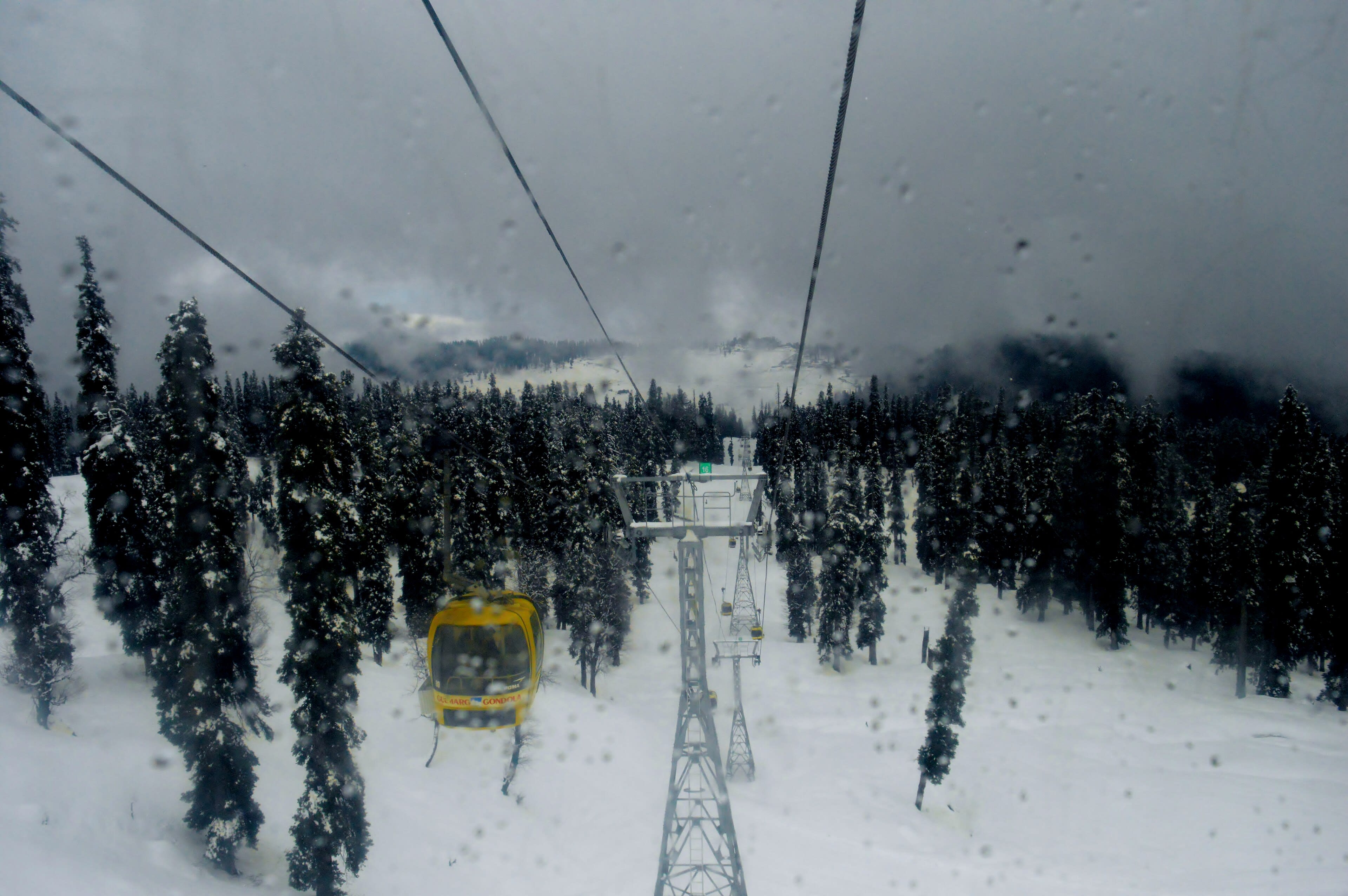
Gulmarg is not a ski resort in the conventional sense — it is a Himalayan meadow with a gondola that happens to also be one of the world's highest ski lift systems. The village of Gulmarg sits in a circular meadow that has been a summer resort for the Mughal emperors, a British colonial hill station, and the site of one of Asia's oldest golf courses. In winter, it becomes a ski destination that attracts a combination of Indian domestic tourists (the majority), international freeride skiers, and adventure travellers who have come specifically for the powder. The cultural context is entirely Kashmiri: the market at the gondola base sells kahwa tea, Kashmiri kangri warming pots, and craft textiles; the guide community is drawn from local families with generations of mountain knowledge; and the afternoon descent from the gondola station is conducted against a backdrop of calls to prayer from the valley below. Combining Gulmarg with a stay in Srinagar — the houseboat experience on Dal Lake is one of the great travel experiences in South Asia — transforms a ski trip into something considerably more significant.
Terrain
The ski terrain accessible from the Gulmarg Gondola concentrates on two zones: the Stage 1 runs from Kongdoori (approximately 3,050m) down through open bowl terrain toward the Gulmarg meadow, providing the resort's main groomed descent and the closest thing to conventional piste skiing; and the Stage 2 terrain from the Kongdoori Mountain top station (3,980m) down vast open faces toward the lower stations and through couloirs that require route-finding and technical competence. Apharwat Peak at 4,267m is accessible by approximately 45 minutes of boot-packing from the Stage 2 station and opens descents of up to 1,600m of vertical on runs that are among the longest ski descents in Asia. The total mapped terrain of approximately 25 kilometres understates the practical skiing available on a good powder day — the off-piste terrain extends widely across the Apharwat massif in conditions that reward experienced powder skiers.
Snow & Conditions
Gulmarg's snowfall pattern reflects its position in the western Himalayan snowbelt, where moisture-laden systems from the Arabian Sea and the Bay of Bengal bring substantial precipitation, particularly in January and February. The resort can receive significant powder dumps — 50–80cm in 24 hours is not unusual during peak storm cycles — and the cold temperatures at altitude preserve the snow in excellent condition. However, the Himalayan weather is genuinely variable: warm south-westerly winds can produce rapid temperature increases, and the season from mid-December through late March includes periods of excellent deep powder and periods of rain or freeze-thaw at lower elevations. The best powder conditions historically concentrate in late January and February. Visibility can be very poor during storm cycles; the open above-treeline terrain of Apharwat requires caution and local guide knowledge in whiteout conditions.
Lifts & Mountain Access
Six lifts: the Gulmarg Gondola Stage 1 (Gulmarg base to Kongdoori, ~3,050m) and Stage 2 (Kongdoori to 3,980m) are the centrepiece; three or four additional chairlifts serve the mid-mountain terrain below the Stage 1 station. The gondola system is operated by the Jammu and Kashmir Cable Car Corporation and has been operating since 2005 in its current form. Stage 2 is the key infrastructure: the 3,980m top station provides access to the full vertical of the mountain. Queue times at the gondola base can be substantial on weekends and Indian holiday periods — arriving early in the morning is strongly recommended. Gondola tickets are purchased separately from any ski pass and are priced per stage.
Village & Accommodation
Accommodation in Gulmarg meadow ranges from government-run JKTDC hotels and the historic Highlands Park Hotel (built 1920s, one of the oldest ski lodges in Asia) through to smaller family-run guesthouses and modern resort hotels. The meadow is compact and accommodation is within walking distance of the gondola base. Most serious ski visitors, however, base themselves in Srinagar (90 minutes away) and commute up for day trips — particularly those combining skiing with a broader Kashmir cultural itinerary. The houseboat experience on Dal Lake in Srinagar is genuinely unmissable and represents one of the most distinctive accommodation formats in Asia: Mughal-era wooden houseboats with full-service hospitality on the lake. Srinagar also has a growing range of boutique heritage hotels in traditional Kashmiri havelis.
Getting There
All access routes funnel through Srinagar International Airport (SXR), which handles domestic Indian services from Delhi (1h), Mumbai (2h), and other major cities. International visitors will need a domestic connection, almost always through Delhi (DEL). The road from Srinagar to Gulmarg is approximately 53 kilometres and takes 90 minutes: from Srinagar via NH-1 to Tangmarg, then the mountain road through Tangmarg to the Gulmarg meadow. The final 14km section from Tangmarg climbs significantly and may require 4WD or chains in heavy snowfall. Pre-arranged transfers from Srinagar hotels are the recommended approach for first-time visitors — local drivers know the road conditions and the best timing for the mountain section. Travel advisories for Jammu & Kashmir should be checked with your national government before booking.
- SXRSrinagar International1 hr 30 min
Srinagar International Airport (SXR) is the only practical gateway, at approximately 90 minutes by road through Tangmarg. The airport handles domestic Indian routes from Delhi, Mumbai, Bangalore, and other major cities; some international connections are available but Srinagar is primarily reached via a domestic connection through Delhi (DEL) or Mumbai (BOM). The road from Srinagar to Gulmarg is generally well-maintained but the final section through Tangmarg ascends steeply and may require chains or 4WD in heavy snow. Taxi and pre-arranged transfers from Srinagar are the standard approach — local drivers familiar with the mountain road are recommended. Important: check current UK FCO, US State Department, or your government's travel advisory for Jammu & Kashmir before booking. The region has historically been subject to travel advisories that vary in their severity.
Pricing
Gulmarg is extraordinary value by global ski standards. The gondola Stage 1 ticket costs approximately ₹900 (around €10) and Stage 2 ₹1,000 (around €11) for adults (2024/25 rates) — making the complete two-stage ticket under €22 total for a day's skiing. Equipment hire from local operators at the gondola base runs ₹800–1,500 per day for skis and boots. Accommodation in Gulmarg village runs ₹3,000–8,000 per night in mid-range options; the historic Highlands Park Hotel costs more but provides a distinctive experience. Srinagar houseboats on Dal Lake range from ₹3,000 (budget) to ₹12,000+ (luxury) per night for the full houseboat experience. All food, transport, and incidental costs reflect Indian domestic pricing and are very low by international comparison.
Gondola Stage 1 approximately ₹900 / Stage 2 approximately ₹1,000 (roughly €10–11 per stage, 2024/25 season). Ski area km figure (25) is from ski databases — no official government source confirmed. Verify current gondola rates at the J&K Cable Car Corporation or gulmargskiresort.com.
This is an approximate editorial reference for the season noted. Always check the official resort website for current prices.
All price references are editorial estimates for the 2024/25 season. Current season prices may differ; verify at the official resort before booking. Check your national government's current travel advisory for Jammu & Kashmir before planning a visit.
Atmosphere & Dining
The social atmosphere at Gulmarg is a Kashmiri mountain community rather than a ski resort consumer environment. Local guides and ski instructors congregate at the gondola base and the small tea stalls that line the approach from the meadow. Kashmiri cuisine is the food highlight of any visit: wazwan — the traditional multi-course banquet with rogan josh (lamb curry), yakhni (yoghurt-braised meat), and Kashmiri rice pilaf — is available in Srinagar's old city; in Gulmarg itself, simpler mountain food (roti, dal, chai) dominates the on-mountain options. Kahwa — Kashmiri green tea with saffron and cardamom — is both the warming drink of choice and a significant cultural ritual. The après-ski culture in any European sense does not exist; the social activity after skiing centres on the meadow teahouses and the community of international powder skiers who gather to compare snow conditions.
Expert Tips
Hire a local guide for Apharwat terrain — the boot-pack from Stage 2 to the peak (45 minutes) is straightforward in good weather but the route-finding from the summit in storm conditions is not, and local guides know the terrain intimately. Stage 2 queues build after 10:00 on busy days; buy your ticket and be at the Stage 1 gondola before 09:00. The deep powder lines on the north-facing aspects above Stage 2 hold untracked snow for days after a storm in the right conditions — February morning powder runs in Gulmarg can be genuinely world-class. Combine the ski trip with a full day in Srinagar's old city: the Dal Lake and Nagin Lake houseboats, the Jama Masjid, the Mughal gardens at Shalimar and Nishat, and the Shah-i-Hamdan shrine represent one of the richest cultural landscapes in Asia. Pack your own food for the mountain — the Stage 2 cafeteria is basic and expensive relative to Gulmarg village options.
Editorial Scores
Off-piste (9.5) and scenic beauty (9.5) reflect Gulmarg's exceptional standing in the global freeride community: the open Himalayan bowls from Apharwat Ridge, the altitude, and the powder quality on a good day are genuinely comparable to the best powder destinations in the world, and the Himalayan backdrop is unlike any European or North American ski landscape. Value for money (9.5) reflects extraordinary budget accessibility by global standards — gondola stage tickets cost the equivalent of under €10 per stage, equipment hire and food in the village is priced for the Indian domestic market, and accommodation in Srinagar (houseboat or hotel) costs a fraction of equivalent Alpine lodging. Lift infrastructure (4.5) and beginner suitability (3.5) are honest reflections of Gulmarg's limitations: six lifts, minimal groomed piste, no dedicated beginner progression terrain. Apres_ski (4.0) acknowledges that Western-style après culture does not exist here — post-skiing socialising takes place over Kashmiri tea (kahwa) and wazwan cuisine, not outdoor terrace bars. The piste km figure (25) is sourced from ski databases only and should be treated as an estimate.
Found this resort guide useful?
Support our independent research and help us add more ski resorts.
☕ Buy us a coffee